Home
Home
Services
Services

Resources
Resources
Storm Restoration
Storm Restoration
Roof Systems
Roof Systems
Locations
Locations
Schedule your free roof inspection today. Learn the hidden dangers of ignoring small roof leaks in Houston from mold to structural damage.

In Houston's humid air, ignoring a small roof leak can lead to costly rot and dangerous mold growth. Water follows the path of least resistance through your rafters and walls. Finding the leak early is the key to protecting your home.
Schedule your free AI-powered roof inspection today at 281-841-2504.
The hidden dangers of ignoring small roof leaks involve more than a simple water stain on your ceiling. Houston's humid air can cause mold to grow on wet items in just 24 to 48 hours as the Department of Energy (DOE) Consumer Guide to Insulation notes. This moisture slowly feeds on your wood beams and wall studs. This process weakens the frame of your home over time. Small drips often travel along your roof boards and soak into your insulation before you see them. Wet insulation cannot keep your home cool and forces your air unit to work harder. These hidden leaks can also reach your wires and create fire risks behind your walls. Finding these problems early with an expert drone check helps you avoid the high cost of a new roof.
Many homeowners do not realize how quickly a minor drip can turn into a major repair bill. You must understand the path water takes once it gets under your shingles. The story of How a Small Roof Leak Becomes a Big Problem in Houston starts here.
Why do small roof leaks become big problems in Houston? Houston's humid subtropical climate traps moisture in attics, turning a minor drip into a breeding ground for mold and rot within days. High heat accelerates wood decay, while seasonal storms widen small gaps. The combination of humidity, heat, and heavy rain makes Houston uniquely punishing for unresolved leaks.
Houston's weather is tough on roofs. High heat and heavy rain create a cycle that turns a small drip into a big repair. Many homeowners think a minor leak can wait for a sunny day. But in our humid climate, a small gap in your shingles does not stay small for long. AI Roofing helps Houston homeowners spot these issues before they escalate. Water finds its way in and stays there. This moisture works against your home every hour it goes unfixed.
A small roof leak can cause thousands in structural damage within weeks in Houston's climate.
Water does not always fall straight down from a leak. It follows the path of least resistance. It can run along your roof decking or travel down a wood truss before it ever reaches your ceiling. By the time you see a brown stain on your drywall, the water may have traveled ten feet from the actual hole. This makes it hard to find the source without help. Small leaks often hide in attic spaces where you cannot see them.
You might not notice the damp wood or wet insulation for months. During this time, the water soaks into the wood frame of your house. This slow soaking weakens the wood over time. Watch for these warning signs:
This slow damage can lead to warped boards and a sagging roof line. Based on roofing data, roof leaks cause about 33 percent of all roof replacements in the country each year. Catching a leak early can keep your home out of that group.
In Houston, humidity is a constant threat to your roof structure. When water enters your attic, it does not dry out quickly. The trapped moisture creates a breeding ground for mold and wood rot. The Centers for Disease Control and Prevention (CDC) reports that mold can grow on damp surfaces within 24 to 48 hours. This rapid growth can damage your home and hurt your indoor air quality.
Heat speeds up this process. On a hot Texas afternoon, an attic can reach high heat levels. This heat and moisture act like a greenhouse for rot. It turns a small leak into a large area of decay in just a few weeks. If you wait too long, you might face a full roof replacement instead of a simple patch. The longer the water stays, the more it costs to fix the damage.
Finding a tiny leak is hard with the naked eye. Most leaks start in spots that are tough to reach or see from the ground. This is why we use high-tech tools to find moisture before it ruins your home. You can schedule a professional roof inspection to find these hidden spots. Our drones and AI tools see what human eyes might miss. We look for heat changes and small cracks that lead to big bills later. Checking your roof early keeps minor issues from becoming major crises. This early step protects your investment and keeps your family safe.
Is mold from a roof leak dangerous to your health? Yes. Mold spores from roof leaks can trigger asthma attacks, allergic reactions, and respiratory infections, especially in children and older adults. In Houston's humidity, mold can colonize attic insulation and spread through HVAC vents within 48 hours of a leak starting.
A small drip from a roof leak creates the perfect spot for mold to grow. According to the Institute of Inspection Cleaning and Restoration Certification (IICRC), moisture in attic spaces compromises the effectiveness of insulation and building materials. In the humid air of Houston, a damp attic or ceiling becomes a home for spores very fast. The EPA says you should dry moisture problems within 24 to 48 hours to stop mold from starting.
Is mold from a roof leak dangerous? Yes, mold from roof leaks is a health risk. Spores can spread through your air vents and cause breathing problems, asthma, or allergies. Persistent moisture from leaks creates a major risk to your indoor air quality.
Once mold starts in your attic, it does not stay in one place. Spores travel through the air and can get into your HVAC vents. This lets the mold spread to every room in your house. Because Houston is so humid, the water from a small leak does not dry out on its own. Our team uses AI-powered tools to detect moisture before it spreads. Instead, it sits in your insulation and wood. This is one of the top hidden dangers of ignoring small roof leaks for local people.
Mold can also weaken the bones of your home over time. The Federal Emergency Management Agency (FEMA) warns that water intrusion can weaken floors, walls, and structural supports over time. This means a leak does more than just ruin your paint. It slowly eats the wood that holds up your roof and ceiling. If you see a dark stain on your ceiling, mold may already be growing in the dark space above it.
Many types of mold grow in damp attics after a roof leak. Black mold is a big worry because it can make people sick. Other types can grow on wet drywall or wood. These molds can make you sneeze or cough. Because many of these molds grow in hidden spots, you may smell a musty scent before you see any growth. Finding these spots early can save you from a big repair bill later.
Expert help is the best way to stop these risks. A professional roof inspection can find wet spots that you cannot see from inside your house. Using drone tools and AI, experts can find where water gets in. This helps you fix the leak and dry the area before mold becomes a big problem for your family. Catching leaks early keeps your air clean and your home safe.
How quickly can a roof leak damage the wood structure of your home? Wood rot can begin within weeks of a roof leak in Houston's humid climate. The constant moisture allows fungi to colonize roof decking and rafters, softening the wood and reducing its load-bearing capacity. Left unchecked for six months, rot can spread to wall studs and compromise your home's frame.
Water that enters through a small gap in your shingles does not stay in one place. In the humid Houston air, moisture travels quickly along the roof decking and framing. This water often moves far from the first leak site, making it hard to find. If you leave these leaks alone, the wood stays damp for weeks at a time. This leads to wood rot, which slowly weakens the very bones of your house.
Even a slow roof leak can rot wooden roof supports, threatening your home's structural integrity.
Small drips can soak into the wood sheathing that sits right under your shingles. Once the sheathing is wet, the moisture spreads to the rafters and the trusses. Because the attic is often dark and warm, these wet spots become a breeding ground for wood-eating fungi. Over time, the wood loses its strength and starts to break under pressure.
When wood framing absorbs water, it begins to soften and decay. This is one of the most common hidden dangers of ignoring small roof leaks. Rafters and trusses are built to hold the weight of your entire roof system, including heavy shingles and solar panels. When these parts rot, they lose their strength and can no longer provide the support your home needs.
The National Association of Insurance Commissioners (NAIC) notes that mold and moisture can damage building materials, including wood and drywall, if moisture problems are not resolved quickly. In some cases, the rot can spread from the roof down into the walls of your home. This can damage the studs that hold up your drywall and siding. Fixing rot in the framing is a major job that often requires removing large parts of the roof or wall.
Structural damage often shows up in ways that are hard to ignore but very expensive to fix. You might notice sagging ceilings or walls that look uneven or bowed. These are signs that the wood underneath is no longer strong enough to hold the weight above it. If you see brown stains on your ceiling, it means water is already moving through your home's structure.
In extreme cases, a roof that has been weakened by wood rot can collapse under the weight of heavy rain or high winds. This risk is higher during Houston's storm season when wind and rain put extra stress on your home. To catch these problems before they become dangerous, you should schedule a professional roof inspection. This helps find rot and damp spots that are not seen from the ground or inside the living area.
The humid air in Houston makes roof leaks much worse than in drier areas. In West Texas, wood might dry out between rain storms because the air is dry. In our area, the air stays thick with moisture, so wet wood in an attic never truly dries. The lack of air flow in many attics makes the problem even worse.
This constant dampness speeds up the rot process and leads to faster structural decay. Even a small hole can let in enough water to keep the wood wet all year. This is why small leaks in Houston must be fixed fast. Waiting even a few months can turn a simple patch job into a full framing repair.
Can a small roof leak really increase your monthly energy costs? Yes. Wet insulation loses up to 40 percent of its R-value, forcing your HVAC system to run longer to maintain the same temperature. In Houston, where summer cooling dominates, a single leak can add 15 to 25 percent to your monthly electric bill until the insulation is replaced and the leak is sealed.
One of the hidden dangers of ignoring small roof leaks is the damage to your attic insulation. Even a minor drip can soak the pink or white fluff that keeps your home cool. When this layer gets wet, it loses its power to block heat. This failure lets hot air seep into your living space, making your rooms feel stuffy and warm.
A leaky roof can ruin your attic insulation, raising energy bills by forcing your HVAC to work harder.
According to the U.S. Fire Administration (USFA), wet insulation loses its thermal resistance and must be replaced to restore energy efficiency. This water does more than just cause damp spots. It changes how your home handles the Texas sun.
Insulation works by trapping small spots of air. These spots slow down the flow of heat from your roof into your home. When water from a leak fills these spaces, the fluff mats down and clumps together. This process destroys the R-value, which is the way the layer blocks heat.
Once the insulation is flat and wet, it stays that way. It does not puff back up after it dries. You might need to check our step-by-step guide to fixing a leaking roof to prevent further loss. Changing wet sections is often the only way to get your home's cover back to its best level.
In Houston, your AC works hard for most of the year. If your insulation is failing, your AC unit must run longer and more often to keep you cool. This extra work shows up on your monthly power bill. It also puts a lot of stress on your HVAC system, which can lead to costly repairs or a full breakdown.
Keeping your attic dry is a key part of saving money. When your roof stays sealed, your insulation can do its job. This helps keep your cooling costs low even when the air is very damp. If you ignore a leak, you are really paying extra for power every single day.
You can look for signs of damage without climbing into your attic every day. Look for dark spots on your ceiling or walls. Check for rooms that stay hot even when the AC is running. These signs often point to wet insulation that is no longer doing its job.
Finding these issues now can save you a lot of money later. A quick check of your roof can stop a small drip from ruining your entire attic. By acting fast, you keep your home tight and your bills steady.
One of the most dangerous results of a roof leak is how water hits your home's power system. Water can travel along the bottom of roof wood and seep into attic wires, junction boxes, and ceiling light parts. When wetness enters these items, it creates a big risk of short circuits and fires that most homeowners never see until it is too late.
Water leaks cause two main types of power issues: short circuits and rust. A short circuit happens when water joins live wires. This can trip breakers or start a fire. Over time, even small drips lead to rust on copper wires and metal parts. Rusty links make it hard for power to flow, which makes heat. This heat can melt wire covers or start a fire in the wood frame of your house.
The National Fire Protection Association (NFPA) says that power failure is a top cause of home fires. In older Houston homes, wires may be brittle or lack a ground. This makes the risk even higher. Wetness from a small leak can turn a minor roof issue into a grave hazard. It can ruin your whole power grid.
Electrical fire risk: Water in your attic can cause hidden wires to short or rust. Which may lead to a house fire even if the roof leak seems small.
Homeowners should watch for signs that a roof leak has hit their power lines. If you see lights blink, plugs that feel warm, or breakers that trip for no reason, you may have water in your lines. You might also see brown water stains near ceiling fans or lights. This shows that a leak is using those spots as a path for water travel.
If you ignore these signs, you may need to rewire your whole home. That costs much more than a simple roof fix. To avoid these costs, you can schedule a professional roof inspection to find where water enters. Catching a leak early keeps your power lines safe. It also keeps your family safe from fire risks.
The high humidity in the Houston area makes power water damage worse. In our damp air, wet spots in the attic do not dry fast. This lets rust spread quickly along your wires. This constant wetness is one of the hidden dangers of ignoring small roof leaks. It can lead to power failures during heavy rain or high use.
Data from the Occupational Safety and Health Administration (OSHA) (CDC) shows that keeping a home dry is key for safety. A leaking roof gives the steady moisture needed for mold and wire decay. Early care is the best way to make sure a small drip does not turn into a big disaster for your home's power and safety.
Ignoring a small roof leak is a gamble that rarely pays off. In many cases, people only see the leak when water reaches the ceiling. By then, the water has often soaked through the roof deck, insulation, and wood framing. Free AI-powered inspections catch hidden roof damage early, saving you thousands in preventable repairs.
A small drip can lead to a full roof replacement faster than most people think. About 33 percent of all roof replacements in the U.S. happen because a leak caused too much damage to fix. These hidden dangers of ignoring small roof leaks can turn a simple repair into a huge project. When you wait, you risk wood rot, mold, and damage to your home structure.
| Factor | Early Repair | Delayed Repair |
|---|---|---|
| Typical cost | $150 - $600 | $1,500 - $10,000+ |
| Scope of work | Localized patch, seal flashing | Deck replacement, mold remediation, structural repair |
| Timeline | 1 - 2 days | 1 - 3 weeks |
| Insulation impact | None | R-value loss, replacement needed |
| Insurance claim risk | Typically not needed | Risk of denial due to neglect |
| Health risk | None | Mold exposure, poor air quality |
Delaying repairs also makes it harder to file an insurance claim. Insurance firms often look for signs of neglect. If they see that a leak has been active for weeks, they may deny your claim. The National Association of Home Builders (NAHB) advises that moisture should be dried within 24 to 48 hours to prevent mold growth. Catching the issue early keeps your home safe and your costs low.
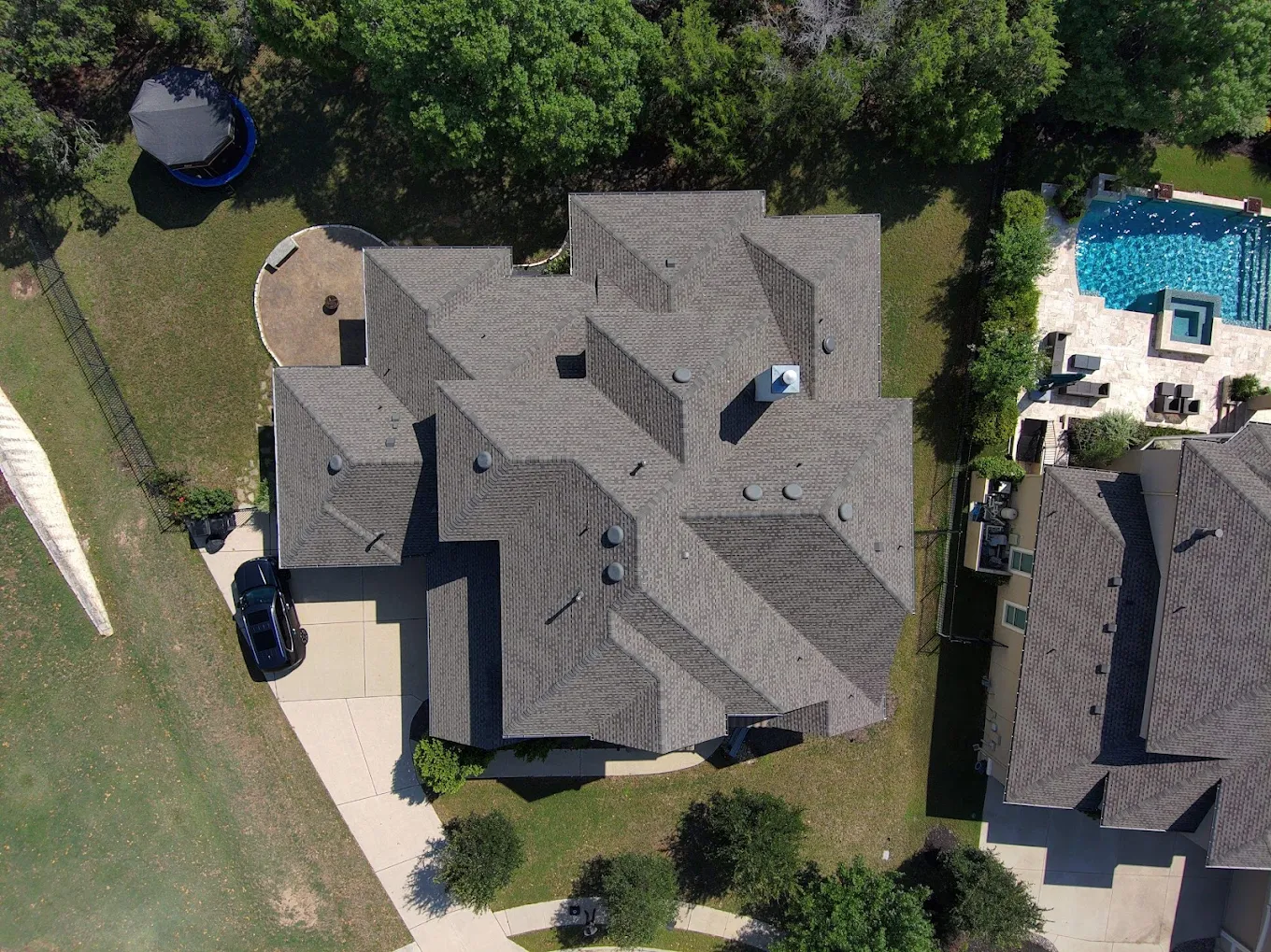
Most roofing firms rely on a person climbing a ladder to look for leaks. This method can miss tiny cracks or soft spots in the roof deck. AI Roofing uses drone tech and AI software to find what the human eye might skip. These drones take high-detail photos that show every part of your roof. The AI then looks for heat changes and patterns that point to hidden moisture.
This data-led approach removes the guesswork from roof work. You get a clear map of your roof's health. You can see what needs a fix now and what can wait. When you schedule a professional roof inspection with our team, you get facts instead of views. This clarity helps you make smart choices for your home and your budget.
In the Houston area, the humid air can speed up rot and mold growth. That is why speed is a key part of our process. You can set up a free roof inspection within 24 hours of your call. We then send a full report to you within 48 hours. This report shows photo proof of all findings. You will see clear data that helps you know the state of your roof.
Our goal is to help you stay ahead of damage. With a clear report in hand, you can fix small problems before they spread. Here is what you get with every inspection:
This early care can add years to the life of your roof. It also gives you peace of mind that your home is secure. Our work is backed by a lifetime warranty, so you can trust the results will last.
Yes. A small roof leak creates the wet space that mold needs to grow. The American Society of Civil Engineers (ASCE) states that mold can start to grow within 24 to 48 hours on damp materials. In Houston's hot and damp air, mold spreads fast and can hurt the air you breathe. It can also eat away at the wood in your attic and walls. Finding a leak early stops these health risks before they start.
Yes. Water from a roof leak can drip onto wires, light boxes, and wall plugs. This can cause a short or rust in your wires. Over time, this leads to a high risk of house fires. These problems are often hidden behind your walls or in the attic. This is why even a small leak is a big safety risk. You should always have a pro check for water near any power lines in your home.
Most home insurance plans cover sudden damage from big storms. They often do not cover damage that comes from a lack of care. If you ignore a small drip, your insurance firm may not pay for the work. This is because they see it as a failure to look after the home. Getting a pro to check your roof each year can help you prove that you took good care of your home.
Houston's hot and damp air makes roof damage happen fast. High heat and wet air lead to wood rot and mold growth much sooner than in dryer areas. A tiny leak lets in moisture that the Texas sun turns into a breeding ground for mold. Getting a roof report can find these hidden issues before they lead to big bills.
A small leak in your roof can lead to big bills, mold growth, or wood rot if you wait to fix the problem. It is best to catch these issues now while they are still simple and cheap to fix so you can save money. Our expert team will show you just what is wrong with clear photos and data so you can make a choice. You will know if your roof is safe or if it needs a quick fix to keep your home dry and secure. Taking care of your roof today means you can rest easy when the next big storm hits the Houston area. Do not wait for a small drip to turn into a big mess that costs you your peace of mind.
Ready to schedule a free AI-powered roof inspection? Call 281-841-2504 to set up your inspection and get a clear report on your roof.
Roofing Resources