Home
Home
Services
Services

Resources
Resources
Storm Restoration
Storm Restoration
Roof Systems
Roof Systems
Locations
Locations
Get clear answers on heavy wind roof insurance, including what’s covered, common exclusions, and steps to file a successful claim after storm damage.
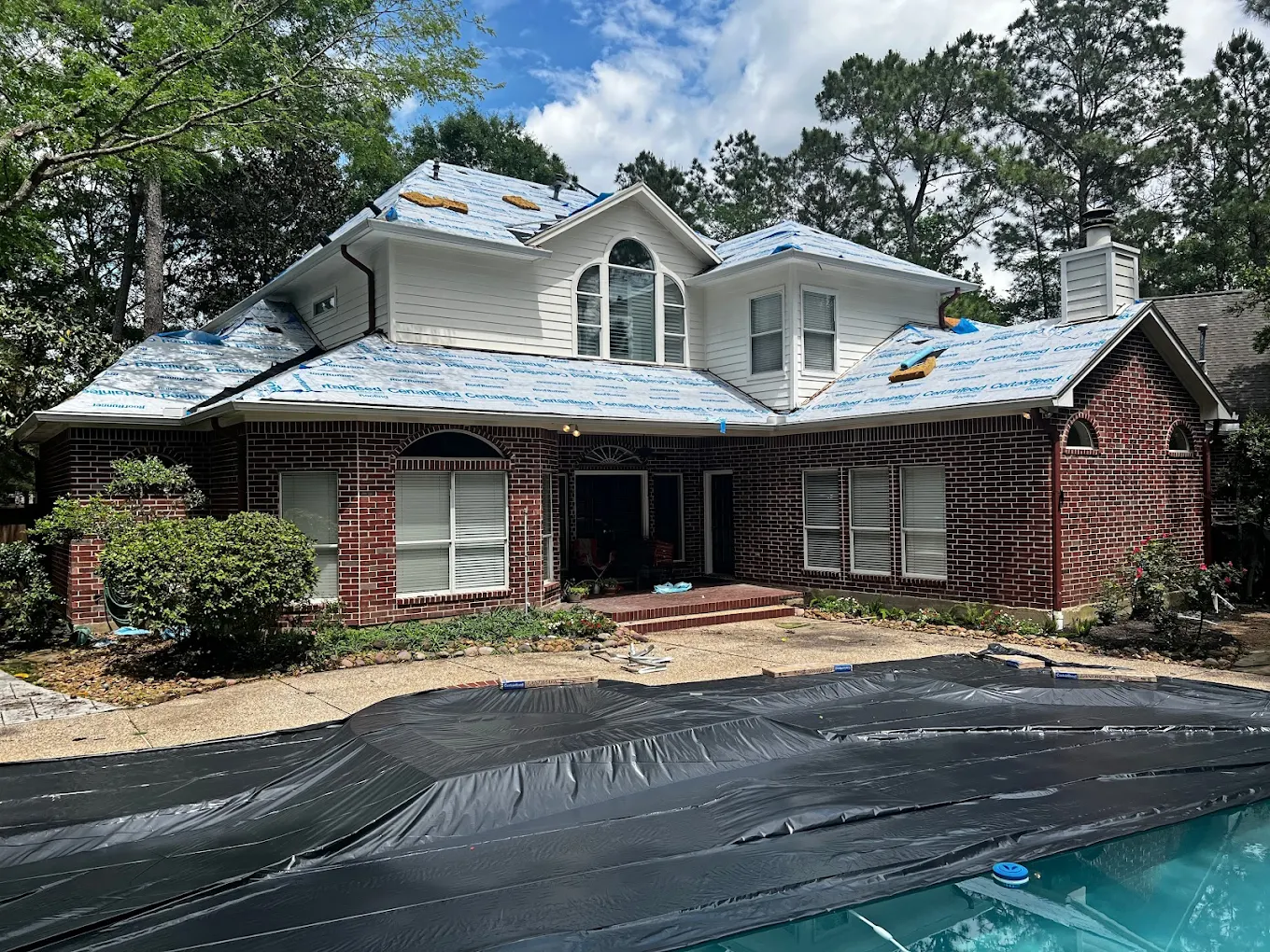
Let's be honest: filing an insurance claim is a negotiation where the other side wants to pay as little as possible. The adjuster works for the insurance company, not for you. This can leave you feeling powerless, especially when you're already stressed about a damaged home. But you have more control than you think. This guide will show you how to level the playing field. We’ll cover the common mistakes to avoid, how to document everything correctly, and how to build a solid case for your heavy wind roof insurance claim to get the full amount you’re owed.
When high winds tear through your neighborhood, the first question on your mind is often, "Is my roof covered?" For most homeowners, the answer is yes, but the details of that coverage can be complex. Standard homeowners insurance policies typically include protection against wind damage, but understanding what is covered, how payments are calculated, and what you are responsible for paying is essential to a smooth claims process.
It might surprise you to learn that wind and hail are the leading cause of home insurance claims, outpacing issues like fire or water damage. A major reason for this is that most standard homeowners insurance policies are designed to cover damage from specific, sudden events like thunderstorms, tornadoes, and hurricanes. When high winds or hail strike, the damage to your roof, siding, and windows typically falls under your policy's "dwelling coverage." This is different from damage that happens slowly over time, such as leaks from an old, worn-out roof, which insurers often classify as neglect or "wear and tear" and won't cover. Because severe weather is an unavoidable reality, especially here in the Houston area, these event-driven claims are a frequent and expected part of homeownership.
Most home insurance policies cover wind damage as a standard "covered peril." This means damage from a wide range of events, including thunderstorms, tornadoes, and hurricanes, is generally included in your base policy. If high winds lift and crease your shingles or a tornado sends a tree branch through your roof, your insurance is designed to step in. The key is that the damage must be caused by a sudden, specific event. Your policy is there to protect you from the unexpected, and powerful storms certainly fall into that category.
While the roof often takes the biggest hit, wind damage can affect your entire home. Your homeowners insurance should cover damage from covered perils like strong winds, hail, fire, or falling objects. This means if a windstorm tears siding from your house, breaks a window, or causes a tree to fall on your garage, those repairs should also be covered under the same claim. It’s important to inspect your entire property after a storm, not just the roof, to ensure you document all related damage for your insurer.
When high winds compromise your roof, the problem rarely stays on the outside. Water can quickly find its way in, putting your furniture, electronics, and other personal items at risk. The good news is that your homeowners insurance policy typically extends coverage to your personal belongings when they're damaged as a direct result of a covered event like a windstorm. To make sure you get what you're owed, it’s critical to document everything. Take clear photos of all damaged items before you move or discard them. If you have receipts, bank statements, or even photos of the items from before the storm, gather them to help establish their value. This evidence is crucial for building a comprehensive claim that covers every aspect of your loss.
Windstorms don't discriminate, and often the damage extends beyond your home's main structure. Your fence might be flattened, or a shed could lose its roof. This is where your policy's other structures coverage comes into play. This part of your insurance is designed to protect detached structures like garages, sheds, and fences. It's important to know that this coverage usually has a separate limit, often calculated as a percentage of your home's total insured value. Also, be aware that for items like fences, insurers may only pay the actual cash value—meaning they account for depreciation—rather than the full replacement cost. Reviewing your policy's declaration page will help you understand exactly what to expect.
This is where insurance can get tricky. Most policies have a two-part payment system for roof replacements. Initially, your insurer will pay the "Actual Cash Value" (ACV) of your damaged roof. Think of ACV as the used value; it’s the replacement cost minus depreciation for the roof's age and wear. After you complete the repairs and provide receipts, the insurance company pays the remaining amount, called depreciation. This ensures you use the funds for the actual repair, but it means your first check won't cover the full cost of a new roof.
When your insurance claim is approved, don’t be surprised if the first check doesn’t cover the full cost of a new roof. Most insurers use a two-payment system. The initial payment is for the Actual Cash Value (ACV) of your roof, which is the replacement cost minus depreciation for its age and condition. This is a standard practice in home insurance policies and represents the roof's value right before the storm. This ACV check is just the first step, and it’s meant to get the repair process started, not to cover the entire bill.
The second payment is the recoverable depreciation, which is the amount the insurer held back. To get this money, you must complete the repairs and submit the final, paid invoice from your contractor to the insurance company. This proves the work was done and the funds were used correctly. This is where having a professional partner makes a huge difference. At AI Roofing, we provide the clear, data-driven documentation needed to make this final step seamless. Understanding the process and the details of what your policy covers helps you manage your budget and ensures you receive the full settlement you’re owed.
For homeowners in Houston, it's critical to understand your wind deductible. Unlike a standard flat-dollar deductible, a wind or hurricane deductible is usually a percentage of your home's total insured value, often between 1% and 5%. For example, a 2% deductible on a home insured for $400,000 is $8,000, not a percentage of the repair cost. This can be a significant out-of-pocket expense, so it's vital to review your policy and know exactly what your financial responsibility will be before you need to file a claim.
Knowing what your policy doesn’t cover is just as important as knowing what it does. Insurance is designed to protect you from sudden and accidental events, not to pay for routine upkeep or fix problems that existed before a storm. Before you pick up the phone to file a claim, understanding these common exclusions can save you time, prevent a potential denial, and help you set realistic expectations. An insurer will look for any reason to deny or underpay a claim, and pre-existing issues are the most common justification. Getting ahead of this with a clear, independent assessment of your roof's condition is the smartest way to prepare.
Homeowners insurance is not a maintenance plan. If your roof was already in poor shape before the windstorm, your insurer will likely deny your claim. Policies specifically exclude damage that results from old age, neglect, or gradual deterioration. As insurance provider Progressive notes, home insurance generally does not cover roof damage from normal wear and tear or a failure to maintain the roof. This is why documenting your roof's condition before a storm is so valuable. An insurer might argue that loose shingles were a pre-existing issue, but a recent inspection report proving otherwise gives you powerful evidence to support your claim for wind damage.
This is the most important distinction in any roof insurance claim. Insurance policies are written to cover "sudden and accidental" damage—think shingles torn off during a specific thunderstorm. They are not designed to pay for problems that develop over time, like shingles becoming brittle with age or seals failing due to years of sun exposure. An adjuster will look for signs of this gradual deterioration to argue that the wind didn't cause the damage, but simply exposed a problem that was already there. This is why having a baseline report of your roof's condition is so powerful. A detailed, data-driven inspection can document that your roof was in solid shape before the storm, making it much harder for an insurer to blame the damage on pre-existing wear and tear.
This is a critical distinction, especially in a place like Houston. If high winds tear a hole in your roof and rain gets in, the resulting interior water damage is typically covered under your standard homeowners policy. However, if water enters your home from the ground up, that is considered a flood. Flood damage is almost always excluded from homeowners insurance and requires a separate policy from the National Flood Insurance Program (NFIP). Similarly, if your roof leaks simply because it's old and wasn't maintained, your policy likely won't cover the repairs. The water damage must be a direct result of a covered event, like wind.
You might think a small area of damage only requires a simple patch, but local building codes could say otherwise. In many areas, a rule known as the "25% rule" is enforced. This guideline states that if more than 25% of your roof system is damaged, the entire roof must be brought up to the current building code, which often means a full replacement. An insurer’s adjuster may calculate the damage at 24% to avoid paying for a replacement, while a thorough inspection might find it’s closer to 30%. This is where an accurate, data-driven assessment becomes your most important tool for ensuring you get the full coverage you are entitled to.
What happens when a storm damages only one slope of your roof, but the shingles are ten years old and no longer manufactured? This is where the "matching clause" in your policy becomes critical. This provision is designed to protect your home's value by ensuring repairs don't leave you with a mismatched, patchy roof. If replacement shingles don't match the existing, undamaged ones, this clause may require your insurer to pay for the replacement of the entire slope—or even the whole roof—to restore a consistent look. Insurers may argue that a close-enough color is sufficient, but you have the right to a roof that doesn't look like a quilt. According to the Texas Department of Insurance, if a repair fails to maintain a reasonably uniform appearance, the policy may cover a full replacement. Documenting the unavailability of matching materials is key to successfully invoking this part of your policy.
Filing a wind damage claim can feel like a necessary step after a major storm, but it’s important to understand how it can influence your insurance premiums down the road. When you file a claim, your insurer may see your property as a higher risk, which can lead to an increase in your rates at renewal time. This isn't a punishment; it's a recalculation of risk based on your home's claims history.
Several key factors determine how a wind damage claim will impact your policy and what you pay. Your home’s location, the age and material of your roof, and the specific deductibles written into your policy all play a significant role. Understanding these elements before you file helps you make a more informed financial decision and sets realistic expectations for the outcome. It’s about weighing the immediate need for repairs against the potential long-term costs.
Living in a place like Houston means you’re in a region prone to hurricanes and severe wind events. Insurers assess the risk associated with your location when setting your premiums, and coastal areas are automatically considered high-risk. Because of this, your homeowners policy likely contains specific language, rules, or higher deductibles for wind and hail damage. It’s not personal; it’s a business decision based on decades of weather data. This geographic risk factor is one of the primary reasons why windstorm coverage can be so complex and costly in our area.
The age and condition of your roof are critical when an insurer evaluates a wind damage claim. As one provider notes, if your roof was old or had existing problems before a storm, your insurance payout for repairs might be reduced. An aging roof is seen as more vulnerable, and insurers may argue that the wind damage was worsened by pre-existing wear and tear. This is why they often pay out the Actual Cash Value (depreciated value) for older roofs instead of the full Replacement Cost. Having a clear, documented record of your roof's condition before a storm can be your strongest tool in these discussions.
The material on your roof—whether it's asphalt shingles, metal panels, or clay tiles—plays a big role in how an insurer assesses your claim. Different roof types react differently to damage, which can change how much your insurance company is willing to pay. For instance, it can be difficult to find matching asphalt shingles for a partial repair on an older roof, which can strengthen the case for a full replacement. On the other hand, a metal roof might resist wind uplift but suffer cosmetic hail damage in the same storm, leading to debates over what constitutes functional damage. Knowing the specific vulnerabilities of your roof's material helps you prepare for the adjuster's evaluation and build a stronger, more informed claim from the start.
Many Houston homeowners are surprised to learn their wind damage deductible isn't a flat dollar amount. Instead, policies often include a percentage-based deductible, typically ranging from 1% to 5% of your home's total insured value. For example, if your home is insured for $500,000 and you have a 2% wind deductible, you are responsible for the first $10,000 of the repair costs. This out-of-pocket expense can be much higher than the standard deductible for other perils like fire or theft. It's essential to understand your wind deductible before you decide to file a claim.
Filing an insurance claim can feel complicated, but breaking it down into manageable steps makes the process much clearer. Following a structured approach helps ensure you provide the right information, document everything correctly, and position yourself for a fair settlement. This guide walks you through the essential actions to take after a storm damages your roof, from the initial assessment to reviewing your insurer's offer. By staying organized and informed, you can handle the claims process with confidence.
After a storm, you want repairs to happen quickly, but the insurance claims process operates on its own schedule. Understanding the key deadlines from the start helps you manage expectations and hold your insurer accountable. The clock starts ticking the moment you file, and knowing the timeline for each stage gives you a clear roadmap for what to expect and when to follow up. This isn't just about being patient; it's about being prepared and proactive.
Once you notify your insurance company of the damage, they have their own set of deadlines to meet. According to Texas law, your insurer has 15 business days just to acknowledge they’ve received your claim and start their investigation. They may also ask for more information from you during this time. After they receive all the necessary documentation, they have another 15 business days to approve or deny your claim. If they need more time, they must notify you and explain why. These timelines are important because they set the pace for the entire process, and knowing them helps you keep things moving forward.
While insurers have deadlines for responding, the total time it takes to settle a claim can vary widely, from a few weeks to several months. A straightforward claim with clear damage and complete documentation might be resolved in 30 to 60 days. However, delays often happen when there are disagreements about the scope of the damage or the cost of repairs. This is where having a detailed, independent inspection report before you even file can make a huge difference. It provides clear, factual evidence of the damage, which can help prevent disputes and shorten the negotiation process, getting you closer to a fair settlement faster.
Before you do anything else, document the damage as soon as it is safe to go outside. Use your phone to take extensive photos and videos of your roof and property. Capture wide shots to show the overall impact and close-ups of specific issues like missing or lifted shingles, dents from debris, and granules that have collected in your gutters or on the ground. This visual evidence creates a crucial record of your roof's condition immediately after the storm. This documentation will be your most important asset when you open your claim and speak with the adjuster.
With your initial documentation in hand, contact your insurance agent or the company's claims department to officially open a claim. When you call, be prepared to provide your policy number and the date the wind damage occurred. State the facts clearly and concisely: a storm with high winds caused damage to your roof. Avoid speculating on the extent of the damage or offering opinions on what repairs might cost. Your only goal at this stage is to report the event and get a claim number. The detailed assessment will come later.
From your very first call, keep a detailed log of every interaction with your insurance company. In a notebook or a digital file, write down the date and time of each call, the name of the person you spoke with, and a summary of what was discussed. Save all emails and correspondence related to your claim. If you make any temporary repairs to prevent further water intrusion, such as placing a tarp over a hole, keep the receipts for materials. This paper trail is essential for holding your insurer accountable and ensuring nothing gets lost in translation.
Your insurance company will send its own adjuster, but their goal is to limit the insurer's liability. To protect your interests, you should get an independent roof assessment from a trusted, technology-forward roofing contractor. A professional roofer can use tools like drones and thermal imaging to identify damage that an adjuster might overlook. Having a detailed, data-driven report from an expert gives you a powerful tool for negotiations. You can even schedule your contractor to be present during the adjuster's inspection to point out key findings and ensure a thorough evaluation.
The insurance adjuster's job is to evaluate the damage, but they work for the insurance company, not for you. Their goal is to close the claim while minimizing the payout. An independent assessment from a trusted roofer levels the playing field by providing a detailed, third-party analysis of the damage. This professional report, backed by photos and data, serves as the factual evidence needed to support your claim. It documents the full scope of necessary repairs, making it much harder for an insurer to overlook issues or justify a low settlement offer. Think of it as your expert witness statement, giving you the confidence and documentation to negotiate for the full amount you are owed.
An insurance adjuster will schedule a visit to inspect your roof in person. They will evaluate several factors, including the roof's age, its overall condition, the number of shingle layers, and whether there are signs of pre-existing issues or neglect. They will also measure the roof to calculate the scope of the damage. Have all your documentation ready for their visit, including your photos, videos, and the estimate from your independent contractor. Being prepared shows you are serious and organized, setting a professional tone for the interaction.
Insurance adjusters use specialized software to create a detailed estimate for your roof repairs. This program calculates costs based on standard pricing for materials and labor in your area. However, the software is only as accurate as the information the adjuster puts into it. If the adjuster overlooks damaged shingles, miscalculates the roof's square footage, or fails to account for local code requirements, the final estimate will be too low. This is why your insurer's first offer is just a starting point for negotiation. An independent report from a trusted roofer provides the detailed, factual data you need to contest an insufficient settlement and ensure the adjuster’s estimate reflects the true scope of the damage.
After the inspection, the insurance company will send you a settlement offer. It is critical to remember that the first offer is rarely the final one. Carefully review the adjuster's report and compare it to the estimate provided by your own roofing contractor. If there are discrepancies or the offer seems too low to cover the necessary repairs with quality materials, don't be afraid to negotiate effectively. Present your contractor's report and any other evidence to support your case for a higher settlement amount.
Once your insurance company provides its initial assessment, it's time for you to take control of the narrative. The adjuster's estimate is a starting point, not the final word. To effectively negotiate and ensure you receive a settlement that covers a high-quality repair, you need your own evidence. This comes from getting detailed, accurate estimates from reputable roofing contractors. Think of this step as building your case. A vague, one-line quote won't help you, but a comprehensive, line-item estimate is a powerful negotiation tool that demonstrates the true cost of restoring your home properly.
This is where you shift from being a passive recipient of information to an active manager of your home's restoration. Instead of relying on the insurer's numbers, you'll be gathering your own data. A modern, professional contractor can be your greatest ally here. At AI Roofing, we use a data-driven approach to create our estimates, relying on detailed inspections to document every point of damage. This replaces assumptions with facts, giving you a clear, objective report to present to your insurer. This level of detail ensures that the conversation is about the actual work required, not just a number on a page.
To understand the true market cost for your roof repair or replacement, you need to gather several quotes. Aim to get estimates from at least three to five different local roofing companies. This process gives you a clear picture of the fair price for the work and protects you from outliers—both the suspiciously cheap quotes and the unreasonably expensive ones. One effective strategy is to initially ask for a "cash price" without mentioning your insurance claim. This can help you get a more straightforward, unbiased estimate that isn't inflated to meet a perceived insurance budget. This baseline price becomes a powerful piece of evidence when comparing against your insurer's settlement offer.
A legitimate roofing estimate is more than just a final price; it's a complete project plan. It should be detailed enough that you can see exactly what you are paying for, leaving no room for surprise costs or disputes later. A thorough estimate breaks down every component of the job, from the specific materials being used to the costs for labor and cleanup. This transparency is the hallmark of a professional contractor and is essential for comparing different quotes accurately. It also serves as the foundation for your supplement request if the insurer's initial offer falls short of covering all necessary work and materials.
Your estimate should list every single material required for a full and proper roof replacement. A detailed quote will specify the brand and type of shingles, but it doesn't stop there. Look for line items covering all the essential components of a complete roofing system. This includes drip edge, ice and water shield (especially in valleys and around penetrations), synthetic underlayment, starter shingles for the eaves, ridge cap shingles for the peaks, and proper flashing for your chimney, walls, and skylights. It should also list smaller but critical items like pipe boots, nails, and seam tape, ensuring nothing is overlooked.
Materials are just one part of the equation. A comprehensive estimate must also clearly outline all associated service costs. This includes the cost of labor for tearing off the old roof and installing the new one. It should also specify the fees for obtaining the necessary building permits from your local municipality. Finally, look for a line item covering project cleanup and disposal, which includes the cost of a dumpster for the old roofing materials and the fees for hauling it away. These costs are a standard part of any roof replacement and must be included in your insurance claim.
Some contractors may offer a "layover" or "re-roof" as a cheaper alternative, which involves installing a new layer of shingles directly over the old one. You should almost always insist on a full roof replacement, which involves tearing off all old materials down to the roof deck. A complete tear-off is the only way to properly inspect the wooden deck underneath for rot or damage, which is especially important after a wind event. It also ensures the new shingles can be properly fastened and sealed, which is critical for wind resistance and for your manufacturer's warranty to be valid. A layover adds excess weight and can hide serious problems.
If your home has older 3-tab shingles, a full replacement is an excellent opportunity to upgrade to architectural shingles. While 3-tab shingles are a single, flat layer, architectural shingles (also called dimensional shingles) are thicker, heavier, and made of multiple laminated layers. This construction gives them a more textured, high-end appearance that can improve your home's curb appeal. More importantly, their weight and design provide significantly better durability and higher wind resistance—a crucial feature for homes in Houston. Most insurance policies will cover the cost to replace with a "like kind and quality" material, but you can often pay the small difference to upgrade.
When selecting a roofer, look for one who is certified by the shingle manufacturer whose products they are installing. This certification isn't just a marketing gimmick; it means the contractor has been specifically trained to install that manufacturer's roofing system according to their strict standards. The primary benefit to you is access to superior warranties. A manufacturer-certified contractor can often offer an enhanced warranty, sometimes extending coverage up to 50 years, that covers not just the materials but also the workmanship. These robust warranties are often transferable to a new owner, adding significant value if you decide to sell your home.
Navigating the financial and administrative side of a roof replacement is a critical part of the process. A professional contractor will be transparent about all costs and will handle the permitting process on your behalf. Understanding the basics of how roofing projects are priced and why permits are necessary will empower you to review estimates with confidence and ensure your project is completed correctly and legally. This knowledge helps you spot red flags and ensures that every necessary cost is accounted for in your insurance claim, leaving you with no unexpected out-of-pocket expenses.
In the roofing industry, costs are often discussed in terms of a "square," which is a 10-by-10-foot area, or 100 square feet. While prices vary widely based on your location, the materials you choose, and the complexity of your roof, a general price for architectural shingle installation is often in the range of $300 to $350 per square. This figure typically includes both materials and labor. Knowing this industry benchmark can be a helpful tool for a quick reality check when you review your estimates, allowing you to see if a contractor's pricing is within a reasonable range for the work being proposed.
A full roof replacement almost always requires a building permit from your city or county. This is not an optional step or a corner you should ever cut. The permitting process ensures that the work is done in compliance with local building codes, which are in place to guarantee your safety. A reputable contractor will insist on pulling a permit and will include the fee in their estimate. If a contractor suggests skipping the permit to save money, consider it a major red flag. Working without a permit can lead to fines and may force you to tear the work out, putting all the financial risk and liability directly on you, the homeowner.
The insurance claims process can feel overwhelming, especially when you're already stressed about a damaged roof. While your policy is there to protect you, a few missteps can lead to a denied claim, a low settlement, or higher premiums down the road. The key is to approach the process with the same care you'd use for any major financial decision. By understanding the common pitfalls, you can protect your interests and ensure you receive the fair coverage you're entitled to. It’s not about being adversarial; it’s about being informed and prepared. Knowing what to do is just as important as knowing what not to do.
When the insurance adjuster visits, it’s important to be careful with your words. Remember, their job is to protect the insurance company’s financial interests. Casual remarks can be misinterpreted and used to reduce your settlement. For example, saying something like, "My roof was getting old anyway," could lead the adjuster to attribute the damage to age and wear rather than the storm. Stick to the facts you know and have documented. Avoid guessing about the extent of the damage or the roof's prior condition. Let your professional roof inspection report do the talking for you.
Your most effective strategy is to be a calm, credible source of information. When you communicate with your adjuster, stick to the objective facts you have documented. Your role is not to diagnose the problem or estimate the cost—that’s what your professional inspection report is for. By presenting clear, factual statements, you establish yourself as organized and serious. This approach shifts the conversation away from opinions and focuses it on evidence. When you have a data-driven analysis of the damage, you don’t need to argue; you can simply present the facts and let them speak for themselves. This removes the pressure from you and places the focus squarely on the documented condition of your roof.
When you make the first call to your insurer, keep your statement short and to the point. Your only goal is to report the event and get a claim number. Avoid offering any extra details or opinions. A simple, factual script works best: "Hello, I'm calling to report damage to my property at [Your Address]. A severe windstorm passed through on [Date], and it appears to have damaged my roof." That's it. You have successfully started the claim without speculating on the severity or cost of repairs. Let the insurer know you are in the process of having the damage professionally assessed to determine the full scope of what is needed for a proper repair.
When the adjuster asks what damage you’ve seen, refer to your photos and describe only what you can observe. Instead of saying, "The roof is totally ruined," provide specific, factual details. For example, you can say, "I found more than a dozen shingles in my front yard after the storm," or "I can see several shingles that are lifted and creased from the ground." If you have interior damage, describe it factually: "There is a water stain on the ceiling in the upstairs bedroom." This method of documenting your claim with observable facts, supported by your photos and videos, creates a clear and undeniable record of the storm's impact.
It can be tempting to accept the first offer from your insurer just to get the process over with, but this is often a mistake. The initial settlement is frequently a starting point for negotiations, not the final amount. Before you agree to anything, ask for a detailed, line-by-line breakdown of the estimate to understand how they arrived at that figure. If the offer seems low, you have the right to negotiate for a fair settlement. Providing your own independent inspection report and estimate from a trusted roofer gives you powerful leverage to justify a higher amount.
Before you even contact your insurance company, it’s wise to get a clear idea of the repair costs. If the damage is minor and the cost to fix it is less than your policy's deductible, filing a claim doesn't make financial sense. You'll pay for the entire repair out of pocket anyway, and you’ll also have a claim on your record, which can lead to higher premiums in the future. Always get a professional assessment first. This data-driven step helps you weigh the costs against the benefits and make a smart financial decision instead of an emotional one.
Your insurance policy is a contract that outlines exactly what is and isn't covered. Not understanding your home insurance policy before you file a claim can lead to major surprises. Take the time to review your declarations page, which summarizes your coverage limits, exclusions, and deductibles. Pay special attention to whether you have an Actual Cash Value (ACV) or Replacement Cost Value (RCV) policy, as this dramatically affects your payout. Also, check for a separate, higher deductible for wind or hurricane damage, which is common in areas like Houston.
Receiving a denial or a low settlement offer from your insurance company can feel like a final verdict, but it’s often just the start of a conversation. An initial offer is a starting point for negotiation, not the end of the road. If you believe your claim has been unfairly denied or the proposed payout won’t cover the cost of repairs, you have the right to challenge the decision. The key is to approach the situation with a clear, organized strategy, treating it as a business discussion rather than a personal conflict.
Don’t let frustration take over. Instead, shift your focus to building a strong case for your appeal. This process involves formally questioning the insurer’s decision, gathering your own evidence to counter their assessment, and understanding when it might be time to bring in outside help. Remember, the insurance company's initial assessment is based on their adjuster's findings, which may not capture the full scope of the damage. By taking these deliberate steps, you can methodically address the insurer’s position and work toward a fair resolution. The following sections outline the exact actions you can take to contest an unsatisfactory outcome and ensure you receive the coverage you are entitled to.
In Texas, insurers frequently deny claims by attributing damage to pre-existing conditions rather than a specific storm. Your policy is designed to cover sudden, accidental events, not to pay for routine upkeep or fix problems that existed before the wind blew. An adjuster might argue that lifted shingles or granule loss are just signs of an old roof, a classic case of "wear and tear" that your policy explicitly excludes. This is the most common reason claims are denied, leaving you to cover the costs. Without clear, objective proof of your roof's condition before the storm, it's difficult to dispute their assessment and prove the damage is new.
Your first step is to move the conversation from the phone to paper. If your claim is denied or underpaid, immediately ask the insurance company for a detailed written explanation. This document should cite the specific policy language they are using to justify their decision and provide a clear breakdown of how they figured out their offer. A verbal denial is not enough; you need an official record to build your appeal.
This letter is a critical piece of evidence. It forces the adjuster to put their reasoning in writing, which you can then compare against your policy and the evidence you’ve collected. It also serves as the foundation for your response, allowing you to address their points one by one.
If the insurer’s assessment doesn’t match the reality of your roof’s condition, it’s time to present your own evidence. Your goal is to prove the extent of the wind damage and the true cost of repairs. Start by compiling all the photos and videos you took immediately after the storm. This initial documentation of the damage is your baseline.
Next, get an independent roof assessment from a trusted, local roofing professional. A thorough inspection can uncover damage the adjuster may have missed and provide the data-driven proof needed to justify a full repair or replacement. Follow this up by getting at least three detailed estimates from reputable roofing companies. These quotes demonstrate the real-world market cost for the work, strengthening your position that the insurer’s offer is insufficient.
If your attempts to negotiate are hitting a wall or your claim is particularly large and complex, you might consider hiring a public adjuster. Unlike the insurance company’s adjuster, a public adjuster works directly for you to manage the claim and negotiate a settlement. They have deep expertise in policy language and claims processing, which can be a significant advantage.
However, this service comes at a cost. Public adjusters typically charge a percentage of your final settlement, often between 10% and 20%. Before you hire one, carefully weigh the potential increase in your payout against their fee. For smaller, straightforward claims, the cost may not be justified. But for major disputes where the stakes are high, a public insurance adjuster can be a valuable ally in securing a fair outcome.
Before you decide to hire help or formally appeal a decision, it's important to weigh the financial risks. A public adjuster's fee can take a significant portion of your final settlement, and you'll still be responsible for your wind deductible, which is often a high percentage of your home's insured value. The biggest risk is investing time and money into an appeal only to have the insurer stand firm. This is why your initial preparation is so critical. Having a data-driven roof assessment from the very beginning provides the objective evidence needed to build a strong case, reducing the chances of a denial and giving you a solid foundation for any negotiation.
Waiting until a storm is on the horizon is too late to prepare. Taking a few proactive steps now can save you significant money and stress when severe weather hits. By understanding your insurance policy and the condition of your roof, you can make informed decisions without the pressure of an emergency. This preparation ensures you are in the best possible position to protect your home and navigate the claims process smoothly if damage occurs.
Your homeowners insurance policy is a contract, and its terms can change at renewal. Set aside time once a year to read through it carefully. Your policy document details exactly what is covered, the coverage limits for different types of damage, and your out-of-pocket costs, known as deductibles. Pay close attention to any specific language about wind, hail, or named storms, as these sections often contain critical limitations. Knowing these details beforehand prevents surprises and helps you understand what to expect if you ever need to file a claim.
In coastal areas like Houston, many insurance policies include a separate, higher deductible for wind or hurricane damage. It is critical to understand how wind deductibles work because they are often calculated as a percentage (usually 1% to 5%) of your home's total insured value, not the cost of the repair. For example, a 2% wind deductible on a home insured for $500,000 is $10,000. This is the amount you must pay out of pocket before your insurance coverage begins. Knowing this figure helps you budget for potential repairs and decide if filing a smaller claim is financially worthwhile.
The best way to prevent major storm damage is to ensure your roof is in excellent condition beforehand. You can perform a basic visual check from the ground with binoculars, looking for obvious issues like loose, curled, or missing shingles. However, a professional inspection provides a much more thorough assessment. An expert can identify subtle weaknesses, check flashing around chimneys and vents, and document your roof's pre-storm condition. Addressing minor repairs promptly is far less expensive than dealing with a major failure during a hurricane. This documentation also serves as a valuable baseline if you need to prove new damage later.
The best way to prevent major storm damage is to keep your roof in top shape year-round. While you can perform a basic visual check from the ground with binoculars to spot obvious issues like loose or missing shingles, this only shows part of the picture. A professional inspection provides a far more detailed assessment. An expert can identify subtle weaknesses, check the integrity of flashing around chimneys and vents, and create a clear, documented record of your roof's pre-storm condition. Addressing these small issues promptly is always less expensive than dealing with a catastrophic failure during a hurricane, and it provides crucial evidence if you need to file a claim later.
Your insurance policy is designed to cover sudden events, not problems that develop over time. Recognizing the signs of an aging roof helps you understand what is likely considered gradual deterioration, which is almost always excluded from coverage. Keep an eye out for shingle granules—the small, sand-like particles—collecting in your gutters; this is a classic sign that your shingles are wearing out. Other red flags include recurring leaks, widespread cracking or curling shingles, and simply the age of the roof itself. If your roof is over 20 years old, it’s likely nearing the end of its intended lifespan. Knowing these signs helps you distinguish between new storm damage and pre-existing issues, so you can avoid filing a claim that is likely to be denied.
Given that Houston is prone to hurricanes and severe thunderstorms, your standard policy might not provide the level of protection you need. Insurers often apply special rules or higher deductibles for wind and hail damage in high-risk regions. If your policy has a high percentage-based deductible or significant exclusions, it may be wise to explore supplemental windstorm coverage. This separate policy can help cover the gap left by your primary insurance, reducing your financial risk. Talk to your insurance agent to see what options are available to you.
What's the real difference between "Actual Cash Value" and "Replacement Cost"? Think of Actual Cash Value (ACV) as the "garage sale" price of your roof; it's what your roof is worth today, considering its age and general wear. Your insurer's first check will typically be for this amount. Replacement Cost Value (RCV) is the full price to install a brand new roof using similar materials. You usually receive the second part of the payment, called depreciation, only after you've completed the repairs and sent the final invoice to your insurer.
My policy has a 2% wind deductible. What does that actually mean? This is a critical detail to understand. A percentage-based deductible is calculated from your home's total insured value, not the cost of the roof repair. For example, if your home is insured for $400,000, a 2% deductible means you are responsible for the first $8,000 of the repair costs. Your insurance coverage only kicks in after you have paid that amount out of pocket.
If wind damages my roof and rain gets in, is that considered flood damage? No, that situation is typically covered as water damage because it was a direct result of a covered event (the windstorm). Flood damage, which is excluded from standard homeowners policies, refers specifically to damage from water that enters your home from the ground up, like from rising rivers or storm surges. For that, you would need a separate flood insurance policy.
The storm only damaged a few shingles. Should I file a claim right away? It's best to pause and get a professional assessment first. If the repair cost is less than your wind deductible, filing a claim doesn't make financial sense. You would pay for the repairs yourself anyway, but you would also have a claim on your record that could increase your insurance rates later. An inspection gives you the facts you need to make a smart financial decision.
Why should I get my own roof inspection if my insurer is sending their own adjuster? The insurance adjuster's job is to represent the insurance company's interests, which often involves minimizing the payout. An independent inspection from a professional roofer is done for your benefit. A roofer can use technology to find damage an adjuster might overlook and create a detailed report that serves as powerful evidence. This gives you a strong starting point for negotiating a fair settlement with an expert on your side.
Roofing Resources