Home
Home
Services
Services

Resources
Resources
Storm Restoration
Storm Restoration
Roof Systems
Roof Systems
Locations
Locations
Schedule your free AI-powered roof inspection. Find out if your roof is ready for solar panel roof installation Houston. Learn about roof types, age...
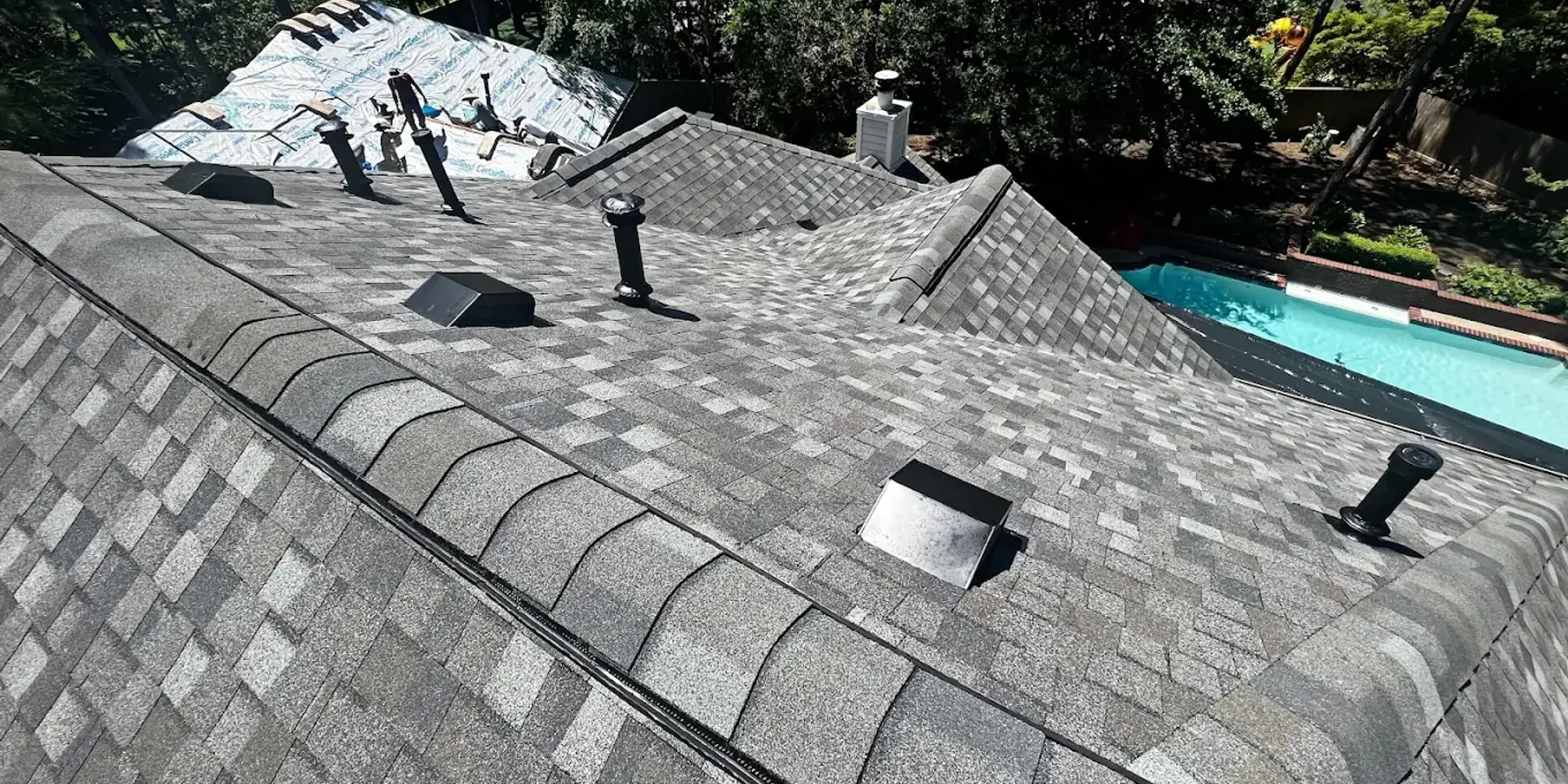
Solar panels can work on more Houston homes than many homeowners expect, but the roof itself is only the starting point. Age, condition, material, available roof space, shade, orientation, pitch, and structural integrity all affect whether an installation is practical and durable. Houston's mix of asphalt shingles, standing-seam metal, tile, and low-slope roofing makes a site-specific review more useful than a general yes-or-no answer.
Solar panel roof installation Houston is generally feasible when the roof has adequate remaining life, can support the system. And offers suitable sun exposure, but a qualified professional should assess the roof and site before installation.
The U.S. Department of Energy identifies roof age, orientation, shading, and structural integrity as important parts of solar planning. A documented inspection can clarify what is working, what needs attention, and whether repairs or replacement should come before panels.
Schedule your free AI-powered roof inspection today at 281-841-2504.
The next step is comparing how each common Houston roof type handles those requirements.
Most Houston roofs can support solar panels when the roof is in good condition, has compatible materials, and passes a site-specific structural and installation review. The U.S. Department of Energy notes that roof age, orientation, shading, and structural integrity all affect solar feasibility. A professional assessment should confirm the roof can support the system before panels are installed.
| Roof type | Solar compatibility | What to evaluate |
|---|---|---|
| Asphalt shingles | Usually compatible | Shingles should be in good condition, with roughly 10 to 15 years of useful life remaining. |
| Standing-seam metal | Highly compatible | Solar clamps can attach to the seams without drilling through the panels, which can help preserve the roof system and its warranty. |
| Concrete tile | Compatible with extra review | The installer must account for tile fragility, attachment methods, roof condition, and structural details. |
| Flat or low-slope TPO and modified bitumen | Often compatible | The system may require ballasted or rack-mounted equipment, along with additional review of drainage, penetrations, wind uplift, and membrane condition. |
| Wood shake | Possible, but case-specific | Material condition, fire considerations, attachment methods, and local installation requirements require extra evaluation. |
Asphalt shingles are one of the most common roofing materials for residential solar projects. However, installing panels on a roof nearing the end of its service life can create a poor long-term match. Solar arrays commonly remain in service for decades, so the roof should be evaluated before the solar project is approved. If repairs or roof replacement in Houston are likely soon, coordinating that work first may avoid future panel removal and reinstallation.
Standing-seam metal is often the simplest roof type for solar attachment because clamps can connect to the seams without drilling through the roofing surface. Tile, TPO, and modified bitumen systems can also work, but the mounting approach must fit the roof design. Flat and low-slope roofs may use ballasted or rack-mounted systems rather than the same attachment method used on sloped shingles.
Because no two Houston roofs have identical exposure, condition, or construction, an objective professional roof inspection can document what is working, what needs attention, and whether the roof is ready for solar planning. The Department of Energy likewise recommends an installer site assessment to determine whether a specific roof is suitable for solar panels: energy.gov's solar consumer guide.
A roof should generally have at least 10 to 15 years of reliable service remaining before solar panels are installed. Solar panels commonly remain in service for 25 to 30 years, so placing them on a roof nearing replacement can create an avoidable maintenance problem. The U.S. Department of Energy recommends considering the age and condition of the roof when evaluating a solar project (energy.gov guidance on going solar).
Houston conditions make this evaluation especially important. Strong sun, humidity, heavy rain, and heat cycling can shorten the practical life of roofing materials. Asphalt shingle roofs in the Houston area often last about 15 to 25 years, depending on ventilation, installation quality, storm exposure, and maintenance. A roof that is 12 years old is not automatically unsuitable, but it is a borderline candidate that deserves evidence-based evaluation before you commit to an array.
Age is only one part of solar feasibility, but it is one of the most expensive to overlook. A documented assessment lets you compare the timing of both projects without pressure or guesswork.
In Houston, a south-facing roof plane with a 15- to 40-degree slope is generally the strongest starting point for solar. But orientation alone does not determine whether installation is appropriate. Shading, roof condition, structural capacity, wind exposure, and electrical service all need to be evaluated together.
South-facing planes typically receive the most favorable sun exposure throughout the day. East- and west-facing planes can also support a productive system, although energy output may be somewhat lower depending on shading and the home's electricity goals. North-facing planes rarely make practical sense for a standard residential array because they usually receive less direct sunlight.
The roof's pitch matters as well. A slope between 15 and 40 degrees is often well suited to solar panel placement in Houston. Nearby trees, chimneys, dormers, and taller structures can reduce production even when the roof faces the right direction. The U.S. Department of Energy identifies orientation, shading, and roof integrity as important parts of determining solar feasibility. Its consumer solar guide recommends a site-specific assessment rather than relying on a general rule.
Solar panels and their mounting equipment add approximately 2 to 4 pounds per square foot to the roof. That load is modest for many sound structures, but it still needs to be reviewed alongside the roof framing, existing materials, and the condition of the decking. Houston homes also face strong storm conditions. Wind uplift requirements tied to Texas coastal building codes make secure attachment and structural assessment especially important.
Many modern solar systems are designed around 200-amp electrical service. Older Houston homes may have 100-amp or 150-amp panels, which can require an electrical upgrade before the system is connected. This is separate from the roof assessment, but it belongs in the same early planning conversation.
A professional inspection can document roof condition, slope, orientation, attachment considerations, and visible structural concerns before an installer develops a proposal. Schedule a free AI-powered roof inspection to get clear information about your roof's solar readiness before making installation decisions.
Yes, if your roof has less than 10 to 15 years of reliable service life remaining, replacing it before solar panel installation is usually the more practical sequence. Solar panels commonly remain in service for decades, while an aging roof may need replacement much sooner. Installing panels first can create a second project later, because the array may need to be removed and reinstalled before roofing work can be completed.
Start with the roof's actual condition, not its age alone. Active leaks, widespread granule loss, recurring repairs, damaged decking, or deterioration around penetrations can indicate that the roof should be addressed before an array is mounted. The U.S. Department of Energy identifies roof age and condition as important factors in becoming an informed solar consumer. Review the Department of Energy's solar consumer guide before committing to a system.
A roof replacement and solar installation can also be planned as one coordinated project. The roofing team can complete the new roof and establish a sound surface for the solar installer, reducing scheduling friction and avoiding unnecessary panel removal later. Because replacement costs vary by roof size, material, ventilation, decking, and scope, homeowners should request a documented, project-specific assessment rather than rely on a generic estimate.
If inspection evidence shows that the roof has substantial life remaining, replacement may not be necessary before solar. Confirm that the roof can support the planned equipment, that flashing and attachment points will be handled correctly, and that both contractors' warranties are clear. The federal 30% residential solar tax credit remains an important incentive for eligible homeowners, but tax rules and individual eligibility can change. Confirm current requirements with a qualified tax professional and consult DOE guidance on planning a home solar electric system.
AI Roofing's free AI-powered roof inspection can provide objective condition data, photos, and documentation before you decide. If replacement is warranted, reviewing roof replacement services first can help you coordinate the work without pressure.
Most common roof types can support solar, but compatibility depends on condition, structure, material, available space, shading, and how the installation will be mounted. Asphalt shingles are generally straightforward when they are in good condition. Standing-seam metal can simplify mounting, while tile and flat roofs require more detailed planning to protect the roofing system and manage drainage.
Not necessarily. The key question is whether the roof has enough reliable service life remaining to avoid removing and reinstalling the array soon after installation. A roof assessment should consider its age, condition, and repair history before solar work begins. The U.S. Department of Energy identifies roof age and condition as important factors in becoming an informed solar consumer: Energy.gov guidance.
Start with a site-specific inspection that documents the roof surface, framing or structural concerns, orientation, pitch, shading, and usable installation area. A qualified installer can evaluate whether the roof is suitable, but a roofing inspection adds an independent view of the roof's current condition and repair needs. That information helps you decide whether to install now, repair first, or plan replacement before solar.
No. Tile roofs may need careful attachment methods and replacement planning if individual tiles are fragile. Flat roofs can accommodate solar, but the design must account for mounting, wind exposure, drainage, and roof membrane protection. The right answer depends on the specific roof, not simply its material or shape.
Ask how the company evaluates roof condition, structural requirements, electrical capacity, shading, permits, warranties, and future roof repairs. Request a clear scope of work that explains who is responsible for roofing corrections and what happens if the roof later needs service. A professional assessment should leave you with documented findings, not pressure to commit before you understand the roof's condition.
A professional inspection can clarify whether your roof is ready for solar panels and which considerations deserve attention first. You will have objective information to support a confident next step, without pressure or guesswork.
Roofing Resources