Home
Home
Services
Services

Resources
Resources
Storm Restoration
Storm Restoration
Roof Systems
Roof Systems
Locations
Locations
Schedule a free AI-powered roof inspection to understand your warranty coverage. A complete roof warranty guide Texas homeowners can rely on for...
A roof warranty can sound like a promise that your roof will last for a specific number of years. In practice, it is a written agreement that defines who is responsible for certain materials or installation problems, and under what conditions. That distinction matters in Texas. Where contractor licensing is not handled at the state level and homeowners need to evaluate both the warranty language and the company behind it.
Schedule your free AI-powered roof inspection today at 281-841-2504.
A roof warranty guide Texas homeowners can rely on should explain both coverage types: manufacturer warranties generally address defects in roofing materials, while workmanship guarantees address installation-related failures. Neither automatically guarantees a roof's full service life, and coverage may depend on proper installation and maintenance.
Understanding who covers what is the first step toward comparing warranty documents fairly. From there, the details of materials, labor, exclusions, and contractor accountability become much easier to evaluate.
Quick answer: A complete roof warranty includes manufacturer coverage for defective materials and a contractor workmanship warranty for installation-related failures. You need both because a sound roofing system depends on quality products and correct installation.
These warranties address different risks, so they should never be treated as interchangeable. Before signing a roofing contract, ask for both documents in writing and confirm who is responsible if a problem develops.
A manufacturer warranty generally covers defects in the material itself. It does not automatically guarantee that the roof will last for the full advertised period. Read the exclusions, registration requirements, transfer rules, and maintenance conditions carefully.
A workmanship warranty covers the contractor's installation labor. It is intended to address failures caused by how the roof was installed. Such as incorrect fastening, improperly sealed details, or work that does not follow the manufacturer's specifications. If the materials are sound but the installation is defective, the contractor's warranty is the coverage that matters most.
| Feature | Manufacturer Warranty | Workmanship Warranty |
|---|---|---|
| What it covers | Defects in roofing materials (shingles, underlayment) | Installation labor and workmanship quality |
| Typical duration | 20-30 years or lifetime (often prorated) | 1-5 years, or lifetime from select contractors |
| Common exclusions | Weather damage, poor installation, neglect | Material defects, improper maintenance |
| Provider | Roofing material manufacturer | Roofing contractor |
| Transferable | Often yes, with registration | Varies by contractor policy |
Having both types of coverage protects your investment from different directions. A manufacturer warranty may not help if flashing was installed incorrectly, and a workmanship warranty will not replace a defective batch of shingles.
That distinction is especially important in Texas. Texas does not have a state-level roofing contractor licensing requirement, according to the City of Garland roofing contractor guidance. Homeowners therefore need to evaluate the contractor directly. Ask how long the workmanship warranty lasts, what it covers, who performs corrective work, and whether the company remains available after severe weather.
Improper installation or failure to follow the manufacturer's exact specifications can void material warranty coverage. A written workmanship warranty, qualified installation team, clear project documentation, and a defined process for reporting concerns work together to protect the entire roofing system. Do not judge a proposal by the material warranty alone. The contractor standing behind the installation is just as important.
In Texas, roof material warranties commonly range from 20 years to lifetime, while workmanship warranties often last one to five years. The exact term depends on the shingle type, manufacturer requirements, contractor, and warranty tier you select.
For common asphalt shingles, 3-tab products typically carry manufacturer warranties of about 20 to 25 years. Architectural, or dimensional, shingles generally offer longer coverage, often around 30 years, with some products rated for 50 years or lifetime coverage. These numbers describe the manufacturer's stated warranty period, not a promise that the roof will perform perfectly for that entire time.
Read the warranty certificate carefully before comparing products. Check whether the coverage is limited, what installation requirements apply, and whether the warranty covers only defective materials. A material warranty normally does not cover poor installation, storm damage, or damage related to neglected maintenance. Improper installation or failure to follow the manufacturer's specifications can also void coverage.
A 30-year or lifetime label may sound comprehensive, but the financial protection can change as the roof ages. The Texas Department of Insurance explains that most manufacturer warranties are prorated, meaning the manufacturer's liability decreases as the months go by. If a covered defect appears later in the warranty period, the compensation may be lower than it would have been shortly after installation. Review the non-prorated period, the prorated schedule, and any transfer rules rather than relying on the headline term alone.
Workmanship warranties address installation-related failures, so they are separate from the manufacturer's material warranty. One year is a common workmanship term, although some contractors offer five years. Ask what defects are covered, how a claim is submitted, and who remains responsible if the contractor is no longer operating.
AI Roofing backs its craftsmanship with a lifetime warranty. That commitment is intended to give homeowners a clear point of accountability for installation quality, alongside the manufacturer's coverage for materials. Before signing any roofing agreement, request both warranties in writing and keep them with your project records.
A roof warranty can be voided when installation, maintenance, or repairs do not follow the warranty's requirements. The specific terms vary by manufacturer and contractor, so keep the signed warranty documents and ask what actions could limit coverage before work begins.
Installation errors are among the clearest warranty risks. If roofing materials are not installed according to the manufacturer's exact specifications, coverage can be voided. That may include incorrect fastening, ventilation, flashing, underlayment, or the use of materials that are not approved for the roofing system. Manufacturer warranties generally address defects in the product itself, while workmanship protection addresses installation-related failures. Those protections work only when the roof is installed as required. AI Roofing's warranty guidance identifies failure to follow manufacturer specifications as a reason coverage may be denied.
Texas roofs face two especially severe conditions: high winds and hail. A material warranty typically covers manufacturing defects, not damage caused by those weather events or by lack of maintenance. Hail impact, wind loss, fallen debris, and deterioration from deferred care may therefore require a separate insurance claim or paid repair rather than a manufacturer warranty claim. A warranty is not a substitute for routine care.
Regular professional inspections help identify maintenance needs before they become larger, non-warrantable problems. After a major storm, document visible damage and arrange an inspection promptly. Avoid making assumptions about coverage until the manufacturer, contractor, or insurer reviews the cause of the failure.
Unauthorized repairs can create another coverage problem. A third party may alter the original installation, use incompatible materials, or make it difficult to determine whether a later failure resulted from the original work. Before hiring anyone, check whether the warranty requires repairs to be completed by the original contractor or an approved provider.
Local accountability matters in Texas because the state licensing and insurance requirements for roofing contractors do not exist at the state level. Out-of-town "storm chasers" often leave an area not long after a storm does. Verify references and insurance, and choose a reputable local company that can document its work and remain available for warranty questions.
Texas weather can damage a roof without triggering a material warranty, so homeowners should evaluate both the roofing products and the installer's workmanship coverage. The Texas Department of Insurance identifies high winds and hail as two of the most severe conditions a roofing system can face. Extreme heat also places repeated stress on roofing components, making product selection, installation details, and maintenance important parts of a warranty conversation.
A manufacturer warranty generally addresses defects in the roofing material itself. It typically does not cover storm damage, weather-related impact, or deterioration caused by neglected maintenance. In practical terms, a shingle that was defective when manufactured may fall within the manufacturer's responsibility, while shingles damaged by a hailstorm may not.
This distinction is easy to miss when a warranty is described as "lifetime." A coverage period does not promise that the roof will withstand every Texas storm. And many manufacturer warranties are prorated. The manufacturer's liability can decrease as time passes. Ask for the complete warranty document, not only the product name or a summary on an estimate.
For wind resistance, ask whether the proposed roofing materials have been tested to ASTM D 3161 and rated for wind resistance of 110 mph or higher. For hail exposure, ask about UL 2218 Class 4 impact-resistant products. These specifications do not make a roof stormproof, but they give you objective criteria for comparing materials and documenting why a product was selected.
The roof deck matters as well. The Texas Department of Insurance recommends 5/8-inch plywood decking for improved wind resistance in applicable roofing systems. A contractor should explain the existing deck's condition, identify any areas that need replacement, and document the materials and fastening approach used.
Weather damage and installation failure are different warranty questions. If flashing, fasteners, underlayment, or shingles were installed incorrectly, the resulting leak may relate to workmanship rather than a manufacturing defect. Improper installation or failure to follow the manufacturer's specifications can also void product coverage. A workmanship warranty gives homeowners a separate path for addressing installation-related failures.
Before signing, confirm who is responsible for workmanship claims, how long the coverage lasts, and what maintenance or inspection records are expected. Request photos, product specifications, and written warranty terms. A clear record helps distinguish storm impact from an installation issue and supports a fair, evidence-based decision. Review the complete Texas Department of Insurance roof warranty guide for context on material performance standards.
AI Roofing's lifetime craftsmanship warranty protects Houston homeowners against workmanship-related failures, with a leak-free guarantee backing the quality of the installation. That distinction matters because a manufacturer warranty generally addresses material defects, while a workmanship warranty addresses problems caused by how the roof was installed.
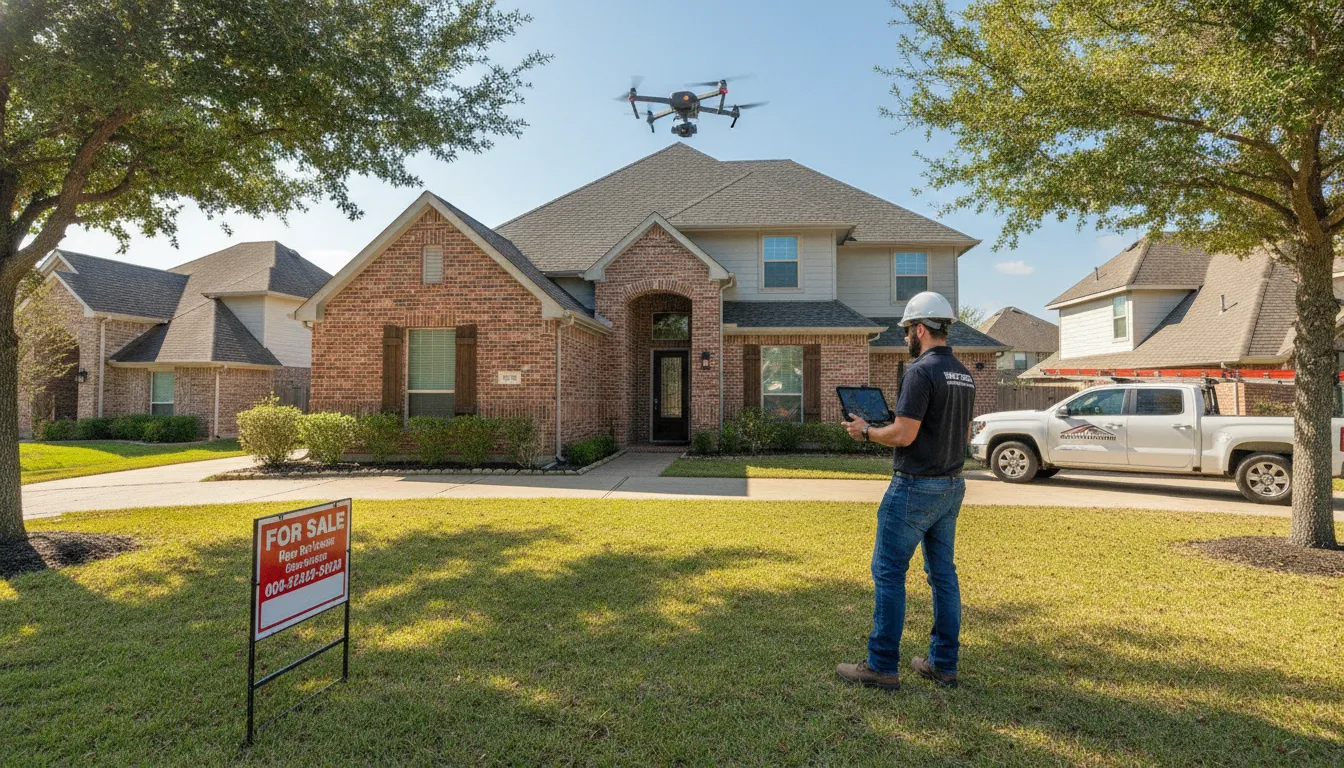
Confidence in a warranty begins with a clear record of the roof's condition. AI Roofing uses AI-powered inspection technology, including drone-based imaging and data-driven analysis, to evaluate the roof and document relevant findings. This approach gives homeowners a more objective starting point than a recommendation based only on a quick visual estimate.
After the inspection, homeowners receive a detailed digital report within 48 hours. The report can clarify what is working, what needs attention, and which items should be monitored. That education-first process helps separate an immediate repair from a maintenance item, without using pressure or manufactured urgency to drive a decision.
A strong warranty should be connected to a defined scope of work. AI Roofing documents materials and recommendations clearly, with transparent, fair-market pricing rather than unexplained line items. Homeowners can review what is being installed, why it is recommended, and what workmanship protection applies to the completed project.
AI Roofing combines this documentation with 20 years of combined experience. That wording reflects the team's collective background, not a claim that the company itself has operated for 20 years. The result is a practical trust signal: professional experience, measurable inspection evidence, and written project details working together.
Before approving roofing work, ask how the workmanship warranty is defined, what maintenance is expected, how a claim is submitted, and whether the leak-free guarantee has specific terms. Keep the final material list, project scope, inspection documentation, and warranty information in an accessible place.
For a fact-based starting point, schedule a free AI-powered roof inspection. If you have questions about documentation or warranty coverage, you can also contact AI Roofing directly. A clear roof warranty guide Texas homeowners can trust should help you evaluate protection, not pressure you into a purchase.
A manufacturer warranty generally addresses defects in the roofing materials, such as shingles or related products. A workmanship warranty addresses installation problems caused by the roofing contractor. These are separate forms of protection, so a material warranty may not help if a flashing detail, fastening pattern, or other installation step was completed incorrectly.
The term depends on the roofing product and the manufacturer's written warranty. Asphalt shingles may carry limited terms measured in decades, while some architectural products offer lifetime-labeled coverage. Read the conditions carefully because lifetime does not mean the roof will last forever, and many manufacturer warranties prorate benefits as the roof ages.
Improper installation, unapproved alterations, neglected maintenance, and repairs performed outside the warranty requirements can affect coverage. Severe weather damage is also commonly handled separately from a material-defect warranty. Keep inspection records, repair documentation, product information, and the contractor's written warranty together so you can show how the roof has been maintained.
Houston roofs face demanding conditions, including wind, hail, heat, and heavy rain. A workmanship warranty gives you a clear point of accountability for installation-related concerns instead of leaving you to determine whether a problem came from the product or the installation. AI Roofing offers a lifetime craftsmanship warranty, supported by documented recommendations and professional installation.
A documented inspection can help you understand your roof's current condition and identify questions to ask about coverage before you need to rely on it. Schedule your free AI-powered roof inspection at airoofingtech.com/contact or call 281-841-2504. AI Roofing provides clear findings so you can make an informed, pressure-free decision about maintenance, repair, or replacement.
Roofing Resources