Home
Home
Services
Services

Resources
Resources
Storm Restoration
Storm Restoration
Roof Systems
Roof Systems
Locations
Locations
Get practical steps for handling roof leaks heavy rain reveals. Learn causes, quick fixes, and when to call a pro to protect your home from water damage.

A sudden downpour doesn't usually punch a new hole in your roof. Instead, it acts like a stress test, exposing weak spots that have been developing for months or even years. So when your roof leaks in heavy rain, the real culprit isn't the storm—it's the gradual aging of materials or a subtle installation flaw that finally gave way. This guide cuts through the confusion. We'll give you a clear, fact-based look at why roofs fail and explain how to trace a leak to its true source, so you know exactly when to call for a professional assessment.
A heavy downpour doesn't usually create a new problem on a healthy roof. Instead, it acts like a stress test, revealing weak spots that have developed over time from weather, aging, or storms. Understanding these common failure points is the first step toward a confident, long-term solution. Most leaks trace back to a handful of key vulnerabilities that were present long before the storm arrived, and identifying them is crucial for an accurate repair.
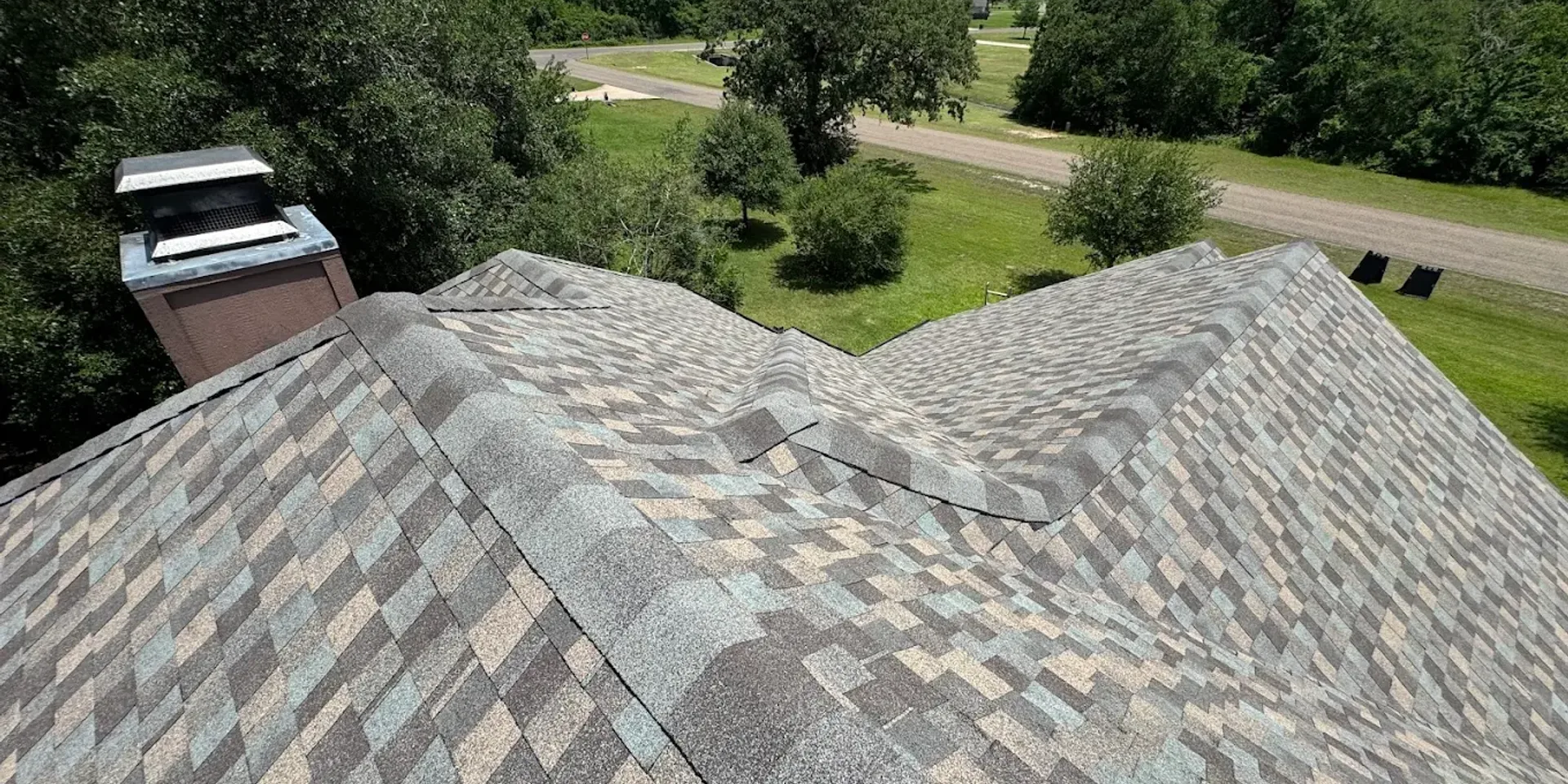
Your shingles are the roof's primary shield against the elements. Constant exposure to Houston's sun, wind, and hail eventually causes them to crack, curl, or break off entirely. When a shingle is damaged or gone, it leaves the underlying materials exposed. Heavy rain easily finds these openings and works its way into your home. It’s important to remember that a sudden leak during a storm is often the result of this gradual wear and tear, not a single catastrophic event. Identifying these compromised areas early is key to preventing water intrusion before it starts.
A shingle’s performance depends on correct installation, and that includes how every nail is placed. When a nail is driven in at an angle, hammered too deep (over-driven), or left sticking up (under-driven), it breaks the shingle’s watertight surface. An over-driven nail can puncture the shingle mat, while an under-driven nail prevents the shingle above it from sealing correctly. Both mistakes create a perfect pathway for water to get underneath. During a heavy downpour, the sheer volume of water flowing down your roof will exploit these tiny installation flaws. Following proper nailing techniques is non-negotiable for a durable roof, but these errors are common and nearly impossible to spot from the ground, often requiring a detailed professional inspection to identify.
Gutters are designed to channel water safely away from your home, but they can only do their job if they're clear. When leaves, pine needles, and other debris build up, they create dams that stop water from draining. During a heavy rainstorm, the water has nowhere to go but up and over the edge of the gutter, pooling along your roofline. This standing water can easily seep under the shingles and into the roof deck and fascia boards. Similarly, debris can collect in roof valleys, blocking drainage and forcing water into vulnerable seams, turning a simple maintenance issue into a serious leak.
Flashing consists of thin pieces of metal installed to direct water away from critical areas where your roof meets a vertical surface, like a chimney, wall, or skylight. Over time, exposure to the elements can cause this metal to crack, corrode, or pull away from the structure. The sealant used to create a watertight bond around the flashing can also dry out and fail. Because flashing protects some of the most vulnerable points on a roof, even a small breach can allow a significant amount of water to enter your attic and home during a downpour.
A roof valley is formed where two sloping roof planes intersect, creating a channel to guide rainwater toward the gutters. These areas handle a concentrated flow of water, making them highly susceptible to leaks if not properly sealed. On older roofs, the sealant in the valley can crack and wear away. On newer roofs, improper installation can leave gaps or fail to account for the sheer volume of water during a Texas thunderstorm. When the valley's seal is compromised, heavy rain can force its way underneath the roofing materials, leading to significant and often hidden water damage.
Anything that penetrates your roof's surface, from skylights to plumbing vents and exhaust fans, is a potential entry point for water. Leaks often occur when the seals around these fixtures fail. The rubber boot or "pipe boot" around a vent pipe can become brittle and crack from years of sun exposure, creating an easy path for rain. Skylights can leak due to failed seals around the glass or deteriorated flashing where the unit meets the roof deck. Proper installation and regular inspection of these penetrations are critical to keeping your roof watertight.
Your chimney might look solid, but it has several weak points where water can get in during a storm. For brick chimneys, the mortar joints can act like a sponge over time, absorbing rainwater and letting it seep into your home's structure. The metal flashing that seals the base of the chimney to the roof is another critical area; if it's damaged or was installed poorly, it creates a direct path for leaks. Finally, water can enter from the very top if the chimney cover is faulty or missing, allowing rain to pour straight down the flue. These issues often develop slowly and go unnoticed until a heavy downpour puts them to the test.
Those small pipes sticking out of your roof are plumbing vents, and each one is sealed with a flexible rubber collar called a pipe boot. While essential, these seals are one of the most common sources of roof leaks. Constant exposure to the intense Houston sun causes the rubber to dry out, become brittle, and eventually crack. Once a crack forms, rainwater has an easy path to run down the pipe and into your attic or ceiling. These boots typically have a lifespan of about 10 years, so on an older roof, it’s not a matter of if they will fail, but when.
Finding the source of a roof leak can feel like detective work. The drip you see in your living room is often just the final symptom, not the origin of the problem. Water can travel along roof decking and rafters before it makes an appearance on your ceiling, meaning the actual entry point could be several feet away. To pinpoint the real culprit, you need to trace the water back to its source. Here’s a step-by-step approach to help you investigate safely and effectively.
Your attic is the best place to start your investigation. If you can access it safely, grab a flashlight and head up there during daylight hours. Turn off the lights and look for any beams of light coming through the roof, as that’s a clear sign of a hole. If you don’t see light, look for other signs of water. Check for damp or compressed insulation, dark water stains on the wood rafters, and the presence of mold or mildew. Following these water trails on the rafters can often lead you directly to the entry point. Be careful where you step, only putting weight on the joists to avoid falling through the ceiling below.
Water rarely drips straight down. It follows the path of least resistance, which means it can run along structural elements before finding a spot to soak through your ceiling. Because of this, the leak you see inside is often far from where the water is getting in. Once you’re in the attic, look at the underside of the roof decking above the ceiling stain. From there, you’ll need to trace the water marks uphill. The highest point where you find moisture or staining is likely the source of the leak. This process requires patience, as the path can be winding, but it’s a reliable way to find the true origin.
If you can’t find the source from the attic, the problem likely lies with something penetrating or joining your roof. Anything that sticks out of your roof, like vents, pipes, chimneys, or skylights, is a potential entry point for water. The metal seals around these objects, called flashing, can crack, rust, or pull away over time. Also, inspect areas where two roof planes meet (valleys) or where the roof meets a wall. Missing or improperly installed step flashing is a common cause of leaks in these spots. Unless you are completely comfortable and equipped for roof work, it’s best to leave the rooftop inspection to a professional.
It’s a common misconception that a ceiling stain is directly below the roof defect. In reality, water enters through a compromised spot and is then pulled by gravity. However, it doesn't just fall straight down. It can cling to the underside of the roof sheathing or run along a rafter until it hits an obstruction, like a seam or a fastener. At that point, it pools and drips. This is why a leak might appear in the middle of a room when the actual entry point is ten feet away. Heavy rain can expose these hidden weak spots, forcing water into tiny cracks that might otherwise go unnoticed and making an accurate diagnosis even more challenging.
Before you assume the worst, it’s important to confirm you’re actually dealing with a roof leak. Sometimes, the culprit isn’t a hole in your roof but another moisture issue that looks nearly identical. The two most common imposters are condensation and poor attic ventilation, especially in a humid climate like Houston’s. Telling them apart is the first step to finding the right solution and avoiding unnecessary repairs. A true diagnosis requires looking beyond the drip and understanding the conditions that create it, ensuring you solve the correct problem from the start.
Condensation can easily be mistaken for a leak. It happens when warm, humid air inside your home rises and meets a colder surface, like the underside of your roof decking in the winter. The U.S. Department of Energy explains that when this warm, moist air cools, it condenses and forms water droplets. If you see widespread, uniform moisture or even frost on the nails and wood in your attic, you're likely looking at condensation, not a leak from a specific hole. Unlike a leak, which often leaves a distinct, isolated water trail, condensation can appear more broadly across a surface.
Poor attic ventilation is a primary cause of the condensation that mimics a roof leak. Your attic needs to breathe to release the heat and moisture that naturally build up. If vents are blocked or insufficient, that humid air gets trapped. This creates the perfect environment for condensation to form on the cool roof sheathing, which then drips onto your insulation and ceiling. The International Association of Certified Home Inspectors highlights that proper ventilation is critical for controlling moisture and preventing damage. This is why a professional inspection is so valuable—it can determine if the problem is your roof or your attic's airflow.
Finding a leak during a storm can be stressful, but a clear, methodical response can significantly limit the damage to your home. Your immediate priorities are to control the water, protect your property, and ensure everyone’s safety. Acting quickly doesn't mean acting recklessly. The following steps will guide you through the first critical moments after discovering a leak, helping you manage the situation effectively until a professional can assess the root cause. These actions are designed to mitigate immediate harm and prepare you for the repair and insurance process, turning a moment of panic into a manageable problem. Remember, the goal is to contain the issue, not to perform a permanent fix in the middle of a downpour.
Your first step is to manage the water inside your home to prevent further damage. Place buckets, pans, or other waterproof containers directly under any drips to catch the water. If the ceiling is bulging, don't poke it, as this could cause a large, uncontrolled collapse of water and drywall. Instead, place a bucket underneath the bulge and use a screwdriver to carefully pierce the center, allowing the water to drain in a controlled stream. Use old towels or rags to soak up any water that has spread across floors or other surfaces. This immediate containment protects your flooring, furniture, and drywall from costly water damage.
If the storm has subsided and it is absolutely safe to do so, you can make a temporary repair to stop more water from entering. The most common emergency fix is covering the damaged area on the roof with a heavy-duty tarp. Lay the tarp flat over the suspected leak source, extending it several feet in all directions. The top edge should be tucked under shingles higher up the roof to prevent water from running underneath it. Use sandbags or secured boards to weigh down the edges. Remember, this is only a temporary measure. A permanent repair requires professional attention to address the underlying issue correctly.
Before you move anything, document everything. Use your phone to take clear photos and videos of the active leak, the containers catching water, and any damage to your ceiling, walls, floors, and personal belongings. This visual evidence is crucial when you file a homeowners insurance claim. Keep a written log of when you first noticed the leak and the steps you took to mitigate the damage. Once the storm passes, a professional inspection report with detailed photos and precise repair estimates will strengthen your claim. Thorough documentation helps ensure your insurance process goes smoothly and you are fairly compensated for the repairs.
Your safety and your family's safety come first. Never climb onto a roof during a rainstorm; wet surfaces are extremely slippery and dangerous. If the leak is near electrical fixtures or outlets, turn off the electricity to that area at the breaker box to prevent electrical shock. If water is streaming heavily, the ceiling is sagging significantly, or you can see major structural damage from the ground, it's time to call for emergency professional help. Do not attempt any repairs that put you at risk. It is always better to wait for the weather to clear and for a trained professional to assess the situation safely.
Most leaks are manageable with buckets and towels, but you need to know when a situation crosses the line into being unsafe. If a leak becomes severe, the smartest and safest decision is to leave your home. Pay close attention to the amount of water; if it’s streaming heavily instead of just dripping, it’s a sign that the problem is escalating quickly. Another major red flag is a ceiling that is visibly sagging from the weight of trapped water, which indicates a risk of collapse. Always trust your gut. If you hear cracking sounds or the situation simply feels dangerous, get everyone out immediately. Your home is replaceable, but your family is not.
When water is dripping into your home, your first instinct is to stop it as quickly as possible. While a professional repair is the only long-term solution, a temporary fix can prevent further damage while you wait for help. These measures are designed to get you through a storm safely, not to replace a proper inspection and repair. Always prioritize your safety; never get on a roof during a storm or if you feel unsafe.
For small, isolated leaks, you can sometimes apply roofing cement or caulk as a temporary patch. If you can safely access the area and have identified a minor crack in flashing or a small hole in a shingle, applying a thick layer of roofing cement can seal the gap. Make sure the surface is as clean and dry as possible before application. This method is best for containing a very small problem until a professional can assess the roof’s condition. Remember, this is a short-term fix, as the cement will eventually dry out and crack, and it doesn't address any underlying issues that may have caused the initial damage.
If you’re dealing with a larger area of damage, like several missing shingles, a heavy-duty tarp is your best option. The goal is to cover the damaged section completely, extending the tarp at least four feet in all directions beyond the leak. Lay the tarp flat and smooth against the roof. To keep water from running underneath it, make sure the top edge of the tarp is tucked under a row of intact shingles. Secure the tarp with sandbags or planks of wood. Avoid using nails or screws, as this will create more holes in your roof. A properly secured tarp can be an effective way to prevent water intrusion until the storm passes.
When you need a quick fix, you'll find several products at the hardware store designed for emergency patches. The most common and effective for larger areas is a heavy-duty tarp, which can cover sections of missing shingles and prevent widespread water entry. For smaller issues, like a crack in flashing, roofing cement can provide a temporary seal. You might also see spray sealants or specialty tapes, which can be useful for sealing minor gaps or seams. While these products can be lifesavers in a pinch, it's critical to view them as temporary bandages, not permanent cures. They are meant to buy you time until a professional can perform a thorough roof inspection and address the root cause of the leak.
Sometimes, a leak isn't caused by a hole but by an overwhelming amount of water being channeled into a vulnerable area. This often happens when a downspout from an upper roof empties directly onto a lower roof section, forcing water under the shingles during a downpour. Take a look at your gutter system. If you notice a significant volume of water hitting one spot, you may be able to temporarily redirect the flow with a gutter extender or a makeshift diverter. Clearing a clogged gutter that’s causing water to overflow can also solve the immediate problem and reduce the strain on your roof.
A temporary patch is not always the right answer. You should call for professional help immediately if you see any serious warning signs. If water is streaming into your home instead of just dripping, or if your ceiling has started to bulge or sag, the situation is urgent. Multiple leak points or visible, significant damage from high winds are also clear indicators that a DIY fix is not enough. Your safety is the top priority. These signs point to a larger, more complex problem that requires an expert assessment to prevent structural damage and ensure your home is secure.
While a temporary patch can offer immediate relief, it’s not a permanent solution. Knowing when to step back and call a professional is key to protecting your home from long-term damage. Certain situations require an expert’s tools, training, and technology to ensure the problem is fixed correctly and safely.
A small drip might seem manageable, but some situations are clear signals that you need professional help immediately. If you notice water streaming into your home, a sagging ceiling, or multiple leaks appearing at once, it’s time to call a roofer. These are signs of a significant failure in your roofing system that a temporary patch won't solve. Similarly, if a storm has visibly damaged your roof with fallen branches or missing shingles, an expert assessment is critical to prevent further interior water damage. Acting quickly in these situations protects your home’s structural integrity and gives you a clear path forward for repairs.
In roofing, a practical guideline called the 25% Rule helps homeowners decide between patching things up and starting fresh. The rule suggests that if more than a quarter of your roof shows damage, a full replacement is often the more logical and cost-effective path forward. Think of it like this: you wouldn't just patch one bald tire when the other three are also worn out; you replace the set for safety and performance. The same principle applies to your roof. Chasing multiple repairs on an aging system can lead to a frustrating cycle of new leaks and more bills. A full replacement, on the other hand, provides a single, reliable system with a new warranty, protecting your home for years to come.
A roof’s age is one of the most important factors in determining its overall health. Most asphalt shingle roofs in the Houston area are designed to last about 20 to 25 years. As a roof gets past the 15-year mark, the shingles and seals become brittle from years of sun exposure, making them more likely to fail during heavy rain. A leak on an older roof often isn't an isolated issue but a clear sign that the entire system is nearing the end of its service life. While a small repair might stop one drip, it doesn't fix the widespread material fatigue. An honest assessment will always use age as a key piece of data to help you choose between a short-term patch and a true long-term solution.
While it’s tempting to climb up and fix a leak yourself, safety should always come first. Attempting repairs during a storm is extremely dangerous, as wet surfaces are incredibly slippery. It's best to wait until the rain stops and the roof is safe to access. Even in good weather, working at heights carries inherent risks, especially without proper safety equipment. You also risk causing more damage if you misdiagnose the problem or apply a patch incorrectly. A professional has the training and gear to work safely and effectively, ensuring the job is done right without putting you or your home in jeopardy.
Modern roofing has moved beyond simple visual checks. Today, advanced tools provide a much clearer picture of your roof's health. The use of drones and artificial intelligence in roof inspections makes the process safer, more efficient, and far more precise. A drone can capture high-resolution images of your entire roof without anyone needing to set foot on it, identifying subtle damage that the naked eye might miss. This data-driven approach removes guesswork, giving you a detailed, unbiased report on your roof’s condition. It allows for accurate estimates and ensures that repair recommendations are based on facts, not assumptions.
A leak's true source often hides where you can't see it, with water trapped inside your roof's layers. That’s why a simple visual check isn't enough. At AI Roofing, we use advanced tools like infrared scanners to get the full picture. An infrared scanner detects subtle temperature differences across your roof, creating a thermal map that highlights hidden pockets of moisture. This technology allows us to find the exact location and extent of water intrusion without tearing your roof apart. It replaces guesswork with a precise, data-driven diagnosis, ensuring we fix the entire problem—not just the drip you see.
After you’ve addressed an active leak, the next step is shifting from a reactive to a proactive mindset. Preventing future leaks is the best way to protect your home’s value and avoid the stress that comes with unexpected water damage. A consistent maintenance routine helps you stay ahead of potential problems, especially in a climate with heavy rainfall. By taking a few key steps, you can ensure your roof remains a reliable shield for your home, giving you confidence and peace of mind no matter the weather.
Think of a roof inspection as a routine check-up for your home. Having a professional examine your roof at least once a year, and always after a major storm, is the most effective way to catch minor issues before they turn into significant leaks. An expert can spot subtle signs of wear, like cracked sealant or loose shingles, that aren't visible from the ground. A thorough roof maintenance program allows you to make small, affordable repairs on your own schedule, rather than being forced into emergency fixes during a downpour. Modern inspections that use technology can give you a clear, data-driven report on your roof’s condition, empowering you to make informed decisions without any sales pressure.
Your gutters are the unsung heroes of your roofing system, designed to channel thousands of gallons of water safely away from your home. When they become clogged with leaves, twigs, and other debris, that water has nowhere to go. It backs up, pools along your roofline, and can easily seep under your shingles, leading to rot and leaks. To prevent this, clean your gutters regularly, especially in the fall and spring. Also, check that your downspouts are clear and directing water several feet away from your foundation. Installing gutter guards can also be a great way to reduce buildup and keep things flowing smoothly.
In areas prone to severe weather, standard roofing materials may not be enough to provide long-term protection. If your roof is nearing the end of its lifespan or has required frequent repairs, consider upgrading to more durable, storm-resistant materials. Products like impact-resistant shingles are specifically engineered to withstand hail and high winds, while a professionally installed metal roofing system offers superior longevity and water-shedding capabilities. While the initial investment is higher, these upgrades often pay for themselves over time through reduced maintenance, fewer repairs, and a longer service life, making them a smart choice for protecting your home.
Fixing a leak correctly involves more than just patching the damage you can see. It requires a specific order of operations, or repair sequencing, to ensure a lasting solution. A common mistake is to immediately repair the interior damage, like painting over a ceiling stain, without addressing the root cause. This only treats the symptom, and the stain will inevitably return with the next storm. Proper sequencing means tackling the problem from the outside in, starting with the true source of the water intrusion. This methodical approach prevents you from wasting time and money on cosmetic fixes that are bound to fail.
The first and most critical step is always to find the leak's origin on the roof itself. Because water can travel along rafters and decking, a professional assessment is often needed to pinpoint the exact failure point, whether it’s cracked flashing or a damaged shingle. Once the source is repaired and the roof is watertight, the next step is to address any compromised structural components, like the roof deck or attic insulation. Only after the exterior and structural elements are fully secured should you begin interior repairs like replacing drywall and painting. Following this sequence ensures the problem is solved permanently.
Trees near your home can pose a dual threat to your roof. Large, overhanging branches can break off during a storm, causing direct and severe damage to your shingles and the underlying structure. Even without a storm, trees constantly drop leaves, pine needles, and small twigs onto your roof. This debris accumulates in the valleys where different roof planes meet, acting like a sponge that traps moisture. This trapped water can slowly work its way under your shingles and cause rot. Regularly trimming tree branches back from your roofline and clearing away any collected debris will help keep your roof dry and free from damage.
Choosing the right materials is your most effective strategy for preventing future leaks. A modern roof is more than just shingles; it’s a complete system designed to protect your home from the elements. When it’s time for a replacement, investing in components that are specifically engineered to handle heavy, wind-driven rain can save you from costly repairs and give you lasting peace of mind. Here are four key elements of a storm-ready roof that work together to keep your home dry.
Upgrading to storm-resistant shingles is one of the most direct ways to fortify your roof. Often called impact-resistant or Class 4 shingles, these products are thicker and more flexible than standard architectural shingles. They are manufactured with a reinforced polymer-modified asphalt that helps them resist damage from hail and wind-blown debris. This durability means they are far less likely to crack, split, or lose their protective granules during a severe storm, which helps prevent water from ever reaching the underlayment. While they come at a higher initial cost, their extended lifespan and reduced need for maintenance make them a smart investment for any homeowner in a storm-prone area.
For ultimate durability, metal roofing is an excellent choice. Known for its impressive longevity of 40 to 70 years, a properly installed metal roof offers superior protection against heavy rain. The panels interlock to create a tight seal that sheds water quickly and efficiently, and because metal is impervious to rot and insect damage, it maintains its integrity for decades. Modern metal roofs are available in a wide variety of styles and colors, mimicking the look of traditional shingles, slate, or tile. This combination of resilience and aesthetic appeal makes it a powerful, long-term solution for homeowners who want to install a roof and not worry about it again for a very long time.
While metal roofs are incredibly durable, they aren't invincible. Leaks almost always trace back to specific failure points, not the panels themselves. The most common culprits are the fasteners; the screws holding the panels down have rubber washers that can dry out and crack over time, creating a direct path for water. Another weak spot is the seams where panels overlap. If the sealant fails or the panels weren't installed correctly, heavy rain can force its way in. Finally, pay close attention to penetrations like vents, chimneys, and skylights. The flashing designed to seal these areas can corrode, crack, or pull away, breaking the watertight seal and allowing water to get underneath.
An ice and water shield is a critical layer of defense that sits beneath your shingles. This is a self-adhering waterproof membrane applied directly to the roof deck in its most vulnerable areas, including valleys, eaves, and around penetrations like vents and chimneys. While the name suggests it’s only for cold climates, this shield is exceptionally effective at preventing leaks from wind-driven rain, which can force water uphill and underneath shingles. By sealing these critical points, an ice and water shield provides a secondary, watertight barrier that protects your home even if the primary roofing material is compromised, ensuring a dry attic during the heaviest downpours.
Flat and low-slope roofs, common on modern homes and additions, require a different approach to water management. While they offer a clean aesthetic, they are notoriously prone to leaks if not perfectly designed and maintained. Unlike a pitched roof that uses gravity to shed water quickly, a low-slope system must actively manage every drop, making it far less forgiving of even minor flaws. Any small imperfection can become a major entry point for water during a heavy downpour, making a proactive approach essential for these roofing systems.
On a flat roof, proper slope isn't just a feature—it's everything. Even a slight depression can allow water to pool, creating constant pressure on the roofing membrane and eventually forcing its way through the smallest seam. This is why drainage is so critical. When gutters or internal drains become clogged with debris, water backs up and has nowhere to go but into your home's structure. If a roof's slope is inadequate for its material, heavy rain will sit and seep underneath, turning a subtle design issue into a significant leak. Identifying these drainage problems early is key to preventing widespread damage.
Proper roof ventilation might not seem directly related to rain, but it’s essential for the long-term health of your entire roofing system. A well-ventilated attic allows heat and moisture to escape, which prevents the roof deck from rotting and your shingles from deteriorating prematurely from below. When moisture builds up, it can condense on the underside of the decking, leading to mold, mildew, and structural decay that can mimic a leak. A balanced system of intake and exhaust vents ensures continuous airflow, keeping the roof deck dry and extending the life of your roofing materials. This makes attic ventilation a crucial component of any leak-prevention strategy.
A small drip in the attic might seem like a minor annoyance you can deal with later, but ignoring a roof leak is one of the most expensive mistakes a homeowner can make. What starts as a simple water spot can quickly spiral into a series of costly and complex problems that affect your home’s safety, value, and your wallet. Heavy rain doesn't typically create new damage; instead, it exposes weaknesses that have been developing over time. Understanding the true costs of inaction can help you make a proactive, informed decision to protect your investment. The consequences go far beyond a stained ceiling, impacting everything from your home's structural integrity to your monthly utility bills.
Once water gets past your shingles, it begins a destructive journey through your home's structure. Water from a leak travels fast, soaking insulation, weakening wood, and often showing up far from where it actually entered the roof. This moisture can cause wooden rafters, ceiling joists, and wall framing to rot and lose their strength over time. If a roof leak isn't fixed, mold can grow and spread through your home's floors and walls, compromising air quality and making the building unsafe. What began as a small roofing issue can quickly turn into a major structural repair and mold remediation project, costing thousands of dollars to fix.
Beyond the visible water stains, the most serious threat from a persistent leak is mold. In the dark, damp spaces of an attic or behind walls, mold can begin to grow in as little as 24 to 48 hours. As it spreads through insulation and drywall, it can compromise indoor air quality and pose health risks to your family. What starts as a simple roof leak can quickly evolve into a complex and expensive mold remediation project. Addressing the source of the moisture promptly is the only way to prevent a small problem from turning into a widespread contamination issue that affects both your home’s health and its value.
One of the most overlooked dangers of a roof leak is the risk of an electrical fire. Water from a leak rarely drips straight down; it often runs along rafters and inside wall cavities before it becomes visible. If this water comes into contact with electrical wiring, junction boxes, or light fixtures, it can cause a short circuit. This can lead to sparks and create a serious fire hazard hidden within your home's structure. For your safety, if you suspect a leak is near any electrical components, it's critical to turn off the power at the breaker box and call a professional to assess both the leak and the potential electrical risk.
A damp environment is an open invitation for pests. Wood-destroying insects like termites and carpenter ants are drawn to the softened, moist wood that results from a chronic roof leak. They find the perfect conditions to nest and feed, turning your home’s structural supports into their next meal. This means your roofing problem can quickly become a pest control problem, adding another layer of complexity and cost to the repairs. By allowing a leak to continue, you are not only risking rot and mold but are also creating an ideal habitat for insects that can cause widespread structural damage throughout your home.
Many homeowners assume their insurance will cover any leak-related damage, but that’s not always the case. Homeowners insurance usually helps pay for roof damage from sudden, unexpected events like hail or falling trees. It typically does not cover damage from normal aging, wear and tear, or a lack of maintenance. If an adjuster determines the leak was a pre-existing issue you failed to address, your claim could be denied, leaving you responsible for all repair costs. Furthermore, visible signs of water damage, like ceiling stains or musty smells, are major red flags for potential buyers and can significantly lower your property’s value.
A roof leak does more than just let water in; it also lets energy out. As water seeps into your attic, it saturates your insulation, causing it to compress and lose its thermal resistance. According to the U.S. Department of Energy, wet insulation is ineffective at preventing heat transfer. This means your HVAC system has to work much harder to keep your home comfortable, leading to a noticeable increase in your heating and cooling bills. Over time, the cost of this wasted energy can add up, making a small leak a constant drain on your finances until the roof and insulation are properly repaired.
How do I know if I need a simple repair or a full roof replacement? The answer depends on the root cause and extent of the damage. An isolated issue, like cracked flashing around a vent, can often be fixed with a targeted repair. However, if the leak is due to widespread shingle failure, old age, or issues with the underlying roof deck, a replacement is usually the more reliable and cost-effective long-term solution. A thorough, professional inspection is the only way to get a clear diagnosis and understand your options.
Will my homeowners insurance cover a leak from heavy rain? Coverage typically depends on the source of the leak. If the damage was caused by a sudden event covered in your policy, like hail or a fallen tree branch, then the subsequent leak is often covered. However, if the leak results from gradual wear, old age, or a lack of maintenance, insurance carriers will likely deny the claim. This is why documenting the damage and getting a professional assessment quickly is so important.
My roof isn't that old. Why would it be leaking already? While frustrating, leaks on newer roofs are not uncommon and often point to issues with the original installation. The most frequent culprits are improperly installed flashing around chimneys and skylights, poorly sealed roof valleys, or incorrectly fastened shingles. These mistakes create vulnerabilities that a heavy, wind-driven rain can easily expose, even on a roof that is only a few years old.
The leak stopped after the rain. Do I still need to get it checked? Yes, absolutely. A leak that only appears during heavy rain is a clear sign that a vulnerability exists in your roofing system. Even though the dripping has stopped, the pathway for water is still there. Trapped moisture you can't see may be slowly damaging your roof deck, rafters, and insulation, which can lead to wood rot and mold growth over time. Addressing it now prevents a much larger problem later.
What's the difference between a standard inspection and one using technology like drones? A standard inspection relies on what a person can see from the ground or by walking on the roof, which can sometimes miss subtle signs of damage. An inspection using a drone captures high-resolution images of your entire roof surface safely and efficiently. This data provides a more precise and objective analysis, identifying minor cracks, granule loss, and other issues that might be invisible to the naked eye, leading to a more accurate diagnosis without any guesswork.
Roofing Resources