
Home
Home
Services
Services

Resources
Resources
Storm Restoration
Storm Restoration
Roof Systems
Roof Systems
Locations
Locations
Schedule a free AI-powered roof inspection in Houston. Get straight answers on flat roof repair Houston, from ponding water to repair vs replacement decisions.
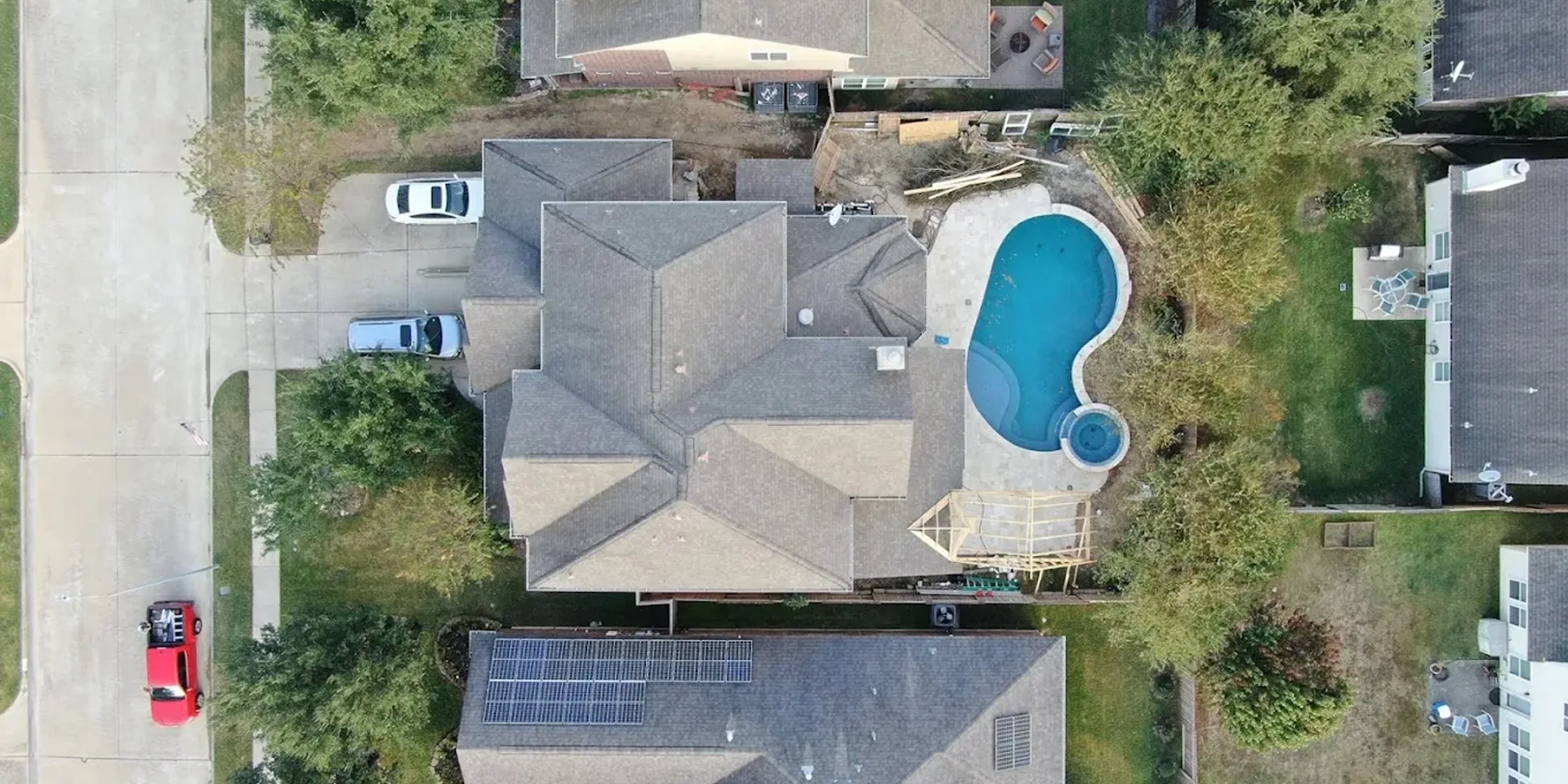
A flat roof can look sound from the ground while moisture, aging membrane, or failing flashing develops out of sight. Houston homeowners also contend with intense sun, heavy rain, humidity, and repeated temperature changes that test every seam and drainage point.
Book your free AI-powered roof inspection today at 281-841-2504.
Flat roof repair Houston should begin with an objective inspection that identifies the source of the problem. The condition of the roofing system, and whether a targeted repair or full replacement makes better long-term sense.
The right decision depends on more than the presence of a leak. Understanding how Houston weather affects flat-roof materials, drainage, and connections gives you a clearer way to prioritize work and protect your home.
Houston's heat, heavy rain, humidity, and strong sun create a demanding environment for low-slope roofing systems. A flat roof is not truly level. It is built with a slight incline, typically at least 1/8 inch per foot, so water can move toward drains and collection points. When that drainage path is obstructed, worn, or poorly maintained, even a sound membrane can face avoidable stress.
After a major rainstorm, water may remain on a flat roof when drains are blocked, the slope has settled, or the membrane has developed low areas. Short-term surface moisture is not automatically proof of a roof failure, but recurring ponding deserves objective evaluation. Standing water adds weight, keeps the surface wet, and gives small defects more time to affect the roofing assembly.
Inspection should trace the water's path rather than focus only on the visible low spot. A professional can check drains, seams, edge details, penetrations, and the condition of the underlying materials. This matters because a leak may appear inside the building some distance from where water entered. If maintenance is neglected, damage can extend into the roof and the building below before the need for repair becomes obvious. Homeowners across our Houston service areas can use documented inspection findings to distinguish a drainage adjustment from membrane or flashing work.
Houston roofs also expand and contract as surface temperatures change. During transitional months, daily temperature swings can reach roughly 40 to 50 degrees Fahrenheit. Repeated thermal cycling places movement demands on the membrane, seams, adhesives, and rigid roof penetrations. Over time, the membrane can pull away from those fixed points, while penetration flashing may fatigue and lose its ability to maintain a reliable seal.
Ultraviolet exposure adds another layer of stress. Prolonged sunlight can gradually age exposed roofing materials, especially where protective surfacing is worn or the membrane is already strained. That does not mean every discolored or weathered area requires replacement. The useful question is whether the material remains watertight and properly attached, supported by photos and a close review of seams, flashings, drains, and penetrations.
Why do Houston flat roofs leak? Recurring ponding water, temperature-driven membrane movement, UV exposure, and fatigued flashing can weaken the roof's drainage and waterproofing details. So a focused inspection is the clearest way to identify the actual cause.
The right decision depends on the condition of the entire roofing system, not just the location of the latest leak. An isolated puncture, failed seam, or damaged flashing may be repairable when the membrane, insulation, and deck still have useful service life. Replacement becomes more practical when moisture and deterioration are widespread.
Repair is often appropriate when the damage is localized and the surrounding membrane remains flexible, secure, and well-adhered. A professional assessment should identify the cause, document the affected area, and confirm that water has not spread into the insulation or roof deck.
For a targeted evaluation, see AI Roofing's professional roof repair services. The goal is to correct the source of the problem, not simply cover the visible symptom.
Replacement deserves consideration when the roof is failing in multiple locations or its underlying components are compromised. Widespread membrane deterioration, saturated insulation, recurring leaks across separate areas, and a roof near the end of its expected service life can make repeated patching less predictable.
Material history also matters. Modified bitumen systems are commonly described as lasting about 10 to 20 years, EPDM systems about 15 to 25 years. And TPO or PVC systems about 20 to 30 years when properly installed and maintained. EPDM also has a 45-year track record of proven performance in flat-roof applications. These ranges are planning guidance, not a guarantee for any individual roof.
| Factor | Repair | Replacement |
|---|---|---|
| Extent of damage | Localized punctures, seams, or flashing | Widespread membrane or structural failure |
| Roof age | Useful life remains | Near the end of expected service life |
| Prior repairs | Few, isolated repairs | Recurring repairs across multiple areas |
| Membrane type | Compatible repair method is available | System is broadly deteriorated or incompatible with patching |
| Energy performance | Existing insulation and performance remain acceptable | Saturated insulation or poor performance warrants a system review |
| Cost approach | Quote-based repair for documented scope | Quote-based replacement for documented scope |
AI Roofing uses a fair-market automated pricing engine, with recommendations and quotes based on the documented project scope rather than specific published prices. If replacement is indicated, review the available roof replacement services and compare the long-term value of a complete system with the uncertainty of repeated repairs.
Quick answer: Is it better to repair or replace a flat roof in Houston? Repair it when damage is isolated and the system has useful life remaining; replace it when failures are widespread. Insulation is saturated, leaks recur, or the roof is near the end of its service life.
Flat roof maintenance includes clearing drainage paths, removing debris, checking seams and flashing, looking for ponding, inspecting interior ceiling assemblies, and investigating suspected wet insulation.
Because a flat roof is usually out of sight, it can escape attention until water appears indoors. A maintenance routine should therefore check both the roof surface and the building assembly below it. The goal is not to assume a problem requires replacement, but to identify conditions early and document what is working, what can wait, and what needs qualified attention.
Seals and flashings cover only a small fraction of the roof area, yet most leaks occur when these details fail. Give them disproportionate attention during maintenance, especially where the membrane meets walls, drains, curbs, pipes, and rooftop equipment. This focused review is one reason a documented roof tune-up maintenance program can be useful for properties where the roof is difficult to see from the ground.
Interior stains, soft ceiling materials, peeling finishes, and recurring dampness can indicate that moisture has moved into the roof or ceiling assembly. Do not treat the visible mark as proof of the exact failure point. A professional moisture survey can help determine whether insulation is wet, while targeted testing and inspection are still needed to trace the entry point. Addressing these clues before damage spreads supports a clearer repair decision and helps protect the building below the roof. Learn more from the building moisture and flat-roof maintenance guidance.
Inspect a flat roof in Houston at least once a year, then schedule another professional inspection after severe storms or when the roof shows signs of change. Flat roofs are easy to overlook because they are not generally visible from the ground. That means a small flashing failure, puncture, or drainage issue can remain unnoticed until water reaches the interior.
Spring thunderstorms and Houston's June through November hurricane season are practical inspection triggers. A post-storm review can document whether wind, falling debris, standing water, or heavy rainfall affected the membrane and its edge details. Older roofs, especially systems more than 10 to 15 years old. May also benefit from inspections more frequently than once a year because materials and previous repairs deserve closer monitoring.
Annual documentation is useful for another reason: many membrane manufacturers make warranty validity dependent on routine, documented inspections and maintenance. The exact requirements vary by product and warranty. So property owners should confirm the terms for their specific roofing system rather than assume that one schedule applies to every membrane.
A thorough inspection should evaluate the roof as a system, not just look for visible punctures. Depending on the roof and site conditions, the process may include:
Watch for ceiling stains, musty odors, bubbling paint, unexplained humidity, ponding water, damaged coping, and debris near drains. Inside the building, changes may appear before the roof surface looks different. After a major storm, avoid walking on the membrane unless a qualified professional confirms it is safe. Instead, photograph accessible signs from the ground and request an objective assessment.
AI Roofing provides free AI-powered roof inspections for homeowners. Inspections are typically scheduled within 24 hours, with reports generally delivered within 48 hours. Giving property owners documented information for deciding what needs attention now and what can be monitored.
Look for interior water stains, recurring leaks, soft areas, cracked or lifted membrane, damaged flashing, deteriorated sealant, and standing water that remains after rain. Because flat roofs are often difficult to see from the ground. A professional inspection can document whether the issue is localized and repairable or connected to broader moisture damage.
Repair is often appropriate when the membrane is generally sound and the problem is limited to a penetration, flashing detail, seam, or small damaged area. Replacement may be more practical when leaks are widespread, insulation is wet, drainage is inadequate, or the roof system is near the end of its service life. The right decision should follow documented inspection findings, not a preset recommendation.
There is no reliable one-size-fits-all price. Cost depends on the roof material, access, affected area, underlying moisture, drainage, and the scope of work required. Ask for a written, itemized recommendation that separates necessary repairs from optional improvements. AI Roofing uses a fair-market pricing approach and provides project-specific quotes rather than publishing misleading fixed prices.
Common causes include failed seals and flashing, membrane damage, ponding water, clogged drainage, and movement caused by repeated heat and weather exposure. A visible drip may not be directly below the entry point, so tracing moisture through the roof assembly is important before selecting a repair.
A professional inspection can help you understand whether your flat roof needs routine maintenance, a focused repair, or more extensive planning. AI Roofing uses documented findings to support a clear, pressure-free next step for Houston homeowners.
Book your free AI-powered roof inspection today at 281-841-2504.
Roofing Resources


