Home
Home
Services
Services

Resources
Resources
Storm Restoration
Storm Restoration
Roof Systems
Roof Systems
Locations
Locations
Find the best roof leak repair service with tips on spotting leaks, vetting contractors, and understanding warranties for a reliable, lasting roof repair.

For years, homeowners have had to deal with a frustrating roofing process: a contractor gives a vague diagnosis, pressures you into a quick decision, and leaves you hoping the work was done right. But you shouldn't have to rely on guesswork when it comes to protecting your home. Today, technology offers a better way. A modern approach replaces assumptions with objective data, giving you a clear, factual understanding of your roof's condition. Choosing the best roof leak repair service means finding a company that embraces this transparency. This article will walk you through what to expect from a tech-forward roofer, from data-driven inspections to detailed photo documentation, so you can make a truly informed decision.
A roof leak rarely starts with a dramatic drip. More often, it begins with subtle clues that are easy to overlook until serious damage is already done. Knowing how to spot these early warning signs is the best way to protect your home and avoid expensive, large-scale repairs down the road. A small issue caught today can save you from a major headache tomorrow.
The key is to look for changes both inside and outside your home. An interior stain might be the first thing you notice, but a quick walk around your property can reveal exterior issues that haven't yet made their way inside. By learning what to look for, you can identify potential problems before they escalate. This guide will walk you through the most common interior and exterior red flags that signal your roof needs attention.
That dark, spreading stain on your ceiling is more than just an eyesore; it’s a clear sign that your home’s primary defense has been breached. Water is getting through your roof and soaking into the drywall, which can lead to structural issues and mold. Other common interior signs include peeling paint on walls or ceilings, bubbling drywall, or a persistent musty odor in upper-floor rooms or your attic. In more advanced cases, you might see active drips during a rainstorm. If you notice any of these issues, it’s a definite signal that water is getting in from somewhere, and your roof is the most likely culprit.
While interior signs confirm a leak exists, an exterior inspection can help you find the source or even prevent a leak from starting. Walk around your property and look up. Do you see any cracked, curling, or missing shingles? These are direct entry points for water. Also, check your gutters for an accumulation of black, sand-like granules; this means your asphalt shingles are deteriorating. Pay close attention to flashing, the metal strips around chimneys, vents, and skylights, as gaps or rust here are common failure points. Neglecting regular inspections is a frequent oversight that allows small problems to become major ones.
Finding the right contractor is the most important step in fixing a roof leak correctly. The Houston market has many options, but not all roofing services are created equal. A great roofer provides more than just a patch; they offer peace of mind by delivering transparent diagnostics, skilled work, and a solid guarantee. Taking the time to vet your contractor ensures your home, your biggest asset, is protected by a professional who values quality and accountability over a quick sale.
Before you discuss any project details, your first question should always be about licensing and insurance. In Texas, proper licensing ensures a contractor meets state-mandated standards of practice. General liability insurance protects your property from accidental damage, while workers' compensation covers their crew in case of injury, preventing you from being held liable. Don't just take their word for it; ask for copies of their insurance certificates. A reputable company will provide this documentation without hesitation. You can also verify a contractor's credentials through organizations like the Roofing Contractors Association of Texas to confirm they are in good standing.
Not all roofs are the same, and experience with your specific material is critical. A roofer who specializes in asphalt shingles may not have the right tools or expertise to properly repair a slate, tile, or metal roof. Each material has unique properties and common failure points. During your conversation, ask about their experience with your roof type and if they have completed similar repairs in your area. An experienced roofer will understand the nuances of the materials and can offer a workmanship warranty that protects your home, ensuring the repair is done right the first time and built to last.
You shouldn't have to guess what's wrong with your roof or what you're paying for. A professional roofing service will provide a clear, data-driven diagnosis of the problem. This includes detailed photo or video evidence of the damage, a precise location of the leak’s source, and a written, itemized estimate explaining the scope of work. At AI Roofing, our mission is to replace uncertainty with structured clarity. We believe homeowners deserve to see the facts for themselves. This transparency empowers you to make an informed decision based on objective proof, not a high-pressure sales pitch.
A contractor’s reputation is a direct reflection of their work and customer service. Look for companies with a strong local presence and a history of positive feedback. Check online reviews on sites like Google, Yelp, and the Better Business Bureau. While a perfect five-star record is rare, pay attention to how the company responds to criticism. Do they resolve issues professionally? Also, don't hesitate to ask for local references. Speaking to a past customer in your area can provide invaluable insight into their experience with the contractor’s communication, timeliness, and the quality of the finished repair.
Choosing a roofing contractor is a significant decision, and unfortunately, the industry has its share of operators who don't have your best interests at heart. Knowing what to watch out for is just as important as knowing what to look for in a great contractor. A little awareness can help you avoid costly mistakes, unnecessary stress, and poor-quality work. Pay close attention to these common red flags to ensure you partner with a true professional who values honesty and quality.
A professional roofing estimate should be clear, detailed, and easy to understand. If you receive a quote that’s just a single number on a piece of paper with a vague description like “roof repair,” consider it a major red flag. A trustworthy contractor will provide an itemized breakdown that specifies the costs for labor, the exact materials being used, and any other associated fees for permits or disposal. This transparency protects you from unexpected charges and shows the contractor has thoroughly assessed the job. A vague estimate often means the contractor hasn't done a proper inspection or is intentionally leaving room to inflate the final bill.
Your home is one of your biggest investments, and you should never feel rushed into making a decision about it. Be cautious of any contractor who uses high-pressure sales tactics to get you to sign a contract on the spot. This can include creating a false sense of urgency with "today only" deals, using scare tactics about the condition of your roof, or becoming pushy if you ask for time to think. A reputable company will provide you with clear, documented findings and give you the space to review the estimate, check references, and make a confident, informed choice without any pressure.
A warranty is a contractor’s promise to stand behind their work. If a company doesn’t offer a warranty on their labor, it’s a strong signal that they lack confidence in their own quality and skills. Reputable roofers will always provide a workmanship warranty that covers any issues arising from the installation or repair process. This is separate from the manufacturer's warranty, which covers defects in the roofing materials themselves. A contractor who is unwilling to guarantee their work may not be around to fix problems, leaving you to pay for their mistakes down the line.
Hiring an unlicensed contractor is a gamble you can’t afford to take. A license proves that a contractor has met specific state requirements for knowledge and experience. Working with an unlicensed individual not only puts you at risk for shoddy work but can also void your homeowner's insurance coverage for the roof and make you liable for any on-the-job injuries. Always ask for a license number and verify it with the state. Similarly, be wary of anyone offering a "quick fix" with sealant or caulk without addressing the underlying issue. These temporary patches often fail and can trap moisture, leading to more significant damage over time.
Hiring a roofing contractor shouldn't feel like a leap of faith. The best way to gauge a company's professionalism, transparency, and expertise is to come prepared with the right questions. Think of it as an interview where you are in the driver's seat. A quality contractor will welcome your questions and provide clear, confident answers. Vague responses or attempts to rush you are signals to walk away. By asking these key questions, you can ensure you’re partnering with a professional who values your home as much as you do.
A roofer’s inspection process tells you everything about their approach. A quick look from the ground is not an inspection; it’s a guess. Ask for a detailed explanation of how they identify the source of a leak. Do they get on the roof for a hands-on assessment? Do they inspect the attic for signs of water intrusion? A thorough contractor will have a systematic method for tracing the leak to its origin. At AI Roofing, we use data-driven technology and comprehensive photo documentation to give you a clear, factual understanding of your roof’s condition. This ensures repairs are precise, effective, and address the actual problem, not just the symptoms.
Never accept a verbal quote or a single number scribbled on a business card. A professional roofing company will always provide a detailed, written estimate that breaks down all the costs. This document should clearly itemize the price of materials, labor, permits, and any other associated fees. An itemized estimate is a mark of transparency. It allows you to see exactly what you are paying for and helps prevent unexpected charges down the road. It also gives you a solid basis for comparing offers if you are getting multiple quotes. Insist on this level of detail before signing any contract.
A warranty is a promise that a contractor stands behind their work. It’s essential to understand what kind of protection you’ll have after the job is done. There are two types of warranties: a manufacturer warranty, which covers the materials themselves, and a workmanship warranty, which covers the installation. Ask potential contractors about the specifics of their workmanship warranty. How long does it last? What does it cover? Are there any conditions that could void it? A strong workmanship warranty is a sign of a confident, reputable roofer who provides quality service.
A roof leak can quickly become an emergency, and it rarely happens at a convenient time. It’s important to know if a roofing company is equipped to handle urgent situations. Ask about their availability for emergency calls and their typical response time. A reliable contractor should have a clear plan for mitigating damage, which may include same-day emergency tarping to protect your home while you wait for a permanent fix. You need a company that will answer the phone when water is coming into your living room, not one that lets your call go to voicemail. Their answer will tell you a lot about their commitment to customer service and reliability.
A professional roof repair isn't a guessing game. It follows a structured, methodical process designed to find the true source of the problem and deliver a lasting solution. Understanding these steps helps you know what to expect from a reputable contractor and ensures your home is properly protected. From the initial inspection to the final verification, each phase plays a critical role in restoring your roof's integrity and giving you peace of mind. A transparent contractor will walk you through this process, providing clear explanations and documentation along the way so you feel confident in the work being done.
The first and most important step is a thorough inspection to pinpoint the exact source of the leak. Water is tricky; it can enter your roof in one spot and travel along beams or decking before dripping into your living room. Simply patching the area directly above the ceiling stain often fails to solve the underlying issue. A true professional will examine the entire roofing system for compromised flashing, damaged shingles, cracked pipe boots, and other potential entry points. This detailed diagnostic process is essential for ensuring the repair addresses the cause, not just the symptom.
Once the entry point is identified, the next step is to assess the full extent of the damage. This includes checking the roof decking for softness or rot, inspecting the insulation for moisture, and examining the attic for signs of mold or water staining. This complete picture allows the contractor to create a detailed repair plan. Instead of a vague quote, you should receive an itemized estimate that clearly outlines the scope of work, the materials to be used, and the reason for each recommended action. This ensures there are no surprises and you understand exactly what you are paying for.
If another storm is on the way and a permanent repair can't be completed immediately, your contractor may recommend placing a tarp over the damaged area. This is an emergency measure designed to prevent further water intrusion and protect your home from additional harm. However, it's crucial to remember that tarping a roof is a temporary fix, not a long-term solution. It buys you valuable time but doesn't address the root cause of the leak. A reliable roofer will schedule the full repair as soon as it is safe to do so.
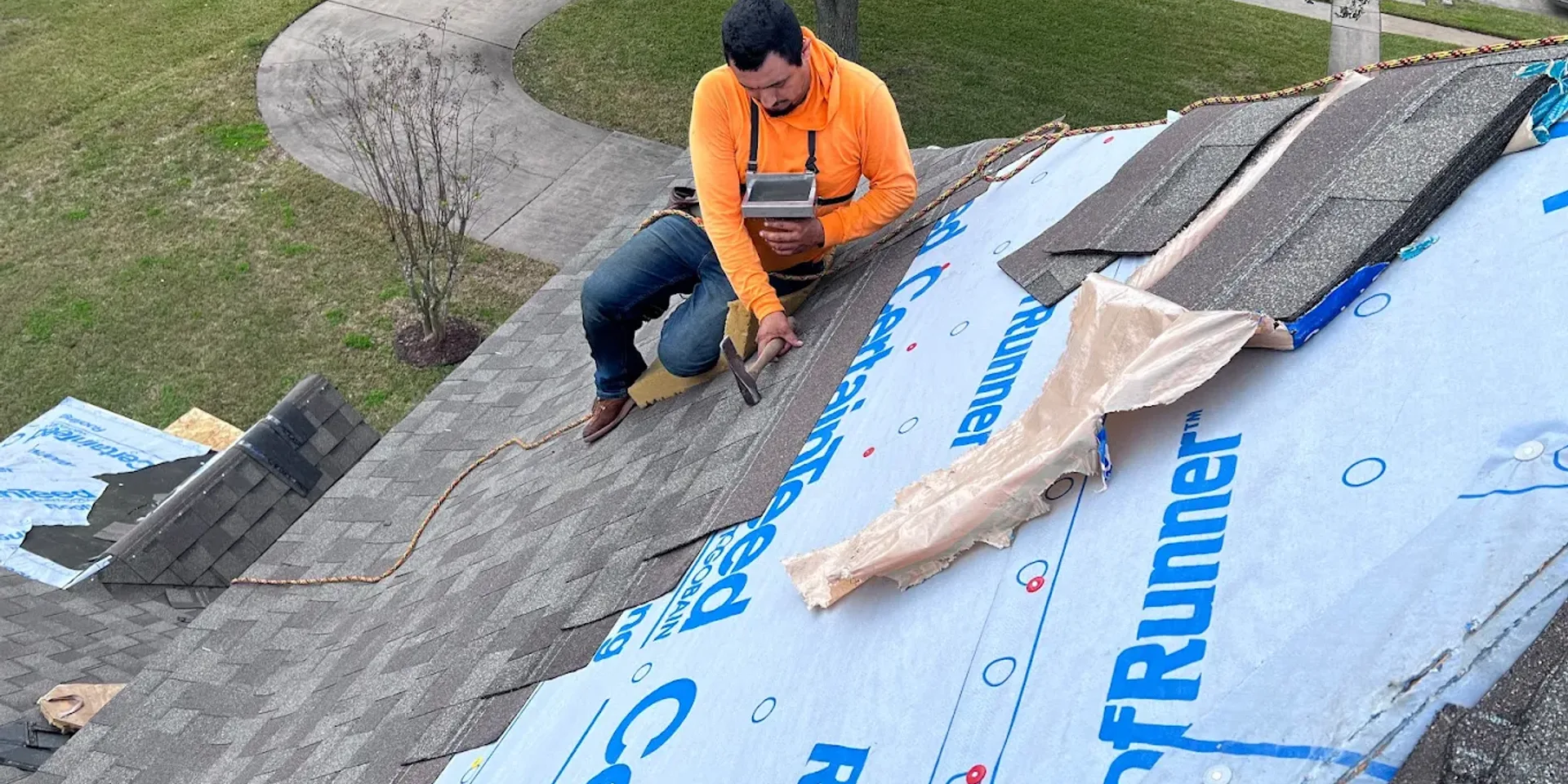
With a clear plan in place, the physical repair can begin. This involves carefully removing all damaged materials, including old shingles, compromised underlayment, and any rotted wood decking. The contractor then installs new, high-quality materials to restore the roof's protective barrier. A professional repair should blend seamlessly with your existing roof, ensuring both functional integrity and aesthetic consistency. Using the correct roofing materials and installation techniques is critical for a durable, watertight seal that stands the test of time.
After the repair is complete, the job still isn't finished. A final verification is necessary to confirm the leak has been successfully resolved. This should include a post-repair inspection and comprehensive photo documentation of the finished work. This record gives you proof of a job well done and is valuable for your home's maintenance history. Finally, the contractor should conduct a thorough cleanup of the job site, removing all old materials and debris. Leaving your property clean and tidy is a hallmark of a professional and respectful crew.
Understanding the potential cost of a roof leak repair is a top priority for any homeowner. While every situation is unique, knowing the key variables can help you prepare and make an informed decision. In Houston, prices can fluctuate based on the severity of the damage, the materials on your roof, and the complexity of the job. A simple fix might cost a few hundred dollars, while extensive damage could run into the thousands. The key is to get an accurate diagnosis first, so you know exactly what you’re dealing with.
Nationally, minor roof repairs can cost as little as $150, while more extensive work can reach several thousand dollars. Most homeowners find themselves paying somewhere in the middle. According to Angi, the average roof repair cost is around $1,170. The final price tag depends on several factors. The size and severity of the leak are the biggest drivers; fixing a few loose shingles is much different from repairing significant water damage to the underlying decking. Your roof’s pitch and accessibility also matter, as steeper or harder-to-reach roofs require more time and safety precautions, increasing labor costs.
The type of material on your roof is another major factor in repair costs. Common asphalt shingle repairs are typically the most affordable because the materials are widely available and the repair process is straightforward for experienced roofers. However, if you have a specialty roof like standing seam metal, slate, or tile, you can expect to pay more. These materials are more expensive and require specialized knowledge to repair correctly without causing further damage. Using the wrong materials or techniques can compromise the entire roofing system, so it’s essential that your roofer accurately identifies what’s needed for a seamless, lasting fix.
It’s tempting to choose the lowest estimate, but a cheap repair often ends up costing more in the long run. A bid that seems too good to be true might signal that a contractor is cutting corners. This could mean using low-quality materials that will fail prematurely or hiring inexperienced labor. An unusually low price can also be a red flag for a company that lacks proper licensing and insurance, putting you at financial risk. Choosing the wrong materials or an improper repair technique can lead to significant issues down the road, turning a small leak into a major problem. A quality repair is an investment in protecting your home.
To get a reliable and accurate estimate, the process starts with a thorough inspection. While you can note where you see stains or drips, avoid trying to diagnose the problem yourself from the ground. Instead, contact a reputable local roofer to perform a detailed assessment. A trustworthy contractor will get on the roof to identify the exact source of the leak and evaluate the condition of the surrounding area. They should provide you with a written, itemized estimate that clearly explains the scope of work, the materials to be used, and the associated costs. This transparency ensures you understand exactly what you are paying for and why the repair is necessary.
A warranty is more than just a piece of paper; it’s a contractor’s promise to stand behind their work. When it comes to roof leak repairs, a solid warranty provides peace of mind and protects you from paying for the same problem twice. However, not all warranties are created equal. The coverage can vary dramatically between contractors, so it’s important to understand exactly what you’re getting before you agree to any work.
A reputable roofing company will always offer a warranty on their repairs, but the value is in the details. A vague or non-existent warranty is a major red flag, often signaling a lack of confidence in the quality of the work. A clear, comprehensive warranty shows that the contractor is committed to providing a lasting solution. It separates the professionals from those offering quick, temporary fixes. Before you hire anyone, make sure you get the warranty terms in writing and understand the two main types of coverage you’ll encounter.
It’s essential to know the difference between a workmanship warranty and a manufacturer warranty. A workmanship warranty covers the quality of the installation itself. If a leak occurs because a roofer installed a flashing incorrectly or failed to seal a penetration properly, this warranty ensures they will come back and fix their mistake at no cost to you. This is the warranty your roofing contractor provides directly.
On the other hand, a manufacturer warranty covers the physical materials used in the repair, like the shingles or underlayment. If a shingle is found to be defective and fails prematurely, this warranty would cover the cost of the material. Understanding this distinction helps you know who to contact if an issue arises. A great contractor will help you process a manufacturer claim, but their own workmanship warranty is a direct measure of their accountability.
A strong warranty is clear, specific, and easy to understand. When reviewing the terms, look for a document that plainly outlines what is covered, the duration of the coverage, and any conditions that could void it. Vague language can leave you unprotected. Your warranty should clearly state whether it covers only the specific area that was repaired or a larger section of the roof.
Pay close attention to the exclusions. Most warranties will not cover damage from future storms, falling tree limbs, or foot traffic from other service providers. Also, check if the warranty is transferable. A transferable warranty can be a valuable selling point if you decide to move, as it assures the new owner that the repair is protected for the remainder of the term.
To ensure you are fully protected, it’s best to be proactive. Before signing any contract, ask your contractor these specific questions about their warranty to avoid any future misunderstandings:
A trustworthy contractor will be happy to answer these questions and provide clear, written documentation. Their willingness to discuss the warranty openly is a strong indicator of their commitment to quality and customer satisfaction.
Traditional roof inspections often relied on a roofer’s visual assessment from the ground or a quick walk on the roof. While experience is valuable, this approach can miss subtle issues and leave homeowners wondering if the diagnosis is accurate. Today, technology provides a better way, replacing subjective opinions with objective data to find the true source of a leak.
A data-driven inspection uses advanced tools to gather concrete evidence about your roof's health. Instead of relying on guesswork, modern roofing professionals use drones, AI, and thermal imaging to create a complete picture. Drones capture high-resolution aerial images, revealing damage that’s invisible from the ground. AI software can then analyze these images to identify patterns of wear, hail impacts, or compromised shingles with incredible precision. This approach significantly enhances the accuracy and reliability of finding leaks, ensuring that the repair plan is based on facts, not assumptions. It’s the difference between a doctor guessing about an injury and one using an X-ray to see exactly what’s wrong.
One of the biggest advantages of a tech-forward inspection is the detailed photo documentation it produces. When a contractor uses a drone or AI-assisted tools, you get a clear, visual record of your roof's condition. This isn't just a handful of blurry photos; it's a comprehensive report with high-resolution images and annotations pointing to specific areas of concern. This documentation is invaluable. It gives you the power to see the damage for yourself, understand the "why" behind a repair recommendation, and feel confident in your decision. It also serves as a baseline for future inspections and provides concrete evidence if you need to file an insurance claim.
Investing in a service that uses modern inspection technology directly impacts your wallet. Accurate diagnostics help you avoid paying for unnecessary work. When a roofer can show you exactly where a leak is coming from, you won’t get sold on a full replacement when a targeted repair will do. By pinpointing issues accurately, contractors can address them before they escalate into catastrophic, expensive failures. A small, hidden leak detected by a thermal camera is a simple fix today, but it could mean thousands in water damage and mold remediation down the road if left undiscovered. This focus on precision ensures your money is spent effectively, protecting your home and your budget.
Finding a roofer you can trust shouldn't feel like a gamble. Too often, homeowners are left with vague explanations and high-pressure sales tactics. At AI Roofing, we built our entire process around transparency. We believe you deserve to see exactly what we see and understand every recommendation we make, so you can feel confident in your decision. Our mission is to replace roofing uncertainty with structured clarity, disciplined execution, and long-term protection for your home.
Instead of relying on assumptions, we focus on providing clear, actionable insights. This means we don’t just tell you what’s wrong; we show you. We take the time to walk you through our findings, explaining the "why" behind every suggested repair. This commitment to clear communication and education is the foundation of our service. We empower you with facts, not fear, so you can make an informed choice for your property without feeling rushed or pressured. Our goal is to build trust through disciplined work and honest assessments, ensuring you feel secure in the long-term protection of your home.
We use modern technology to deliver on our promise of transparency. Our inspections often involve drones and AI-assisted diagnostics to capture a complete and accurate picture of your roof’s condition. This technology provides clear, visual evidence of any issues, from minor leaks to significant damage. Every finding is supported by photo documentation, which we include in our detailed reports. This data-driven approach removes the guesswork from roof repair. You get a precise, itemized plan based on facts, ensuring you only pay for the work that’s truly needed. This is how modern technology transforms the roofing industry for the better.
I have a small water stain on my ceiling. Does this automatically mean I need a whole new roof? Not at all. A ceiling stain is a clear signal that water is getting in, but it rarely means your entire roof has failed. More often, it points to a specific, localized problem like a cracked pipe boot, a damaged shingle, or compromised flashing around a chimney. A professional inspection is designed to find that exact entry point, so a precise, targeted repair can be made. A full replacement is a last resort, not a starting point.
Why shouldn't I just choose the cheapest repair estimate I get? It's wise to be cautious of a bid that is significantly lower than the others. An unusually low price can be a red flag for a contractor who is cutting corners by using low-quality materials, hiring unskilled labor, or, most critically, not carrying the proper licensing and insurance to protect you. A quality repair is an investment in your home's safety, and a fair price reflects skilled work, durable materials, and the peace of mind that comes with a solid warranty.
What's the real difference between a workmanship warranty and a manufacturer warranty? This is a great question, and the distinction is important. A workmanship warranty is your contractor's direct promise to you. It covers the quality of their installation, so if a leak reappears due to their work, they are responsible for fixing it. A manufacturer warranty, on the other hand, covers defects in the physical roofing materials, like a batch of faulty shingles. A reputable roofer will provide a clear workmanship warranty and can help you navigate a manufacturer's claim if needed.
Why is photo documentation so important if I can't get on the roof myself? Photo documentation replaces guesswork with facts. It provides you with a clear, visual record of your roof's condition, allowing you to see the exact source of the problem for yourself. This transparency empowers you to understand why a specific repair is being recommended and feel confident in your decision. It's proof that your contractor has done a thorough diagnosis and is holding themselves accountable for the work they propose.
My leak only happens during heavy rain. How can a roofer find it if it's not actively raining? Professional roofers are like detectives; they don't need to witness the event to solve the case. They are trained to look for the evidence water leaves behind. A thorough inspection involves checking the attic for water stains on the rafters and insulation, examining the roof decking for soft or rotted spots, and identifying any compromised shingles, seals, or flashing on the roof's surface. These clues allow them to trace the path of water intrusion back to its origin, ensuring a precise and effective repair.
Roofing Resources