Home
Home
Services
Services

Resources
Resources
Storm Restoration
Storm Restoration
Roof Systems
Roof Systems
Locations
Locations
A drone thermal roof inspection gives you clear data on hidden roof issues, costs, and benefits so you can make confident decisions about your home’s protection.

Getting a roofing quote can feel like a high-pressure sales pitch, leaving you to wonder if the recommended work is truly necessary. It’s frustrating to make a major financial decision based on opinion alone. We believe homeowners deserve facts, not fear. A drone thermal roof inspection shifts the power back to you by providing objective, verifiable data. One of the key benefits of thermal drone roof inspections is seeing the proof for yourself. Instead of just taking a roofer's word for it, you get a clear report showing the exact location of trapped moisture or energy loss, empowering you to make confident decisions.
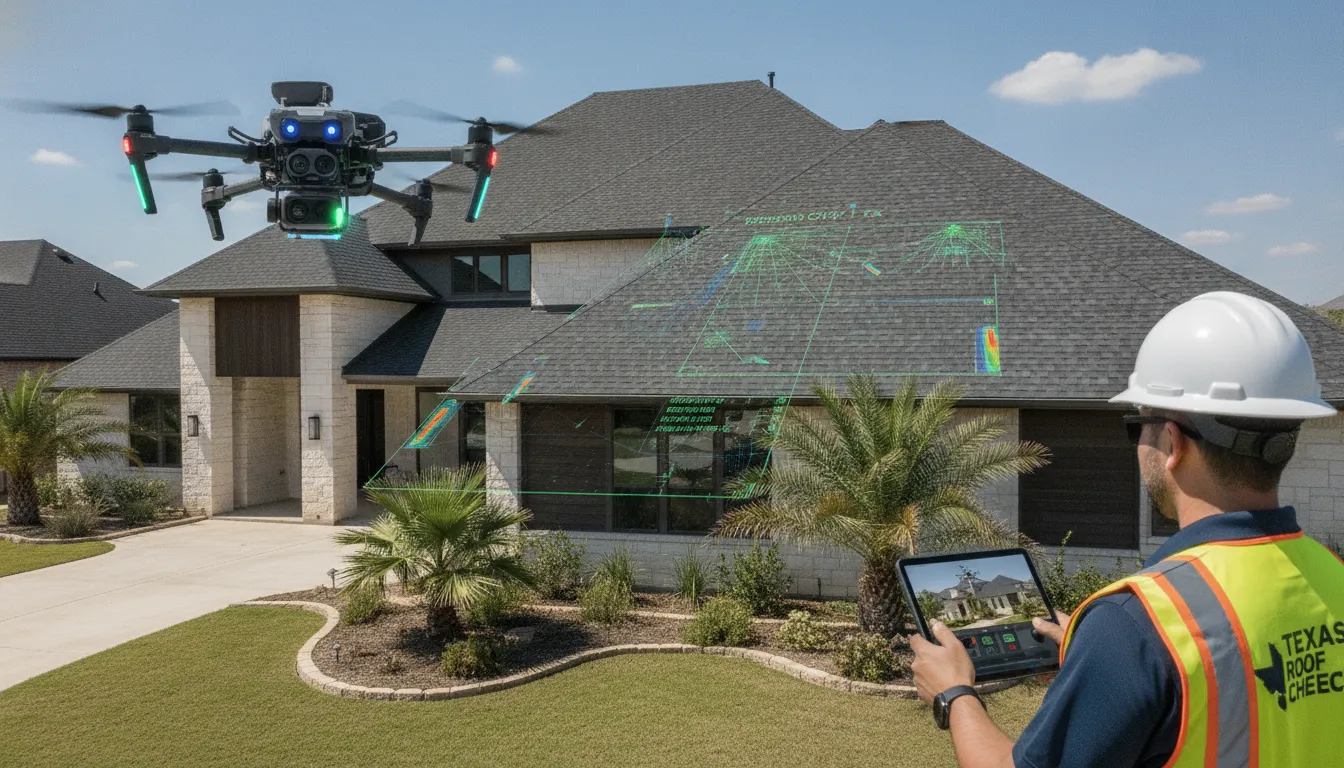
A thermal drone roof inspection is a modern, non-invasive way to assess the health of your roof using an infrared camera mounted on a drone. Think of it as giving your roof a check-up that goes far beyond what the human eye can see. Instead of just looking for visible cracks or missing shingles, this technology detects temperature differences across your roof's surface. These temperature variations can point to hidden issues like trapped moisture, failing insulation, or air leaks long before they become major, costly problems.
If you are tired of ambiguous quotes and high-pressure sales tactics, a thermal inspection provides a foundation of objective data. It shifts the conversation from, “You need a new roof,” to, “Here is what the data shows is happening with your roof, and here are the options.” This approach empowers you with clear, reliable insights, allowing you to make decisions with confidence, not pressure. It’s a fast, safe, and incredibly thorough method that captures a complete overview of your entire roof system without anyone ever having to set foot on your shingles. It’s about using technology to gain a deeper understanding and address potential issues proactively.
At its core, thermal imaging is about seeing heat instead of light. The specialized drone cameras we use don't capture a normal picture; they create an image based on the infrared energy that every object emits. Different materials absorb and release heat at different rates. For example, insulation that has become saturated with water will hold its temperature differently than dry, effective insulation. Our thermal imaging cameras detect these subtle temperature variations, which appear as different colors on a thermal map. This allows us to pinpoint anomalies that are completely invisible to the naked eye, giving us a clear guide to potential problem areas.
The power of a thermal scan comes from its advanced sensors. Our drones are equipped with both a high-resolution visual camera and a thermal camera. While the visual camera captures crisp, clear images of your roof's surface, the thermal camera reveals what’s happening underneath. As one source explains, drones with thermal cameras can find hidden problems like heat escaping, water trapped under the roof, or insulation gaps that you can't see with your eyes. These specialized cameras create images based on the infrared energy your roof emits, allowing us to see temperature differences that signal issues like trapped moisture from a slow leak or areas where insulation is failing. This gives you a complete, data-driven picture of your roof's health.
This level of analysis requires specialized equipment. The drones we use for roof inspections are built for safety and efficiency, eliminating the risks associated with traditional methods. Walking on a roof can be dangerous and may even cause further damage to shingles. As industry experts note, "Drones make inspecting roofs much safer because people don't have to climb ladders or walk on dangerous roofs." By staying on the ground, our certified operators can quickly and safely gather data from every angle of your roof, no matter how steep or complex. This modern approach provides a thorough overview of your roof’s condition in a fraction of the time, delivering clear results without putting anyone—or your property—at risk.
A traditional visual inspection is limited to what a person can see. A roofer might walk your roof looking for obvious signs of damage like cracked shingles, hail impacts, or worn-out seals. While useful, this method can miss underlying problems and carries the risk of causing further damage from foot traffic. A thermal drone inspection, on the other hand, is a diagnostic process that reveals what’s happening under the surface. It’s faster, safer, and provides a comprehensive data map of your entire roof. It doesn't replace a final physical review, but it directs our attention with precision, ensuring nothing is overlooked.
Thermal imaging is excellent at identifying temperature anomalies that often indicate hidden problems. It can effectively locate areas of trapped moisture from a leak, find sections of wet or missing insulation that compromise your home's energy efficiency, and even spot overheating electrical parts on the roof that could pose a fire risk. However, it’s important to understand its limitations. A thermal camera doesn't "see" water; it sees the temperature difference caused by it. It’s a powerful diagnostic tool that tells us where to look, but it must be paired with professional analysis to determine the exact cause and solution for the issue.
A thermal drone inspection goes beyond what the human eye can see. Using an infrared camera, the drone captures temperature differences across your roof's surface. These thermal patterns reveal a story about your roof's health, pointing to hidden issues that could otherwise go unnoticed.
Water trapped beneath your roofing material holds heat longer than dry materials. After the sun sets, these wet areas appear as warm spots on a thermal scan. This allows our drone to spot leaks and map the full extent of moisture intrusion with incredible precision, often long before you would ever see a stain on your ceiling. By identifying the exact location and size of a leak, we can provide you with a clear, data-driven assessment. This proactive approach helps you address small issues before they lead to significant rot, mold, or structural damage, saving you from more expensive repairs down the road.
When your roof's insulation becomes saturated with water, it loses its ability to insulate properly. This compromised insulation can lead to higher energy bills as your HVAC system works harder to maintain your home's temperature. Because wet insulation retains heat, it stands out as a distinct hot spot during a thermal inspection. Our technology helps find hidden problems like this with ease, pinpointing exactly where your insulation is failing. With this information, you can make targeted repairs to restore your home's energy efficiency instead of guessing where the problem lies.
Many modern homes have electrical systems on or near the roof, including wiring for solar panels, attic ventilation fans, or exterior lighting. A faulty wire or malfunctioning component can overheat, creating a serious fire hazard that is completely invisible to the naked eye. A thermal drone inspection is exceptionally good at identifying these risks. The infrared camera immediately detects abnormal hot spots along electrical conduits or at connection points, flagging potential failures before they escalate. This early detection is a critical safety measure that protects your property and gives you peace of mind.
While a thermal camera can't see through your roof, it can detect the symptoms of underlying structural problems. Persistent moisture, identified as a thermal anomaly, is a primary cause of wood rot in the roof deck and supporting beams. By pinpointing these chronically damp areas, the thermal data guides a more focused physical inspection. Instead of relying on random checks, we can examine the exact spots flagged by the drone. This methodical approach helps catch structural decay early, preventing the kind of widespread damage that could compromise the integrity of your entire roof system.
A comprehensive roof inspection looks at the entire system, not just the shingles. For many homeowners, this includes integrated components like solar panels and drainage systems, which are critical to your home's function and value. A thermal drone inspection provides a complete picture, ensuring every part of your roof is working correctly and protecting your investment from top to bottom. This holistic view allows us to identify interconnected issues that a standard visual check might miss, giving you a true understanding of your roof's overall condition.
If you have solar panels, you want to know they are operating at peak efficiency. Our thermal drones can assess the health of your solar array without ever touching a panel. Using thermal imaging, we can detect temperature anomalies that often signal underlying problems. Hotspots can indicate failing components or internal defects that reduce energy output. By using drones, we can deliver comprehensive, panel-level insights that identify these inefficiencies. This data helps you confirm your system is performing as expected and allows you to address any issues with your solar provider, ensuring you get the full return on your investment.
Your gutters are your roof's first line of defense against water damage, but blockages can cause water to back up and seep under your shingles. Over time, this can lead to rot and decay in the roof deck. A thermal inspection is highly effective at spotting these issues. Because trapped moisture retains heat, areas with poor drainage or hidden leaks appear as distinct thermal patterns. This allows us to map the full extent of moisture intrusion caused by gutter problems. By identifying these hidden wet spots, we can help you prevent costly structural repairs and ensure your drainage system is effectively protecting your home.
A thermal drone inspection offers more than just a high-tech view of your roof. It provides tangible advantages that change how you understand and manage your home's most important protective layer. This data-driven approach delivers clarity where traditional methods often fall short, giving you a complete and accurate picture of your roof's condition. From improved safety to long-term savings, the benefits empower you to make confident, informed decisions about maintenance and repairs without the pressure or guesswork.
One of the most immediate benefits of a drone inspection is that it keeps everyone safely on the ground. Traditional inspections require a person to walk across your entire roof, which introduces risk. This is especially true for homes with steep pitches, multiple stories, or materials like slate and tile that can be slippery or fragile. Foot traffic can also inadvertently cause damage by dislodging granules from asphalt shingles or cracking tiles. A drone inspection completely removes these workplace safety hazards, protecting both the inspector and your property from unnecessary risk and potential liability.
A drone equipped with a thermal camera can survey your entire roof system in a fraction of the time it would take for a manual inspection. It captures a comprehensive view of every slope, valley, and peak, including areas that are difficult or impossible to reach on foot. More importantly, the thermal camera "sees" what the naked eye cannot. By detecting subtle temperature differences across the roof's surface, it can pinpoint hidden issues like trapped moisture under the membrane or failing insulation. This allows for a level of diagnostic accuracy that a simple visual check could easily miss.
Your time is valuable, and a lengthy, disruptive roof inspection is the last thing you need. A thermal drone inspection is designed to be as unobtrusive as possible. The entire process is remarkably quick and quiet. Instead of dealing with ladders banging against your house and the sound of someone walking overhead for an extended period, our drone can survey your roof in a fraction of the time. You can continue your day with almost no interruption. This modern, non-invasive method provides a complete assessment without anyone needing to set foot on your shingles, ensuring your home life remains undisturbed while we gather the data needed to give you a clear picture of your roof's condition.
After the flight is complete, the thermal and high-resolution visual images provide a detailed, objective record of your roof's condition. This digital data is far more reliable than a few photos and a person's memory. The images can be analyzed to create a precise map of problem areas, which serves as clear evidence for insurance claims or repair estimates. This documentation is also invaluable for real estate transactions, giving both buyers and sellers a transparent report on the roof's health. Over time, you can use these reports to track your roof's condition and plan for future maintenance proactively.
In the aftermath of a storm, dealing with the insurance claims process can be one of the most stressful parts of recovery. A thermal drone inspection helps simplify this by providing the clear, objective evidence needed to support your claim. Drones can speed up insurance claims by capturing time-stamped, high-resolution images and video that document the full extent of the damage. This digital data creates a detailed, objective record of your roof's condition right after the event, which is far more reliable than an adjuster's memory or a handful of ground-level photos. This level of thorough documentation gives you a factual basis for your claim, reducing back-and-forth and empowering you with the proof needed for a smoother, more transparent process.
The greatest financial benefit of a thermal inspection is its ability to catch small problems before they become expensive disasters. A tiny, unseen leak can saturate insulation and rot the underlying roof deck for months or even years before it shows up as a stain on your ceiling. By then, you could be facing major structural repairs. Thermal imaging identifies these hidden moisture pockets early, when they can often be fixed with a minor repair. This proactive approach to maintenance helps you avoid the high costs of water damage and extends the functional life of your roof, protecting your investment for years to come.
A professional thermal drone inspection is more than just flying a drone over your house. It’s a systematic process designed to deliver accurate, reliable data about the condition of your roof. By combining advanced technology with expert analysis, we can uncover hidden issues without ever setting foot on your shingles. This approach ensures complete transparency, giving you the facts you need to make confident decisions. Unlike a traditional inspection that relies on what a person can see from a ladder or by walking the roof, a thermal inspection provides objective, measurable data. It reveals the story your roof is telling through its temperature, pinpointing problems with moisture, insulation, or structural integrity that are otherwise invisible. This methodical process removes guesswork and sales pressure from the equation. Instead of relying on someone's opinion, you get verifiable proof. Here’s a look at how our team approaches each inspection, step by step, to provide you with a clear and comprehensive picture of your roof’s health.
A successful inspection starts on the ground long before the drone takes flight. Our first step is to conduct a thorough pre-flight check of the property and surrounding environment. We identify potential obstacles like trees and power lines and assess the current weather conditions to ensure a safe, stable flight. Most importantly, we focus on planning the flight path in advance. This ensures the drone can systematically cover every square inch of your roof from multiple angles, leaving no area unexamined. This careful preparation is key to gathering the complete and accurate data needed for a reliable assessment.
Once the plan is set, we launch the drone to capture the data. The drone flies a methodical, grid-like pattern over your roof, a process that ensures consistent and comprehensive coverage. During the flight, the system captures thousands of data points, including both high-resolution visual images and thermal readings. The thermal camera is carefully calibrated to detect subtle temperature differences across the roof's surface. This allows it to identify thermal anomalies that suggest underlying issues, such as trapped moisture or failing insulation. We also capture close-up images of critical areas like vents, flashing, and skylights to document their condition in detail.
After the drone has landed, the real analysis begins. We upload the captured visual and thermal data into specialized software that stitches the individual images together. This creates a complete, high-resolution map of your entire roof, which can be viewed as a 2D orthomosaic or a 3D model. Our certified thermographers then analyze this composite map, looking for temperature patterns that indicate potential problems. Cool spots, for example, often point to moisture trapped beneath the surface. This detailed analysis helps identify issues that are completely invisible to the naked eye, turning raw data into actionable insights about your roof’s health.
Once the drone captures the images, the raw data is uploaded into advanced software. This technology is what transforms thousands of individual thermal and visual pictures into a single, cohesive high-resolution map of your roof. Think of it as creating a detailed digital blueprint that shows every angle and surface. This composite map allows our certified thermographers to analyze temperature patterns across the entire system, not just isolated spots. By using this software, we can precisely map problem areas, providing you with clear, verifiable evidence of where moisture is trapped or insulation is failing. This digital record is far more reliable than a handful of photos and ensures our recommendations are based on facts, not assumptions.
The final step is delivering a report that is clear, transparent, and easy to understand. You won’t receive a confusing data dump. Instead, we provide a comprehensive report that combines visual and thermal images side-by-side, with clear annotations explaining what you are seeing. Each area of concern is documented with detailed explanations, so you understand exactly what the issue is, where it is located, and why it matters. Our goal is to empower you with objective facts, not pressure you with a sales pitch. This detailed documentation gives you the clarity needed to make an informed, confident decision about your home.
While a thermal drone inspection provides incredible insight, it’s not a magic wand. The technology is a powerful diagnostic tool, but its accuracy depends heavily on timing, weather conditions, and the skill of the person analyzing the data. Think of it like an X-ray: it reveals what’s hidden beneath the surface, but you need a trained radiologist to read the results correctly. Understanding these limitations is key to getting reliable, actionable information about your roof’s health. A professional service will be transparent about these factors and will only conduct an inspection when conditions are right for gathering clear, accurate data. This commitment to quality ensures that the findings are trustworthy and that any recommendations are based on solid evidence, not guesswork.
The effectiveness of a thermal inspection is directly tied to the environment. For the best results, inspections are typically performed after sunset. As the roof cools down, areas holding moisture from a potential leak will retain heat longer than the dry sections. This temperature difference creates a clear contrast on the thermal camera, making problem spots easy to identify. Conducting an inspection during the day, when the sun has heated the entire roof surface, can mask these subtle temperature variations. Furthermore, drones cannot operate safely or effectively in heavy rain or high winds. Rain can cool the entire roof surface uniformly, hiding thermal anomalies and making the data useless.
Having a drone with a thermal camera isn’t enough; the operator’s qualifications are just as important. A commercial drone pilot must have an FAA Part 107 license to legally operate the equipment. Beyond that, the person interpreting the images should be a certified thermographer. A thermographer is trained to understand heat transfer, recognize thermal patterns, and distinguish between a genuine issue and a false positive. Without this specialized training, it’s easy to misinterpret the data. An inexperienced operator might mistake a shadow, a patch of debris, or reflected heat from a nearby object for a roof leak, leading to inaccurate conclusions and unnecessary stress.
A thermal inspection is not a replacement for a physical one; it’s a powerful complement that makes the entire process more efficient and thorough. The drone quickly and safely scans the entire roof, identifying potential areas of concern that might be invisible to the naked eye. These "hot spots" act as a map, guiding the roofing expert to the exact locations that require a closer look. Instead of walking every square foot of the roof, the inspector can proceed directly to the flagged areas for a targeted physical assessment. This combination of advanced technology and hands-on expertise ensures that nothing is missed and confirms the root cause of the issue before any repair recommendations are made.
The cost of a thermal drone inspection is best viewed as an investment in certainty. While a standard visual inspection might be cheaper upfront, it can’t provide the same level of diagnostic detail. A thermal inspection gives you a clear, data-driven picture of your roof’s health, helping you make informed decisions without guesswork or sales pressure. The final price isn't a one-size-fits-all number; it's tailored to the specifics of your property and the depth of analysis you need. Think of it less as a simple service fee and more as a comprehensive assessment that protects your home's long-term value. This approach moves away from opinions and focuses on verifiable facts, so you know exactly what’s happening with your roof. By identifying hidden problems early, the cost of the inspection is often a fraction of what you'd spend on major repairs down the road, giving you control over your home maintenance budget and preventing small issues from turning into costly emergencies. It's about replacing uncertainty with clarity.
The cost for a professional thermal drone inspection varies because every roof is different. Key factors that influence the final price include the size and complexity of your roof. A large, steep roof with multiple gables and dormers will require more flight time and data analysis than a smaller, single-story home with a simple roofline. The level of detail needed in the final report also plays a role. For example, a homeowner seeking peace of mind may need a different report than someone preparing extensive documentation for a complex insurance claim. Finally, site accessibility can affect the cost if there are unique challenges, like dense tree cover or difficult-to-reach areas.
For most residential properties, you can expect the cost of a thermal drone roof inspection to fall between $400 and $600. It's helpful to think of this not as a simple fee, but as an investment in clear, actionable information about your home. This price typically covers the entire diagnostic process—from the pre-flight planning by a certified pilot to the detailed analysis of the thermal data by a trained thermographer. When you consider that this data can help you prevent major structural repairs or avoid an unnecessary roof replacement, the upfront cost provides significant long-term value. It’s about paying for certainty, so you can address small issues before they become expensive emergencies.
When you invest in a thermal drone inspection from a reputable company, you're paying for a complete diagnostic process, not just a quick flight. A comprehensive service should always include an on-site visit by a licensed and insured drone pilot who understands both aviation rules and roofing systems. The service covers the flight itself, the professional processing of all thermal and visual data, and the creation of a final report. Most importantly, it includes direct communication with an expert who can walk you through the findings, explain what the images mean, and answer your questions clearly. This ensures you receive actionable insights, not just raw data.
Absolutely. A thermal inspection is a proactive measure that saves homeowners significant money and stress over time. By detecting hidden moisture before it causes rot, or identifying failing insulation before it impacts your energy bills, you can address small issues before they become catastrophic failures. Drones can also spot overheating electrical components on the roof, which helps prevent potential fire hazards. Furthermore, using a drone is safer and more efficient than traditional methods. It eliminates the risk of foot traffic damaging your shingles and can reduce labor costs associated with manual inspections that might require scaffolding. The cost of the inspection is minor compared to the cost of preventable, large-scale repairs.
Not all drone inspection services deliver the same level of quality or insight. The right partner combines advanced technology with deep roofing expertise to give you a complete and accurate picture of your roof’s health. A pilot can fly a drone, but a roofing professional knows what to look for. Choosing the wrong service can lead to misinterpreted data, missed issues, or unnecessary recommendations.
To make a confident decision, you need to know what separates a simple drone flight from a true diagnostic inspection. It comes down to the operator’s qualifications, the clarity of their findings, and their ability to answer the right questions. Before you hire anyone, take the time to evaluate their credentials and process. This ensures the report you receive is not just a collection of images, but a reliable tool for protecting your home. The goal is to find a service that provides facts and clear analysis, empowering you to make an informed choice without pressure.
When hiring a drone service, start with the basics: credentials. The pilot must have an FAA Part 107 license, which is the federal requirement for any commercial drone work. This certification ensures they understand airspace rules and can operate the drone safely and legally. Just as important, ask if the operator holds a thermography certificate. This training is critical for correctly capturing and interpreting thermal images. An untrained eye can easily misread temperature differences, leading to false positives or missed problems. Experience in the roofing industry is the final piece, as it provides the context needed to turn thermal data into actionable insights about your roof’s condition.
Don't just assume a company is qualified to fly a drone over your home. For any commercial drone work, the pilot is legally required to hold an FAA Part 107 license. This isn't just red tape; it confirms the pilot understands airspace regulations and safety protocols, ensuring they operate legally and responsibly. Since the most accurate thermal data is gathered after sunset, you should also ask if the company has an FAA waiver for night operations. This special permission is critical for an effective thermal inspection. A professional service will have these credentials readily available, confirming their commitment to both safety and delivering high-quality, reliable results for your home.
The most valuable part of a thermal inspection is the final report. This document should translate complex data into clear, understandable findings. Before committing to a service, ask to see a sample report to confirm it is detailed and easy to follow. A quality report will include both high-resolution visual photos and corresponding thermal images, with annotations that explain what you are seeing. It should pinpoint specific areas of concern, describe the potential issue (like moisture intrusion or insulation gaps), and provide a straightforward summary. The report is your guide for making decisions, so it needs to deliver clarity, not confusion.
To ensure you’re hiring a true professional, have a list of questions ready. Their answers will reveal the quality of their technology, process, and expertise.
Start with these key questions:
Houston's weather is tough on roofs. The cycle of intense heat and heavy rain can cause materials to expand and contract, creating tiny openings for moisture to seep in. A thermal drone inspection uses a special camera to "see" heat, revealing these hidden problems before they become major headaches. This technology allows us to quickly spot subtle leaks and wet insulation that are brewing beneath the surface. It can even identify overheating electrical components on the roof, helping to prevent a potential fire. By catching these issues early, you can address them before they lead to rot, mold, or expensive structural repairs, protecting your home and your investment.
Whether you are buying or selling a home, a thermal drone inspection provides the objective data needed to move forward with confidence. For sellers, it offers documented proof of your roof's condition, strengthening your position in negotiations. For buyers, it uncovers hidden issues that could turn into costly surprises after closing. This level of detail is why drone technology has become a reliable and efficient tool for insurance companies and real estate professionals. An inspection report with clear thermal imagery removes the guesswork and pressure, ensuring all parties have a transparent understanding of the property’s value and any needed repairs. It replaces assumptions with facts.
Think of an annual roof check as a routine physical for your home. It’s a proactive step that replaces uncertainty with clarity. In a climate like Houston’s, where intense sun and heavy storms constantly test your roof, waiting for a visible problem is a gamble. By the time a leak appears as a stain on your ceiling, hidden damage from trapped moisture may have been spreading for months. An annual thermal inspection gives you a clear, data-backed baseline of your roof's health. This proactive approach helps you find minor issues—like failing sealant or a small patch of wet insulation—when they are simple and inexpensive to fix. It’s about protecting your investment and preventing costly emergencies with facts, not guesswork.
The timing of a thermal inspection is key to getting accurate results. The best time to fly the drone is typically after sunset. During the day, your roof absorbs the sun's heat. As it cools down at night, any areas holding moisture will retain that heat longer than the dry sections, making them stand out clearly on the thermal camera. Because drones can inspect large roof areas much faster than a person on foot, the process is efficient and minimally disruptive. We recommend scheduling an inspection after a major storm, as part of your annual home maintenance, or before you list your home for sale to get the clearest possible picture of your roof's condition.
What is the main difference between a thermal inspection and a standard visual one? A standard visual inspection is limited to what a person can see on the surface, like cracked shingles or worn seals. A thermal drone inspection is a diagnostic process that reveals what’s happening underneath your roof. By detecting temperature differences, it can identify hidden issues like trapped moisture or failing insulation long before they become visible problems. It provides objective data, not just an opinion.
Can a thermal camera actually see water or leaks? A thermal camera doesn't see water itself; it sees the temperature difference that water creates. Materials that are wet hold heat longer than dry materials. After the sun sets and your roof begins to cool, these damp areas remain warm, appearing as distinct patterns on the thermal map. This tells us exactly where to look for a potential leak or moisture problem.
When is the best time to schedule a thermal inspection? For the most accurate results, we conduct thermal inspections after sunset on a clear day. This timing allows for the greatest temperature contrast between dry and potentially wet areas of your roof. Scheduling an inspection as part of your yearly home maintenance or after a significant storm are both excellent ways to proactively monitor your roof’s health.
What qualifications should I look for in a drone inspection service? You should confirm the service provider has two key credentials. First, the drone pilot must have an FAA Part 107 license to operate commercially. Second, the person analyzing the images should be a certified thermographer, which ensures they can accurately interpret the thermal data. Experience in the roofing industry is also vital, as it provides the context to understand what the findings mean for your home.
After the inspection, am I obligated to use your company for repairs? Not at all. Our goal is to provide you with a clear, unbiased report based on objective data. This report is yours to keep and use as you see fit. You can use it for your own records, for an insurance claim, or to get quotes from other contractors. We believe in empowering you with facts so you can make a confident, pressure-free decision.
Roofing Resources