
Home
Home
Services
Services

Resources
Resources
Storm Restoration
Storm Restoration
Roof Systems
Roof Systems
Locations
Locations
Get clear on ai roof assessments—how they work, why they matter, and what contractors need to know for faster, safer, and more accurate roofing estimates.
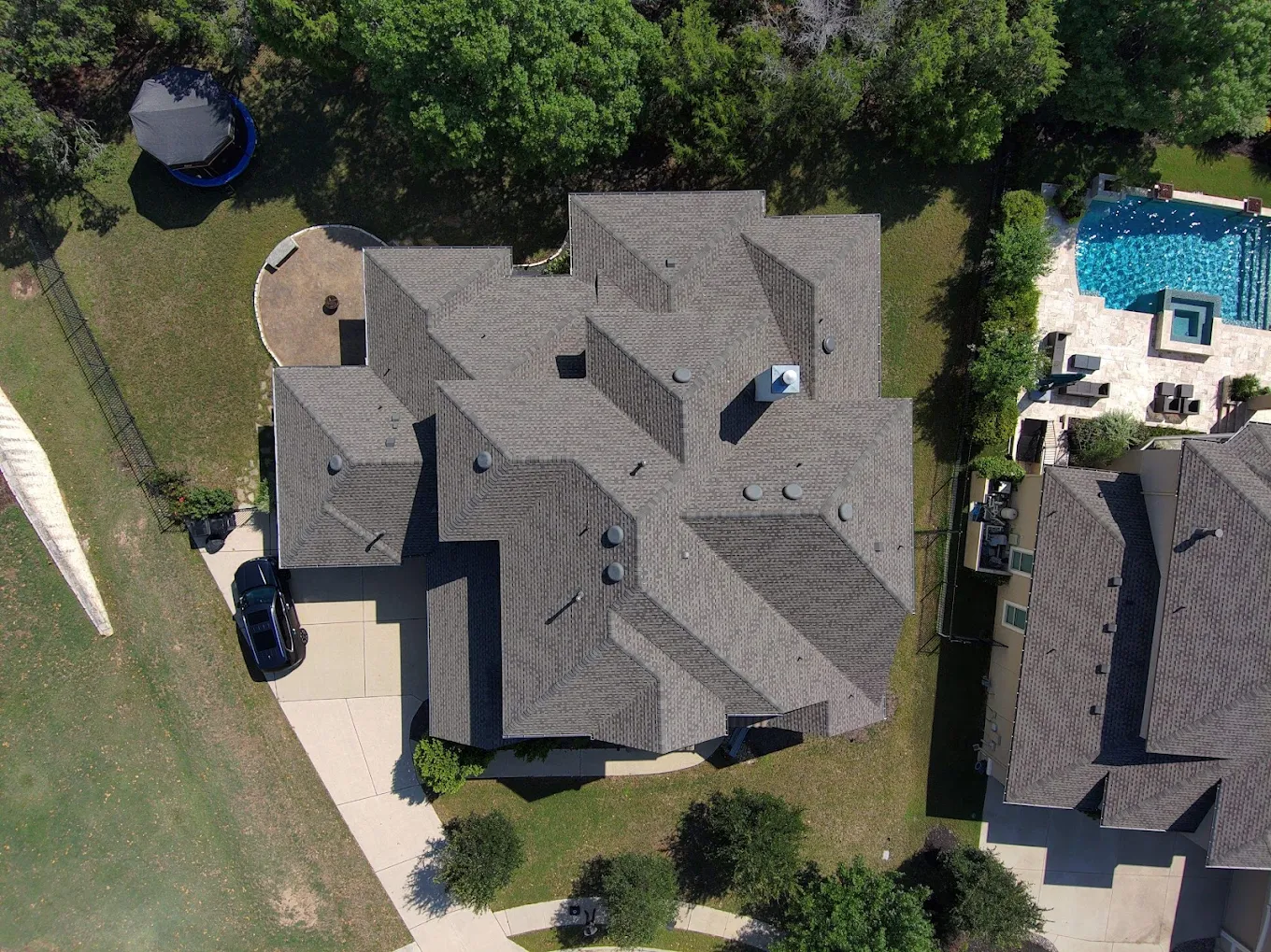
Climbing onto a hot roof with a tape measure is slow, risky, and often inaccurate. These manual estimates eat up your time and can lead to costly errors in material orders, hurting your profit margins. It’s time to work smarter. With AI roof assessments, you can generate a precise, professional quote for any ai roofing project in minutes—without leaving the ground. This technology uses high-resolution imagery to deliver verifiable data, helping you create faster, more reliable estimates that build immediate client trust. This guide explains how these tools work and why they are essential for modern contractors.
AI isn't here to replace skilled roofers; it's here to make them more effective. With a large part of the construction workforce nearing retirement, the industry needs smarter ways to work. AI helps by automating time-consuming tasks like manual measurements, freeing up experienced professionals to focus on high-quality installations and expert guidance. This efficiency allows roofing companies to handle more projects without sacrificing quality, ensuring valuable human expertise is applied where it truly counts. It’s about supporting experts, not replacing them.
A roofer’s job carries inherent risks, with manual inspections on steep or damaged roofs being a primary cause of falls. AI-powered analysis, often using drones, removes this danger by allowing for a complete assessment from the ground. By capturing detailed imagery remotely, contractors can identify issues without ever setting foot on the roof. This method significantly reduces accidents and creates a safer work environment, a benefit supported by studies on automated building assessments. It provides peace of mind for both the crew and the homeowner.
An in-person roof estimate requires time and travel, often costing a company around $300 to produce. In contrast, an AI-driven remote analysis is far more cost-effective. This allows modern companies like AI Roofing to provide precise, data-backed assessments without the high overhead or traditional sales pressure. For homeowners, this translates to a fast, accurate, and transparent quote based on objective measurements, not a quick guess from a ladder. It’s simply a more efficient and honest way to start your roofing project.
The shift to AI in roofing is more than a trend—it’s a redefinition of professional standards. The market for drone-based inspections is expanding rapidly as contractors and homeowners recognize the value of data-driven accuracy. As this technology becomes the norm, detailed, verifiable reports will be the new expectation for any quality roofing job. Choosing a contractor who already uses these tools means you are partnering with a professional committed to providing the most reliable and transparent insights for your home, ensuring you get a modern solution instead of an outdated guess.
AI roof analysis is a technology that uses artificial intelligence to evaluate a roof's condition, dimensions, and material needs from digital imagery. Think of it as a powerful assistant that gives you a complete, data-driven picture of a roof without having to climb a ladder with a tape measure. For roofing contractors, this technology is a game-changer. It automates the tedious parts of the job, like measuring complex roof facets or counting components, so you can focus on what you do best: expert installation and client service. This means less time spent on manual takeoffs and more time building relationships with customers or managing your crews on site.
Instead of replacing your expertise, AI tools enhance it. They provide precise, verifiable data that helps you build more accurate estimates, create professional reports, and communicate with homeowners using facts, not just opinions. By processing high-resolution images, these systems can identify potential issues, calculate material quantities, and generate detailed reports in minutes. This shift toward data-driven analysis helps build trust with clients, streamlines your workflow, and gives your business a modern, professional edge. It’s about working smarter, not harder, and delivering a level of accuracy that was once impossible to achieve manually.
At its core, AI roof analysis relies on special computer programs that are trained to understand roofing structures. These programs use machine learning algorithms to analyze images and identify different components like ridges, valleys, hips, eaves, and penetrations. The software then calculates the length, area, and pitch of each roof plane to create a precise 3D model.
Beyond just measurements, some advanced tools can also detect anomalies like hail damage, water pooling, or deteriorating shingles. Other platforms even offer visualization features, allowing you to show a homeowner exactly what a new roof will look like on their house. The technology essentially translates a 2D image into a comprehensive, interactive report filled with actionable data for your team.
The accuracy of an AI analysis depends entirely on the quality of the input data. Most AI roofing platforms pull from a variety of high-resolution image sources. The most common are satellite imagery and aerial photography, which provide a top-down view of a property without requiring a site visit. These images are often sourced from providers like Google Maps or specialized aerial imaging companies.
For even greater detail, many contractors use drone imagery. A drone flight can capture close-up photos from multiple angles, revealing details that satellite images might miss. Some software also allows you to measure roofs using pictures you take yourself with a smartphone or by uploading blueprints for new construction projects. The AI then stitches these images together to create its detailed analysis.
The AI gets its power from incredibly detailed pictures taken from airplanes. These aren't your average satellite photos; high-resolution aerial imagery is so clear that it can capture details as small as a few inches. This level of precision allows the software to do more than just outline a roof. It can identify specific materials, spot subtle signs of aging, and detect potential problem areas that would be invisible from the ground or a standard map view. Using this data, AI software can find homes with older roofs or those made from outdated materials, which helps us provide a more accurate and proactive assessment. This is how we ensure our analysis is built on solid, verifiable data from the very start.
Some of the most powerful data sources are historical image libraries. These are collections of aerial photos of the same property taken over several years. By comparing these images, the AI can create a timeline that shows how a roof has changed. This is incredibly valuable for identifying gradual deterioration, tracking the impact of a specific storm, or proving the existence of pre-existing damage for an insurance claim. Instead of just telling you a roof is aging, we can show you the visual evidence. This ability to document a roof's history provides undeniable clarity and supports transparent, fact-based recommendations for repair or replacement.
Traditionally, creating a roof estimate required a site visit, climbing onto the roof, and taking manual measurements with a tape measure. This process is not only time-consuming but also carries inherent safety risks. It can also lead to inconsistencies, as two different people might measure the same roof and get slightly different numbers.
AI analysis transforms this workflow. It provides consistent, verifiable measurements in a fraction of the time, often in just a few minutes. This speed allows you to generate quotes faster and respond to more leads. Because the analysis is done remotely, you can reduce preliminary site visits, saving on fuel and labor costs. This efficiency speeds up the estimating process, allowing you to deliver professional, data-backed proposals that build immediate trust with homeowners.
Beyond just speed and safety, AI analysis introduces something even more valuable to the roofing industry: standardization. For too long, a roof’s condition has been a matter of opinion, leaving homeowners confused by conflicting quotes. AI-driven assessments change that by providing an objective, data-backed evaluation that remains consistent no matter who runs the report. This approach moves the conversation away from subjective sales pressure and toward a clear, factual discussion about your roof’s health. At AI Roofing, we believe this transparency is key to helping you make confident, informed decisions without the guesswork.
One of the most effective tools for standardization is the Roof Condition Index (RCI), a scoring system developed by the U.S. Army Corps of Engineers. The RCI grades a roof on a simple 0-to-100 scale, where 100 is a roof in perfect condition and 0 represents complete failure. Think of it as a health score for your roof. By using AI to analyze high-resolution imagery, we can apply this index consistently and accurately. This process helps evaluate roof conditions with an objective benchmark, giving you a clear understanding of where your roof stands today.
Knowing your roof’s current condition is helpful, but what about planning for the future? This is where predictive maintenance comes in. By combining the RCI score with other data points like the roof's age and material type, AI analysis can help forecast its remaining service life and potential future costs. This data-driven approach removes the element of surprise, allowing you to budget for repairs or a replacement long before they become an emergency. It empowers you to plan for maintenance proactively, protecting your investment and giving you peace of mind.
When we talk about AI in roofing, we're not discussing futuristic concepts. We're talking about practical tools that deliver tangible results. These software platforms replace guesswork with data, helping contractors work efficiently and giving homeowners the clarity they deserve. The best AI tools combine several key functions to create a complete picture of your roof’s health. Understanding these features shows you how technology brings a new level of precision and transparency to the roofing process.
A major advantage of AI analysis is its ability to generate incredibly accurate measurements. Instead of relying on a tape measure, these tools use algorithms to produce detailed reports with near-perfect dimensions. Leading platforms can measure roofs with up to 99% accuracy, forming the foundation of a reliable estimate. When a contractor knows the exact square footage and pitch, they can calculate material needs with confidence. For you, this means a transparent, data-driven quote with no hidden surprises.
Beyond simple measurements, advanced AI tools can create a visual map of your roof’s health. This feature, known as geo-located damage mapping, uses high-resolution imagery to pinpoint specific issues like hail strikes, missing shingles, water pooling, and other potential problems. Instead of a contractor just telling you there’s damage, you get a clear report showing you exactly where it is—almost like a GPS for your roof. This technology is especially powerful for insurance claims, as it provides the objective, visual documentation needed to support your case and streamline approvals. For us at AI Roofing, this is a core part of our inspection process. It allows us to have transparent conversations with homeowners, grounding our recommendations in verifiable data you can see for yourself.
AI roofing tools get their data from high-resolution aerial images. Using satellite and drone photography, a contractor can get a comprehensive view of your roofing system without setting foot on it. This process is safer, faster, and often more thorough than a traditional inspection. The AI software analyzes these images to identify facets, slopes, and potential concerns. Some tools even use Google Maps to generate instant roof measurements for a preliminary assessment, allowing for a detailed, objective analysis of your roof’s condition.
Modern AI tools are designed to fit smoothly into a professional contractor's daily operations. They are integrated platforms that streamline the entire process from inspection to project completion. This means a contractor can use a single app to measure a roof, create a professional proposal, visualize different shingle options for you, and order materials. This efficiency is key to a better customer experience. Tools that provide instant estimates allow contractors to respond quickly, giving you the information you need without a long wait.
While AI technology offers incredible precision, it’s important to have a clear picture of what it can and can’t do. No tool is perfect, and being transparent about both the accuracy and the limitations of AI is key to making an informed decision about your roof. Think of it like any diagnostic tool—it provides powerful insights, but the results always benefit from an expert eye. Understanding how performance is measured and what can cause occasional errors helps you appreciate the complete process. This knowledge ensures you can trust not just the technology, but also the professionals who use it to give you a full and honest assessment of your home.
So, just how accurate is this technology? The results are impressive. For example, a recent study on AI roof assessment found that a model could identify missing shingles with 81% accuracy on roofs it had never seen before. Even more importantly, it had a precision rate of 86%. In simple terms, this means that when the AI flagged a shingle as missing, it was correct 86% of the time. This high level of reliability is what allows contractors to generate trustworthy estimates and gives you confidence in the initial findings. The overall performance is considered strong, providing a solid, data-driven foundation for any roofing recommendation.
On the flip side, it's just as important to understand where AI can fall short. The same analysis showed the model missed about 19% of missing shingles. These inaccuracies weren't random; they were typically caused by specific issues like blurry photographs or very small defects that are hard for an algorithm to spot. These limitations highlight the importance of high-quality input data and clear imagery for the AI to work its best. This is also why human expertise remains essential. At AI Roofing, our professionals review every analysis to catch what the machine might miss, ensuring you get a complete and accurate picture. The technology provides the data, and our experts provide the final verification.
Adopting AI isn't just about having the latest gadget; it's about making your entire operation smarter, faster, and more profitable. By automating routine tasks and providing data-driven insights, these tools allow you to focus on what matters most: quality craftsmanship and client relationships. From the first call to the final invoice, AI analysis can refine your processes, reduce overhead, and build a stronger reputation for professionalism and accuracy in a competitive market.
Gone are the days of spending hours on manual measurements and calculations. With AI-powered tools, you can generate a detailed, accurate estimate in minutes, sometimes seconds, often just by typing in an address. Platforms like Rooftops AI deliver instant reports that include precise measurements, pitch, and facet details. This speed allows you to respond to leads faster than the competition, giving you a critical first-mover advantage. More importantly, presenting a client with a branded, data-backed report instead of a handwritten number on a notepad immediately establishes your credibility and professionalism. It shows you’ve invested in accuracy and sets a transparent tone for the entire project.
Every trip to a property costs you time and money in fuel and labor. AI analysis significantly cuts down on unnecessary site visits, especially for initial assessments and estimates. Using high-resolution satellite and drone imagery, you can perform accurate roof measurements remotely. This allows you to inspect and measure a roof without ever setting foot on the property, which also improves safety by reducing time spent on steep or unstable surfaces. This efficiency means your team can focus their on-site time on qualified, confirmed jobs instead of preliminary fact-finding. You can handle more leads with the same size team, directly impacting your bottom line and operational capacity.
When dealing with insurance claims, objective data is your best asset. AI analysis provides the indisputable evidence needed to support a claim for hail, wind, or other storm damage. Instead of relying on a few photos that can be open to interpretation, AI tools generate detailed reports that identify, count, and map out damage points across the entire roof surface. This level of documentation leaves little room for dispute and helps adjusters quickly validate the scope of work. Using a roof visualizer can also help show the "after" state, creating a comprehensive package for the insurer. This not only speeds up the approval process for your client but also reinforces your role as a trusted, knowledgeable expert.
Homeowners are often wary of the roofing industry, tired of confusing quotes and high-pressure sales tactics. AI-powered reports are your antidote. By presenting a client with a clear, visual, and data-driven report, you demystify the process. They can see the exact measurements, the identified issues, and the reasoning behind your recommendations. Tools that simulate what a new roof will look like help them visualize the final product, making them more confident in their decisions. This transparency shifts the conversation from "trust me" to "let me show you." It empowers the homeowner, builds genuine trust, and differentiates your business as one that prioritizes clarity and honesty over a quick sale.
Beyond the initial estimate, AI tools help contractors manage the entire roofing project with greater efficiency. By automating logistical tasks, the software frees up project managers to focus on quality control and client communication. This means your project runs more smoothly, with fewer delays and surprises. The system can help coordinate everything from material delivery to crew scheduling, ensuring all the moving parts of a roof replacement come together seamlessly. This level of organization is what separates a stressful renovation from a professional, hassle-free experience for the homeowner.
Once a project is approved, AI software helps organize the logistics. These platforms can manage projects by automatically scheduling crews and allocating the necessary equipment and materials for each job. By analyzing the project scope, the system ensures that the right team and resources are assigned, minimizing downtime and preventing costly delays. For you as a homeowner, this means the project is more likely to stay on schedule. A well-organized contractor using these tools can execute the job efficiently, reducing the disruption to your daily life and completing the work as promised.
Keeping you informed is a key part of a positive customer experience. AI tools can automate communication by sending updates at key project milestones, such as when materials are ordered, when the crew is en route, or when the project is complete. Furthermore, because AI can spot small damage that might not have been visible initially, contractors can provide immediate, transparent updates about any necessary changes to the project scope. This proactive communication, backed by visual evidence from the AI analysis, ensures you are always in the loop and confident that there will be no surprises on the final invoice.
AI technology also allows roofing contractors to shift from a reactive to a proactive business model. Instead of just responding to calls after a storm, they can use data to anticipate needs and identify opportunities. This approach allows them to serve communities more effectively, offering timely solutions before minor issues become major problems. For homeowners, this means working with a contractor who is not just a service provider but a long-term partner in protecting their home. This forward-thinking mindset is changing how the best roofing companies operate.
Modern roofing companies can use AI to identify properties that may need attention. The software looks at aerial pictures to find homes with visibly aging roofs, signs of wear, or materials that are known to be nearing the end of their lifespan. This allows contractors to proactively reach out to homeowners in specific neighborhoods with data-driven information, rather than using generic, high-pressure sales tactics. For instance, after a hailstorm, a contractor can quickly assess an entire area to see which homes were likely affected and offer a complimentary, detailed inspection, providing value right from the first conversation.
Your roof is one of your home's most critical assets, and preventative maintenance is key to maximizing its lifespan. Some contractors use AI to offer ongoing monitoring services. By periodically analyzing aerial imagery of your property, they can track its condition over time and catch potential issues like water pooling or granule loss early on. This technology helps contractors manage their roofs more strategically, enabling them to recommend small, preventative repairs before they escalate into costly emergencies. This service provides peace of mind and helps you protect your investment with a clear, long-term maintenance plan.
Integrating AI into your business doesn’t require a complete overhaul of your operations. Instead, think of these tools as powerful assistants that streamline your existing processes, from the first customer call to the final project sign-off. By automating repetitive and time-consuming tasks, AI frees you and your team to focus on what matters most: quality craftsmanship and client relationships. It allows you to bring a new level of precision and transparency to every job, building trust and setting your business apart.
The right AI platform fits naturally into your day-to-day activities. It starts by transforming how you gather initial data, allowing you to generate accurate measurements without setting foot on the property. This data then flows directly into professional, easy-to-understand reports that you can share with homeowners and insurance adjusters, justifying your recommendations with hard facts. Ultimately, this efficiency allows you to manage more projects and grow your business without the immediate need to expand your team, giving you a significant competitive edge.
The sales process begins the moment a potential customer contacts you. With AI, you can accelerate your response time and deliver a precise estimate faster than ever. Instead of scheduling an initial visit just to take measurements, you can use an AI tool to get them instantly. Platforms like iRoofing use high-resolution satellite and drone imagery to generate detailed roof measurements in minutes. This allows you to create an accurate, data-driven proposal quickly, demonstrating professionalism and efficiency from the very first interaction. By reducing the need for preliminary site visits, you save valuable time and fuel costs while getting a comprehensive quote into the homeowner’s hands before your competitors.
Trust is the foundation of any successful roofing project. AI analysis helps you build that trust by replacing assumptions with clear, visual evidence. AI tools generate professional, branded reports that document everything from precise measurements to identified damage, complete with annotated images. When you present a homeowner with a report that clearly shows why a repair or replacement is needed, you move the conversation away from a sales pitch and toward a collaborative solution. This documentation is also incredibly valuable for insurance claims. It provides adjusters with the detailed, objective proof they need to process claims efficiently, reducing delays and friction for everyone involved.
One of the biggest challenges for growing contractors is handling an increased workload without sacrificing quality or burning out your team. AI provides a direct solution by automating key administrative tasks. Tools like Rooftops AI can function like "AI employees," instantly generating measurements, creating estimates, and even drafting proposals. By taking these time-intensive tasks off your plate, AI allows your existing team to manage a higher volume of projects. This means you can scale your revenue and take on more work without the immediate overhead of hiring additional estimators or administrative staff. You can close deals faster and focus your team’s energy on delivering excellent work in the field.
Adopting new technology comes with a few hurdles, and AI analysis tools are no exception. The good news is that these challenges are manageable with a bit of planning. Most of the work isn't about the technology itself; it's about your people and processes. Successfully implementing AI means preparing your team for a new way of working, ensuring the software fits into your operations, and getting everyone genuinely on board with the change. Here are the three most common challenges to prepare for.
The success of any new tool depends almost entirely on your team. In fact, successful transformation efforts often dedicate the majority of their focus to people and process changes, not just the technology. It’s not enough to show your team which buttons to click. Effective onboarding means training them on a new workflow, from capturing drone imagery to interpreting the final report. Your crew needs to understand how this tool makes their job better and helps deliver more accurate information to the homeowner. Invest time in hands-on practice to build their confidence and make the new process second nature.
A new tool should make your life easier, not create more administrative work. A common challenge is ensuring your AI analysis software works well with the systems you already use, like your CRM or estimating platform. If the new tool can’t communicate with your existing software, you risk creating data silos and clunky, inefficient workflows. Before committing to a platform, ask about its integration capabilities. A tool with a flexible API or pre-built connections can help you create a seamless process from initial analysis to final invoice, keeping your operations running smoothly.
Beyond formal training, you need genuine buy-in from your team. If your crew sees AI as a threat to their expertise or just another task, they won't use it effectively. As a leader, it's your job to set a clear vision for how this technology improves the business and their roles within it. Frame AI as a tool that helps them work smarter, not harder. It can reduce time spent on dangerous roofs, create more precise material orders, and build stronger arguments for insurance claims. When your team understands that AI supports their skills, they'll be more likely to embrace it.
Bringing any new technology into your business comes with challenges, but they are far from insurmountable. The key is to be strategic and focus on a smooth transition for your team. With a clear plan, you can integrate AI analysis into your operations without disrupting your workflow or overwhelming your crew. Here’s how to get started.
You don’t need to switch your entire operation over to AI overnight. The smartest way to begin is with a small, controlled pilot program. Choose one or two tech-savvy team members and have them use the new software on a handful of upcoming jobs. This approach lets you test the tool in a low-risk environment and see how it performs in the real world.
This trial period allows you to work out any kinks and gather direct feedback from your team. As one industry publication noted, the roofing contractors who test small pilots today will be the ones who perfect their process for tomorrow. Once you have a few successful projects under your belt, you’ll have a strong case for rolling it out to the rest of your company.
Not all AI roofing software is created equal. The right tool should feel like a natural extension of your current process, not a complete reinvention of it. Before you commit, evaluate how a platform will fit into your day-to-day operations. Does it integrate with your existing CRM? Can you easily generate the types of reports you need for estimates and insurance claims?
Look for tools designed specifically for roofing contractors, which often include features like instant roof measurements, material estimates, and professional proposal builders. The goal is to find a solution that simplifies tasks, not one that adds unnecessary steps. Choosing the right business software is about finding a perfect fit for your team’s needs.
The success of any new tool depends entirely on the people using it. If your team doesn’t understand the software or see its value, they won’t use it effectively. That’s why practical, hands-on training is so important. Focus on showing your crew how AI makes their jobs easier, whether it’s by reducing time spent on a hot roof or by creating more accurate material orders.
Instead of just demonstrating features, explain the "why" behind the change. Frame it as a tool that helps them work smarter, not harder. A people-first approach to technology adoption builds confidence and encourages your team to embrace new ways of working. When your crew feels supported, they’ll be more likely to see the AI tool as an asset.
Adopting new technology can feel like a big step, and it’s normal to have questions. Many roofing contractors share similar concerns when they first hear about AI analysis. Let's clear up a few common myths about using AI in your roofing business. The truth is, these tools are designed to support your work, not complicate it. By understanding what AI really does, you can see how it fits into your goals for growth, efficiency, and customer satisfaction.
This is the most common fear, but it’s unfounded. AI is not designed to replace a roofer’s judgment; it’s built to enhance it. Think of it as an assistant that handles tedious tasks like precise measurements and initial damage flagging, freeing you to focus on what you do best: consulting with homeowners, diagnosing tricky leaks, and managing your crew. A recent guide for leaders notes that AI helps people do new things and takes away boring tasks. Your years of hands-on experience are irreplaceable; AI just gives you better data to apply that experience.
Seeing "AI" often brings high costs to mind, but that's not the whole story. Instead of an expense, view it as an investment in efficiency. The costs of driving to a site, manually measuring a roof, and creating an estimate add up. AI analysis tools reduce these costs by minimizing site visits and speeding up the estimating process. The real value comes from changing how the business operates. By delivering faster, more professional proposals, you can increase your close rate and build a reputation for transparency, which is a powerful driver for new business.
No one has time to learn complicated new software. The good news is that the best AI roofing tools are designed for contractors, not software engineers. They are built to be intuitive and fit into your existing workflow. The key to successful adoption is focusing on people and processes. One report suggests spending 10% of your effort on AI programs, 20% on technology, and 70% on your people and how they work. By starting with a pilot program and choosing a tool with good support, you can get your team comfortable without disrupting your operations.
Choosing the right AI software is a major decision for your business. With several options available, it’s important to look past the sales pitches and focus on what truly matters: accuracy, workflow integration, and cost. The right tool is a strategic investment that improves your efficiency, builds client trust, and protects your bottom line. To make a smart choice, focus your evaluation on three key areas.
The sticker price rarely tells the whole story. Some AI tools charge a fee for every report you generate, which can quickly eat into your profit margins, especially during the busy season. Other platforms offer plans with unlimited roof measurements, giving your team freedom without the fear of surprise fees. Before you commit, map out your potential usage and get a clear breakdown of all costs. This ensures the tool is a financial asset, not a liability that complicates your budget.
You wouldn't buy a new truck without a test drive, and the same logic applies here. The best way to know if a tool works for your team is to use it. Most reputable platforms offer a free trial or a complimentary report to let you see the results firsthand. This is your chance to assess the user interface, test the measurement accuracy, and review the final report's quality. Taking advantage of a free report is a no-risk way to evaluate the software’s output before making a financial commitment.
Great software is only half the equation; reliable support is the other. When a tool fails on-site or a report has an error, you need fast, effective help to keep the project moving. Before signing up, read user reviews and look for comments about customer service. A high average rating is a good sign, as are reviews that praise the support team’s responsiveness. Strong customer support is a critical feature that protects your time, your team’s productivity, and your professional reputation.
The AI tools available today are already transforming the roofing industry, but the technology is just getting started. The future of AI in roofing is focused on making analysis even smarter, more detailed, and more accessible for everyone. As the software evolves, it will move beyond just providing measurements to offering proactive insights that help homeowners protect their investment. This means catching problems earlier, simplifying the inspection process even further, and putting powerful diagnostic tools directly into the hands of both contractors and their clients. It’s a future where data doesn’t just create an estimate—it helps you manage the long-term health of your home.
The next wave of AI is moving beyond simple measurements to become a true diagnostic partner. While current tools are great at calculating area and pitch, future systems will get much better at identifying specific types of damage. Advanced tools are already learning to detect anomalies like hail impacts, water pooling, and deteriorating shingles with incredible precision. This means a contractor can spot subtle issues that might be missed during a manual inspection. For homeowners, this is a huge advantage. It allows you to address small problems before they turn into major, costly repairs, giving you more control over your home's maintenance.
Research is proving just how effective this can be. One study showed that drones combined with AI can automatically find missing shingles on a roof, a task that is both time-consuming and risky for a human inspector. By automating this process, AI not only improves safety but also delivers a more thorough and objective assessment. This level of detail provides the clear, factual evidence needed to understand your roof's condition, which is exactly the kind of transparency we believe homeowners deserve when making important decisions about their property.
As AI technology becomes more powerful, it's also becoming more convenient. The future isn't just about what the software can do, but how easily you can access it. A major trend is adapting these complex analytical tools for mobile devices. Soon, generating a detailed roof report could be as simple as using an app on your smartphone. This makes the entire process faster and more efficient, allowing contractors to gather data and share insights with you directly from your driveway. It removes another layer of friction from the process, giving you answers almost instantly.
This shift is already happening. Some platforms already allow contractors to measure roofs using pictures taken with a smartphone, making it easier than ever to get a quick, accurate assessment. As this technology continues to be adapted to work on smartphones and other handheld devices, it will become a standard part of every modern roofer's toolkit. For you, this means a more streamlined and transparent experience from start to finish, with less waiting and more clarity.
When you’re evaluating new technology, the most important question is always about the return on investment. Is AI roof analysis a flashy trend, or is it a practical tool that actually improves your bottom line? For most contractors, the answer is clear: it’s absolutely worth it. The value isn’t in the technology itself, but in the tangible results it delivers, like faster turnarounds, fewer errors, and a more professional client experience. It’s about working smarter, not just harder.
The most immediate benefit is a massive gain in efficiency. Instead of spending hours on a roof with a tape measure or waiting for third-party reports, you can generate highly accurate roof measurements in minutes. This speed allows you to respond to leads almost instantly, getting a detailed, professional proposal into a potential client’s hands before your competition has even scheduled a site visit. This accuracy also protects your profit margins by minimizing the risk of underbidding a job or ordering incorrect quantities of materials, which prevents costly waste and delays.
Ultimately, adopting AI analysis is a strategic move that gives you a significant competitive advantage. In a market where homeowners expect quick responses and clear information, being the fastest and most thorough contractor often means you win the job. These tools help you scale your estimating capacity and grow your business without needing to hire more staff. By presenting clients with data-driven reports, you build trust and position your company as a modern, reliable expert, which is a powerful way to stand out and secure more profitable projects.
As a homeowner, what does AI roof analysis mean for me? For you, it means clarity and confidence. When a contractor uses AI analysis, you get a fast, accurate, and transparent proposal based on verifiable data, not just a guess. You can see precise measurements and visual evidence of any issues, which helps you understand exactly what work is being recommended and why. This process removes the high-pressure sales tactics and empowers you to make an informed decision about your home.
How accurate is an AI measurement compared to someone using a tape measure? AI-powered measurements are consistently more accurate. Leading platforms can generate dimensions with up to 99% precision, which often surpasses manual methods. The technology creates a detailed 3D model of your roof, accounting for every angle and facet. This consistency eliminates the human error that can occur with a tape measure, ensuring the material estimates and the final quote are based on reliable data.
Will this technology replace the need for an experienced roofer? Not at all. AI is a tool that supports a roofer's expertise, it doesn't replace it. The software handles the time-consuming task of measuring and generating reports. This frees up the contractor to focus on what truly matters: diagnosing complex problems, recommending the right solutions, and ensuring a high-quality installation. Your roofer’s hands-on experience is still essential for interpreting the data and managing the project successfully.
Is this technology difficult for a roofing team to learn? While any new process requires some adjustment, the best AI tools are designed to be user-friendly and intuitive. They are built for contractors in the field, not software developers. Most platforms can be learned quickly, especially when a company starts with a small pilot program to get a few team members comfortable. The goal of the software is to simplify the workflow, so ease of use is a primary feature.
Does this make roofing services more expensive for the customer? It usually has the opposite effect. AI analysis makes a contractor's operations more efficient, which can lead to cost savings. By reducing the need for multiple site visits and preventing costly material ordering errors, contractors can run their business more effectively. This efficiency allows them to offer competitive pricing while delivering a more professional and transparent service.
Roofing Resources


